
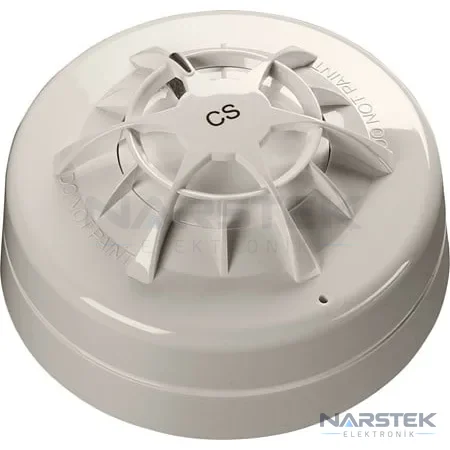
Apollo ORB-HT-41006-MAR Orbis Marine Heat Detector (CS)
Request a quote for pricing and availability. Installation, commissioning and compatibility checks with your existing system are also available.
Technical documents and wiring diagrams
PDFDatasheetOrbis Marine Heat Detector Datasheet
EnglishIncludes a wiring diagramPDFCertification
DNV Certificate
EnglishPDFCertification
Lloyd's Register Certificate
English
The manufacturer has not published Turkish documentation for this product; please contact us for technical support in Turkish.
Product description
The Orbis Marine Heat Detector can be used in environments that are normally dusty or smoky, where smoke detectors are unsuitable, and in marine applications. A flashing red LED at start-up indicates operation, while a flashing yellow LED indicates a fault.
Key features
- CS heat classification
- Suitable for marine applications
- Suitable for dusty or normally smoky environments
- Flashing red LED operation indicator at start-up
- Flashing yellow LED in the event of a fault
- Test the detector in four seconds using FasTest
Technical specifications
| Heat classification | CS |
|---|---|
| Applications | Dusty environments, marine applications |
| Standby current | 95 μA (at 24 V DC) |
| Operating voltage | 5–33 V |
| Protection rating | IP44 |
| Relative humidity | 0–98% (non-condensing or non-icing) |
| Colour | White |
| Weight | 70 g |
| Dimensions | Length 36 mm, diameter 97 mm |
| Warranty | 10 years |
Information has been compiled from manufacturer/distributor sources. Please consult the documentation for current technical specifications.
Other Apollo products
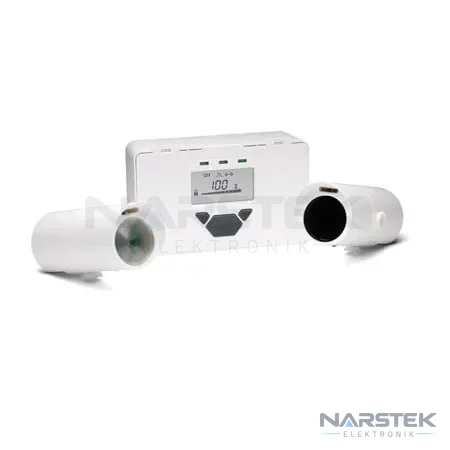
Apollo 29600-929 Conventional End-to-End Beam Detector
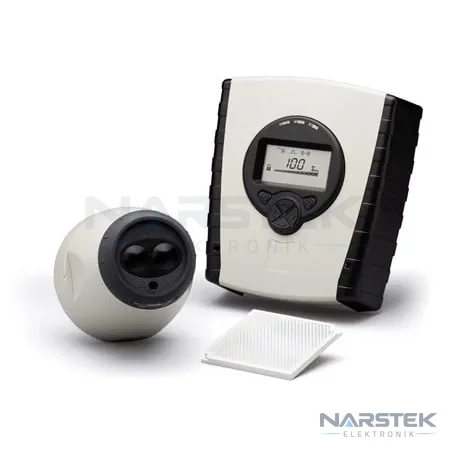
Apollo 29650-069 Self-Aligning Conventional Reflective Beam Detector
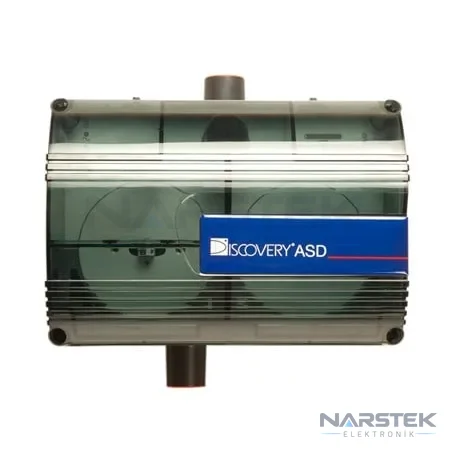
Apollo 29650-081APO Single-Point Aspirating Smoke Detector
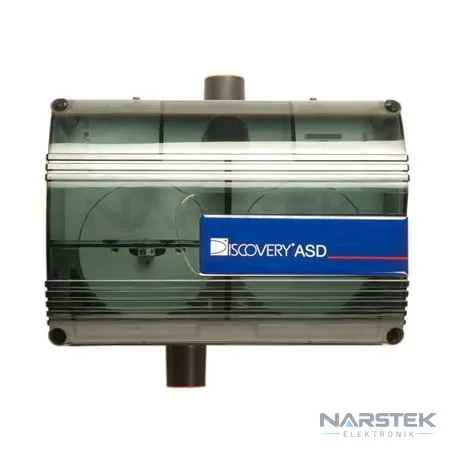
Apollo 29650-082APO Dual-Point Aspirating Smoke Detector
Request a site survey and quote for your project
Tell us about your building, existing system and requirements; together, we can determine the right solution.