
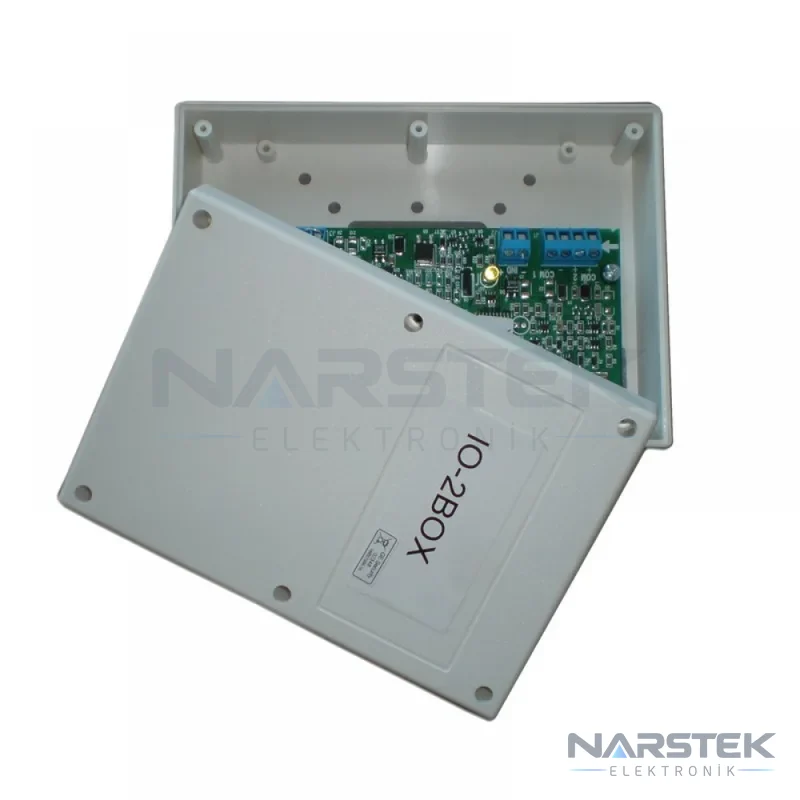
Aritech IU2055NC Addressable Conventional Zone Module
Request a quote for pricing and availability. Installation, commissioning and compatibility checks with your existing system are also available.
Product description
1. Product Name: Aritech IU2055NC Addressable Conventional Zone Module
2. Description:
What Is the Aritech IU2055NC Addressable Conventional Zone Module?
The Aritech IU2055NC is a two-wire zone module that serves as an interface between conventional fire detectors and an addressable fire alarm control panel using the 2000 series protocol. In standard applications, it can monitor up to 30 detectors; in intrinsically safe applications, it can monitor up to 20 detectors.
Operating Principle
The module communicates with the panel via the two-wire loop and powers the conventional zone line within a range of 17,5 – 18,5 VDC. The zone line is monitored for open and short circuits using a 3,9 kΩ end-of-line resistor, and alarm conditions are also monitored. All faults are reported to the panel; an open-circuit fault is indicated by a steady yellow LED on the module. After an alarm, the panel resets the system by interrupting and then restoring power to the zone line. The module supports alarm verification and CleanMe™ functions.
Role in Fire Detection Systems
The IU2055NC allows an existing or new conventional zone to be incorporated into an addressable detection loop. This enables legacy systems to be upgraded to an addressable panel without replacing the field detectors. It can also be used to connect intrinsically safe conventional detectors to an addressable system via a GBX2000 galvanic barrier in areas where explosive atmospheres may be present. The module also has an unsupervised remote indicator output for the zone.
Why Choose It?
- High capacity: Up to 30 standard or 20 intrinsically safe detectors can be monitored on a single zone.
- Line monitoring: The zone line is continuously monitored for open and short circuits.
- Advanced functions: Supports alarm verification and CleanMe™.
- Loop-powered: Operates without requiring an additional power supply.
- Easy addressing: The address is set using two rotary switches; CE/CPR certified and compliant with EN54-18.
Installation and Commissioning
The module is wall-mounted and connected to the panel via a two-wire loop. The address is set using two rotary switches within the range 1–128 and is retained during power failures. A 3,9 kΩ end-of-line resistor is connected at the end of the conventional zone circuit. The zone circuit resistance must be below 40 Ohm in normal mode and below 26 Ohm in intrinsically safe mode. The manufacturer specifies cable types such as J-Y(ST)Y 2x2x0,8 and EB CY (TP) 2x2x0,75. For intrinsically safe applications, the module must be set to IS mode using the J4/J5 links, used with a GBX2000 barrier, and mounted just outside the Ex-classified area, as close to the barrier as possible; standard conventional detectors must not be connected on the barrier's hazardous-area side.
Technical Specifications
- Status indication: Yellow fault LED (open circuit)
- Compatibility: Aritech 2000 series systems
- Addressing method: Rotary switch
- Address range: 1 – 128
- Operating voltage: 21–28 VDC (loop) / 17,5–18,5 VDC (zone)
- Current consumption: <15 mA (standby) / <40 mA (alarm) / <3,6 mA (remote indicator)
- Number of inputs: 1
- Input type and rating: Monitored, max. 19,4 mA
- Input states: Active, Normal, Open circuit, Short circuit
- Supervisory voltage: 17,5–18,5 VDC
- End-of-line resistor: 3,9 kΩ, ¼ W, 5%
- Zone resistance – normal mode: <40 Ohm
- Zone resistance – intrinsically safe mode: <26 Ohm
- Output: 1 (remote indicator), unsupervised, 3,6 mA
- Dimensions: 175 x 124 x 51 mm
- Net weight: 325 g
- Colour: White
- Mounting type: Wall-mounted
- Cable entry: 1
- Material: Plastic
- Cable specification: J-Y(ST)Y 2x2x0,8 rt, EB CY (TP) 2x2x0,75, KAL21A, KAL21B, KAL51A, KAL51B, KAL61A
- Operating temperature: −10 to +55 °C
- Storage temperature: −20 to +60 °C
- Relative humidity: 10%–95% (non-condensing)
- Environment / protection rating: Indoor, intrinsically safe (IS), IP40
- Compliance: CE, REACH, RoHS 3, WEEE
- Certification / Standard: CPR, EN54-18
Applications
- Converting conventional systems to addressable panels
- Hazardous areas requiring intrinsically safe detectors
- Industrial facilities and warehouses
- Phased modernisation of existing buildings
- Zone integration in campus-style buildings
- Connecting specialist detector types to an addressable system
Compatible Products
Compatible with Aritech addressable panels, such as the 2X-A series, which use the IU2055NC, 2000 series protocol. Manufacturer data lists the IO2034NC 4-input 4-output module, IU2050NC single-input module, IU2080NC supervised output module and ISM-95 isolator module as compatible products in the same family. Only detectors included in the manufacturer's IU2055NC compatibility list should be connected to the zone. This list includes 700 series conventional detectors such as DP721I, DP721T and DT713-5, the DB702 base, AI672/AI673 remote indicators and the GBX2000 galvanic barrier for intrinsically safe applications.
Frequently Asked Questions
How many detectors can be connected to one IU2055NC? Up to 30 conventional detectors can be connected in standard applications, and up to 20 in intrinsically safe applications.
How is the zone alarm reset? The zone circuit is reset by interrupting and then restoring its power using a panel command.
How many addresses does the module use on the loop? The entire zone reports to the panel via a single loop address.
At Narstek, we provide site surveys, design and commissioning support for the conversion of conventional systems to addressable systems and for projects using the Aritech 2000 series. Contact us for a quote for the IU2055NC.
Other Aritech products
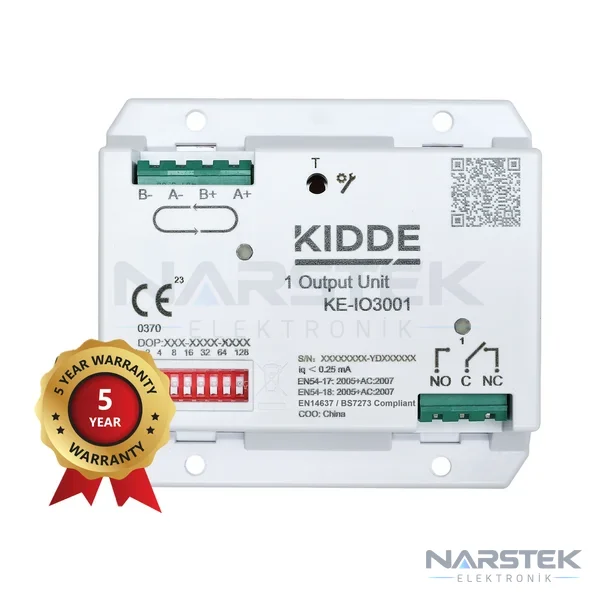
Aritech Excellence KE-IO3001 Addressable Relay Output Module
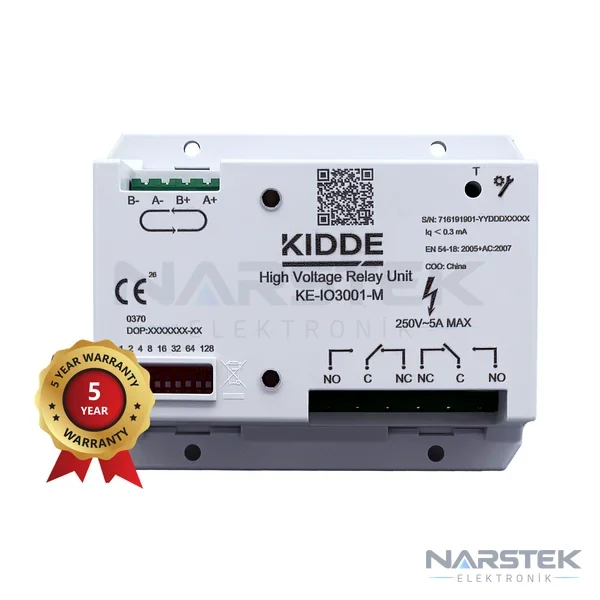
Aritech Excellence KE-IO3001-M Addressable Mains Switching Relay Module
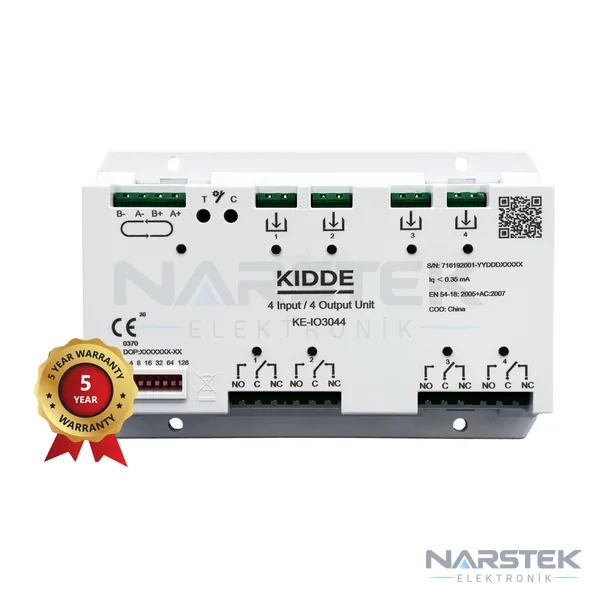
Aritech Excellence KE-IO3044 Addressable 4-Input / 4-Output Module
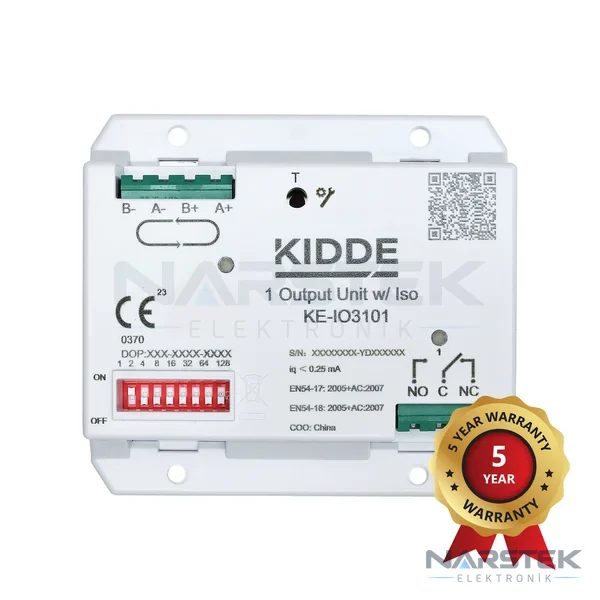
Aritech Excellence KE-IO3101 Addressable Relay Output Module with Isolator
Request a site survey and quote for your project
Tell us about your building, existing system and requirements; together, we can determine the right solution.