
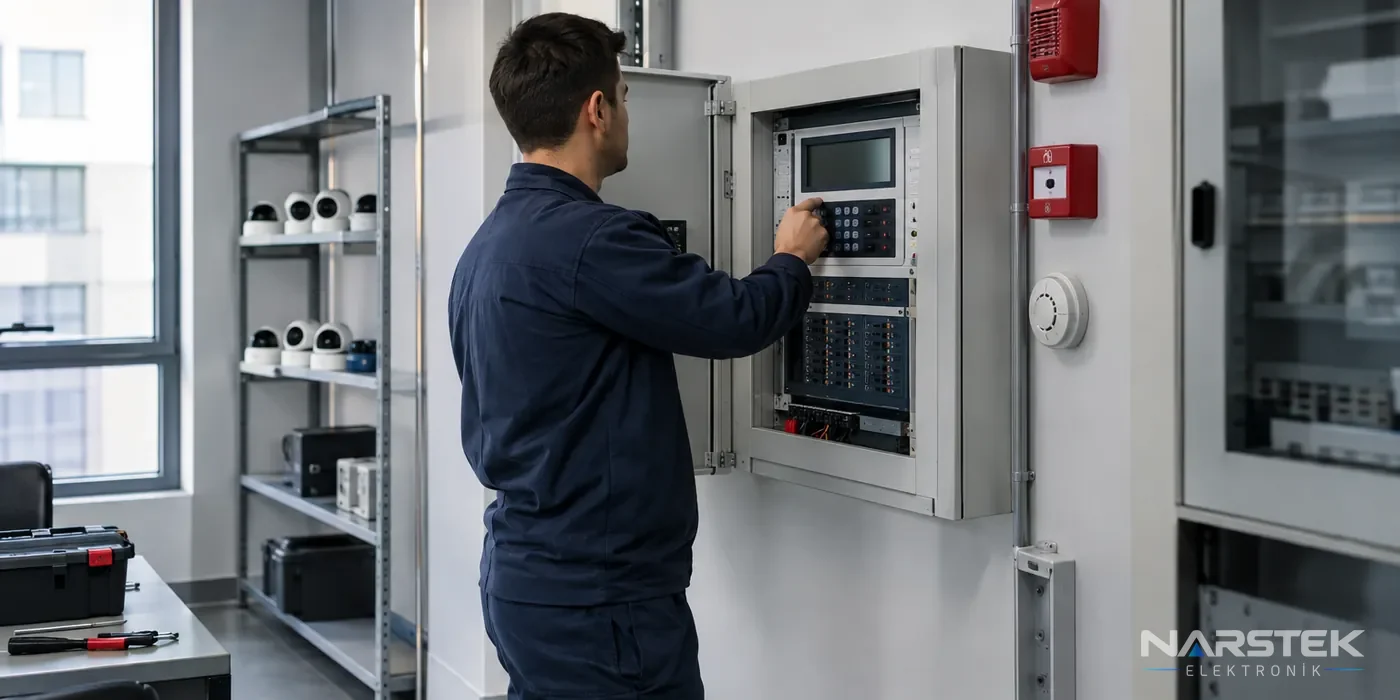
Law No. 7579 provides for periodic fire safety inspections in buildings with an occupancy permit, following an application by the building owner. Inspections are carried out by the municipal fire department or, where deemed necessary by the fire department, by fire safety experts authorised by the Ministry; a fire safety report is issued following the compliance assessment.
If deficiencies are identified during the inspection, they must be rectified within the period set by the relevant authority. This period may not exceed six months. The inspection intervals and other details of implementation have not yet been finalised. Building managers can therefore organise system records and technical documents in advance.
Which buildings are covered by Law No. 7579?
The law entered into force upon publication in the Official Gazette dated 22 May 2026, No. 33261, and added new provisions to Zoning Law No. 3194. The regulation provides for fire safety inspections in buildings with an occupancy permit. The inspection will be carried out upon application by the building owner within the specified period.
This provision does not mean that the same inspection schedule has already begun for every building. The scope, inspection intervals and fees, as well as the qualifications of fire safety experts, will be determined by regulations issued by the Ministry. In August 2026, the Ministry of Environment, Urbanisation and Climate Change opened the draft “Regulation on Fire Safety Expertise and the Procedures and Principles for Periodic Inspections” for consultation. As this text is a draft, it should not be treated as a finalised implementation rule.
It would not be appropriate at this stage to give a definitive figure for the inspection interval. Until the draft and final regulations are published, a period such as “annually” or “every two years” should not be presented as a definitive statutory requirement. Building managers should follow the final text published by the Ministry and announcements from the relevant authority.
Who will carry out the inspection, and how will the report be obtained?
Under the law, inspections will be carried out by municipal fire services. Where the fire service considers it necessary, the inspection may be assigned to fire safety experts authorised by the Ministry. At the end of the inspection, a fire safety report setting out the building’s fire safety status will be issued.
If deficiencies are identified, they must be rectified within the period set by the relevant authority, and a valid fire safety report must be obtained. The period granted may not exceed six months. If a deficiency requires major alterations, the work will be subject to the relevant permit or authorisation processes. Management should therefore not treat every item in the report as routine maintenance; if structural work or work affecting the approved design is required, the process to be followed should be clarified with the relevant authority.
As the implementation details of the law have yet to be determined by regulation, the final text in force should be consulted for definitive information on matters such as the application method, application deadline and fees before an inspection. Preparing at this stage does not mean assuming an inspection date or interval that has not yet been set.
Responsibility for maintaining fire systems continues
The new periodic inspection regime does not replace existing responsibility for system maintenance. Under Article 84 of the Regulation on the Protection of Buildings from Fire, emergency lighting, directional signage, fire detection and alarm systems must undergo periodic inspection, testing and maintenance under the responsibility of the building owner and manager, or a building representative to whom that responsibility has been transferred in writing. The frequency is determined in accordance with the relevant standards and the requirements of the system; this article of the regulation does not specify a fixed maintenance interval in days or months.
A common practice on site is to supplement at least two comprehensive maintenance visits a year with regular brief checks by users. This should not be presented as a fixed number required by law for everyone. A maintenance plan should take account of the building’s systems, the manufacturer’s documentation and the relevant standards.
One issue encountered during maintenance visits is that fault warnings on the panel are not monitored for long periods, or that completed work is not recorded. Even if the alarm system appears to be working, disabled points, battery condition and line faults should also be checked. You can review the maintenance steps for fire detection systems using the fire alarm system maintenance checklist. The Security Systems Service and Maintenance page can also be used to arrange a service visit.
Pre-inspection preparation checklist
Until the inspection procedure is finalised, use the following list as a preliminary preparation exercise. This is not a definitive inspection form set out in the draft regulation. The aim is to organise the condition of the systems and the existing building documents.
- Check that the fire alarm system is operational. Check whether the panel shows any persistent faults or disabled-system warnings. Keep the test and maintenance records for detectors, manual call points, sounders and other components together.
- Gather the design and installation documents. Keep the fire detection system design, any installation or revision documents, and maintenance reports in an accessible file. Check that any subsequent changes to the building are consistent with the existing design.
- Inspect emergency lighting and directional signage. Check the condition of the luminaires and directional signs; file test and maintenance records alongside the documents for other relevant systems.
- Review fire suppression equipment. Check the visible condition, maintenance documents and accessibility of fixed fire suppression systems and other fire extinguishing equipment in the building. Record any missing items or issues requiring attention.
- Assign a person responsible and a date for each deficiency. Identify a person responsible for each issue found and document the work carried out. For issues that may require major alterations, check with the relevant authority whether a permit or authorisation is required before starting work.
- Plan access for the inspection day. Arrange access to the panel, plant rooms and areas containing system components. Ensure that someone from building management or the technical team is present during the inspection.
This preparation helps identify deficiencies before the inspection date and makes it easier to provide any information that may be requested during the reporting process. If the alarm system has a fault or incomplete maintenance records, you can submit a request to the technical service team using this form.
Do not confuse the new inspection regime with the deadline of 31 December 2025
The period granted for certain deficiencies in existing buildings was based on an amendment to the regulation made by Presidential Decision No. 10026. The amendment was published in the Official Gazette dated 1 July 2025 and numbered 32943. Provisional Article 4, which was added by the amendment, required deficiencies involving processes for procuring materials to be rectified by building owners and managers and heads of institutions by 31 December 2025, after which the authorities responsible for issuing occupancy permits were to carry out inspections.
This period has expired and, as of November 2026, no new extension has been incorporated into the regulation. Do not treat this inspection process as the same procedure as the periodic inspection regime for buildings with occupancy permits introduced by Law No. 7579. For further details about the previous deadline and amendment, you can read the article on the Decision No. 10026 and Provisional Article 4.
Contact Narstek for information about maintenance and site surveys
Narstek Elektronik is based in Istanbul and provides site surveys, design, installation, maintenance and fault repair services for fire detection and alarm systems. It also offers service and project support for public address, fire suppression, carbon monoxide detection, CCTV, and access control systems. Project design and product supply can also be provided for work outside Istanbul.
For a maintenance request or site survey, please provide the building’s use, its province and district, an approximate number of floors or floor area, the make and model of the existing fire alarm control panel, and any available drawings or the latest maintenance report. Please also include any fault indications you are aware of and the service you require. This information helps us make an initial assessment with the right scope. You can use the Request a Survey / Quote form, call 0212 424 07 24, or message us on WhatsApp at 0540 001 07 24.
Frequently asked questions
How often will periodic fire safety inspections be carried out?
Inspection intervals have not yet been finalised. The procedures and principles opened for consultation by the Ministry are still in draft form; until the final regulation is published, do not treat any specific interval in years or months as definitive.
Who will carry out the inspection, and what report will be issued?
Inspections will be carried out by municipal fire departments or, where deemed necessary by the fire department, by fire safety experts authorised by the Ministry. A fire safety report will be issued following the inspection.
How much time may be allowed to rectify deficiencies?
Deficiencies must be rectified within the period set by the relevant authority, and a valid fire safety report must be obtained. The law provides that this period may not exceed six months.
Is there a fixed interval for fire alarm system maintenance?
Article 84 of the regulation does not set a maintenance interval in days or months; it requires periodic inspection, testing and maintenance of the system in accordance with the relevant standards. Comprehensive maintenance at least twice a year is common practice in the industry, but this is not a mandatory frequency set by legislation for everyone.
Share the panel brand, number of devices and address, and we’ll get back to you about a site survey and quote.