When selecting a Dahua camera system, first identify the existing cabling infrastructure, the areas to be monitored and the recording requirements. IP cameras require an NVR, while HDCVI and other analogue HD cameras require a DVR or compatible XVR. WizSense and WizMind features affect how footage is analysed and which events can be searched for in recordings.
There is no need to use the same technology for every camera in a building. Cabling, image resolution, low-light conditions and remote access requirements should all be considered together. At Narstek, we clarify these points during the site survey and help you select compatible cameras and a recorder.
IP camera or HDCVI?
IP cameras operate over a network. PoE-enabled models can receive both data and power over a single Ethernet cable connected in accordance with the IEEE 802.3af/at standard. These cameras connect to an NVR. The network infrastructure, camera locations and connections to the recorder should all be considered in the cabling plan.
HDCVI cameras are part of the analogue HD camera range and operate over coaxial cable. Footage is recorded by a DVR or XVR. This setup may be suitable for businesses wishing to reuse existing coaxial cables; however, check the manufacturer’s documentation to confirm that the camera and recorder are compatible in terms of resolution and connections.
For a more detailed comparison of IP and analogue HD systems, see our article IP cameras or analogue HD cameras. You can also browse the IP Cameras and Analogue HD Cameras categories to explore the product ranges.
The difference between WizSense and WizMind
WizSense offers smart detection features designed to distinguish between targets such as people and vehicles. For example, the IPC-HDBW3441DR1-AST-4G model in the catalogue includes detection features that support human and vehicle classification. These functions may be useful where footage needs to be searched by target type. Check the model documentation to confirm the scenarios in which each feature can be used.
WizMind products include analytics features such as facial recognition, perimeter protection, smart motion detection and AcuPick in the catalogue examples. For instance, the NVR5816H-XI is listed with facial recognition and perimeter protection, as well as support for 16 channels and up to eight HDDs. The NVR5832H-XI is listed for recording up to 32 IP camera channels and includes SMD with human and vehicle classification.
Use this distinction as a starting point to help guide your selection. Target classification may be sufficient for a few entrance and perimeter cameras; at a site where recordings will be searched extensively or more analytics are required, the recorder and camera features should be assessed together. Before the project begins, confirm whether the analytics feature is available on the camera or recorder and which functions work with the selected model.
When should a hybrid XVR recorder be considered?
An XVR is a hybrid recorder option that can be considered for bringing different camera types together within the same recording system. Suitable devices may be worth considering for businesses that want to retain existing coaxial cabling while adding IP cameras. However, “hybrid” does not mean that every XVR supports every camera type and resolution.
Before purchasing, check the manufacturer’s documentation to confirm the signal types supported by the device, its available channel configuration, IP camera support and recording resolution. In addition to the number of cameras, allow for any points that may be added in the future. The Dahua NVR models in the catalogue are designed for network cameras; as no XVR models are listed, the choice of an analogue or hybrid recorder should be made separately to suit the project requirements.
You can view the available options on the Recorders (NVR / DVR) page. For projects requiring movable cameras, you can also browse the PTZ and Speed Dome Cameras category.
DMSS app and remote access
DMSS can be considered for mobile access to Dahua systems. Before installation, check that the selected camera and recorder are compatible with the app, confirm the network connection and review user access permissions. In addition to live viewing, check whether recordings can be viewed in the app for the specific device model.
The needs of a business owner, technical manager and building manager may differ. Rather than giving every user the same permissions, decide during installation who will view footage and who will manage system settings. When setting up the mobile connection, follow the manufacturer’s instructions for network and account security, and test the connection on site with the user.
How is recording capacity calculated?
Recording duration depends on disk capacity, the number of cameras, the bitrate per camera and the number of recording hours per day. A simple calculation is: disk capacity ÷ (number of cameras × bitrate × recording hours). For the result to be meaningful, the units must first be converted to the same system.
For example, a camera recording continuously at 4 Mbps produces approximately 43 GB of data per day: 4 Mbit/s × 86.400 seconds ÷ 8 ≈ 43.200 MB. H.265 or H.265+ compression can significantly reduce disk requirements compared with H.264. Motion-triggered recording and smart codecs can also reduce consumption; actual recording duration varies according to image content and configuration.
Surveillance-grade hard drives suitable for 7/24 operation should be used in recorders. When determining the number and capacity of the disks, consider the current recording target as well as the number of cameras, bitrate and recording schedule. For calculations, see our article Camera Recording Duration and HDD Capacity.
Dahua Products from the Catalogue
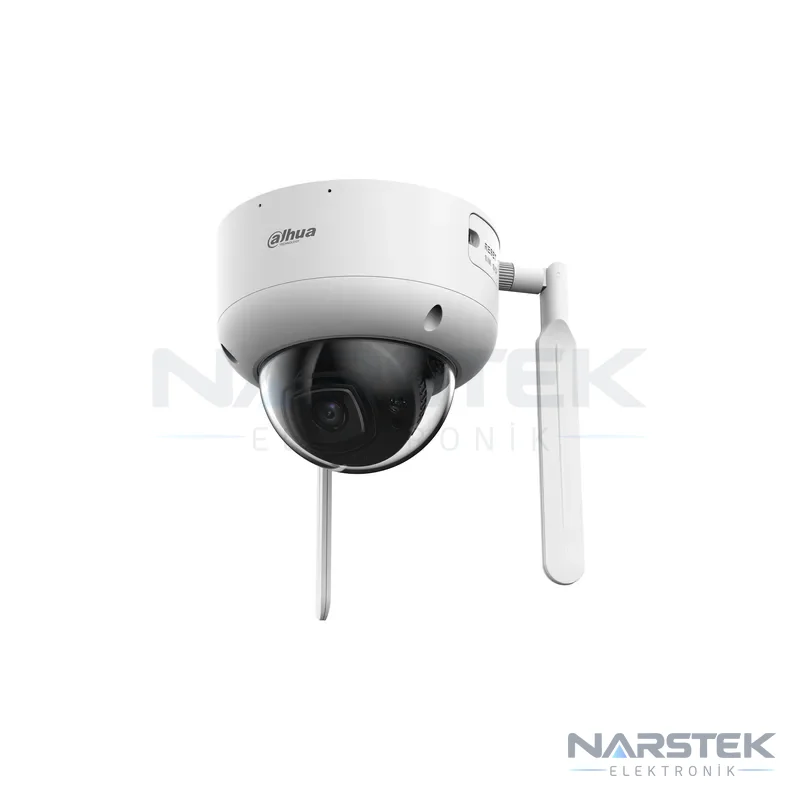
- Dahua IPC-HDBW3441DR1-AST-4G, a 4 MP WizSense dome IP camera with 4G connectivity. It may be suitable for locations where access to a network cable is limited.
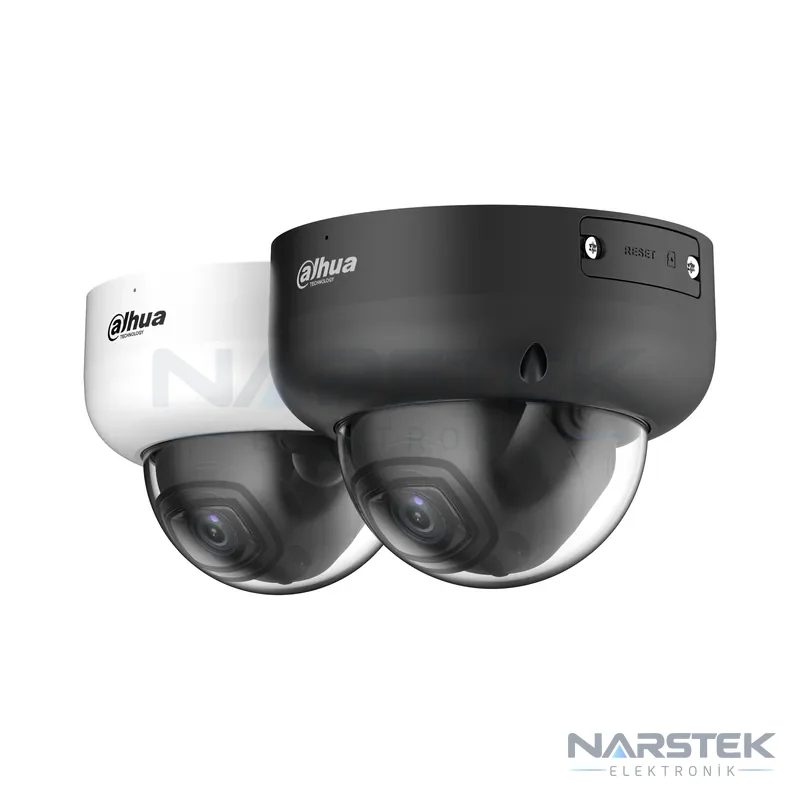
- Dahua IPC-HDBW5441R-ASE-HDMI, a 4 MP WizMind dome IP camera. The product information specifies an HDMI output and AcuPick functionality.
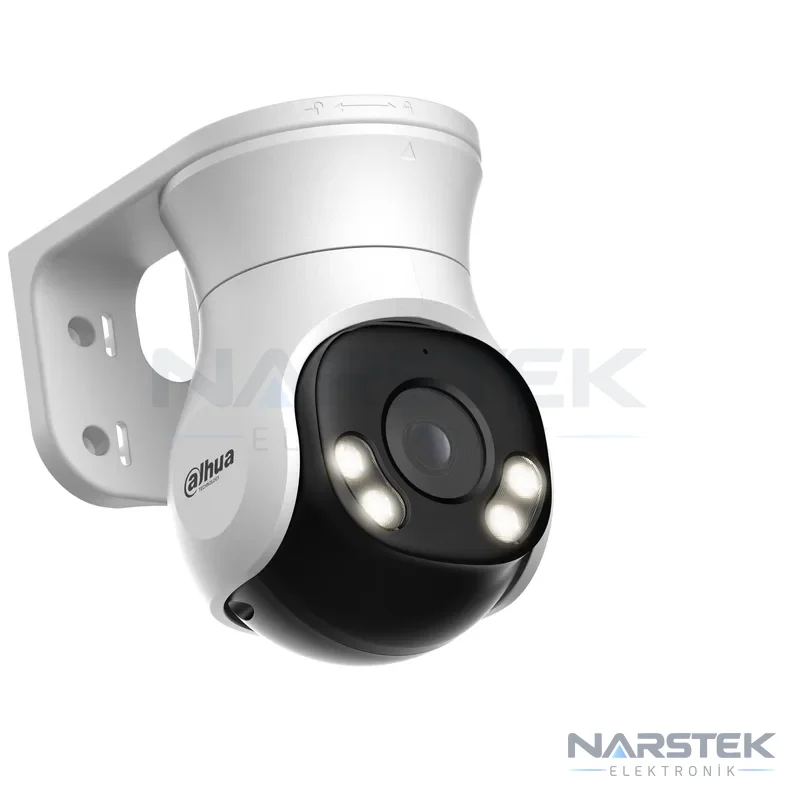
- Dahua HAC-PT1500A-IL-A, a 5 MP HDCVI PT camera. It features pan and tilt movement, a built-in microphone, and IR and warm-light support up to 40 metres.
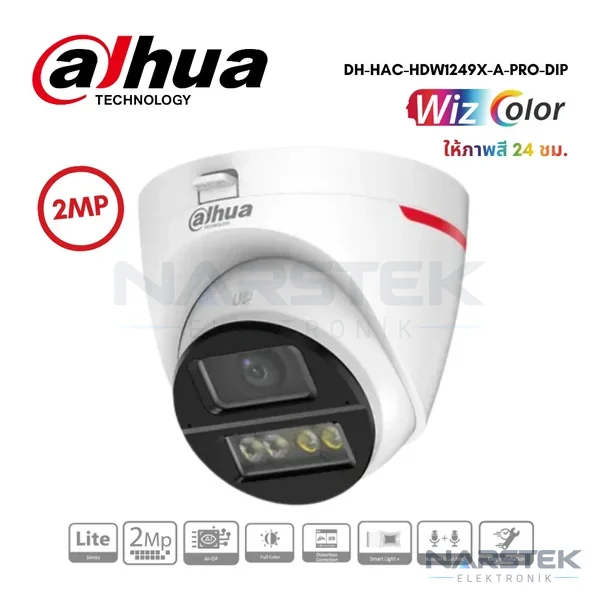
- Dahua HAC-HDW1249X-A-PRO, a 2 MP WizColor HDCVI fixed-lens camera. The product description specifies colour imaging in low light, warm light and dual built-in microphones.
- Dahua NVR5832H-XI, a WizMind network video recorder listed with recording for up to 32 IP camera channels, eight HDD bays and advanced analytics features.
Compare the model information on the Dahua products page with the camera and recorder requirements for your project. Catalogue specifications alone do not confirm system compatibility; the devices must be checked for interoperability before a quote is prepared.
Arrange a site survey and quote with Narstek
Narstek Elektronik Bina Teknoloji San. ve Tic. Ltd. Şti., based in İstanbul, provides CCTV camera site surveys, installation, maintenance and fault repairs, and supplies products and delivers projects across Türkiye. Find out about our CCTV Camera Installation and Maintenance service for your project, or complete the site survey and quote form.
For an initial assessment, please share the approximate number of camera locations, the types of existing cameras and cabling infrastructure, how the areas will be used, the required recording duration and whether remote access is needed. If available, include the model and disk capacity of the existing recorder. You can contact us on 0212 424 07 24 or via WhatsApp on 0540 001 07 24. Our address is Tevfikbey Mah. Halkalı Cad. No:112 Nazlı İş Merkezi Kat:3 Ofis No:64 Küçükçekmece / İstanbul, and our e-mail address is info@narstek.com.
Frequently asked questions
What is the main difference between WizSense and WizMind?
WizSense products may include smart detection features such as human and vehicle classification. WizMind product examples include broader analytics functions such as facial recognition, perimeter protection and AcuPick; check the datasheet for the exact features of each model.
Can HDCVI cameras be used with existing coaxial cable?
HDCVI cameras operate over coaxial cable and are recorded by a DVR or compatible XVR. Before installation, check the condition of the existing cable and confirm that the camera and recorder are compatible in terms of signal and resolution.
What is the difference between an XVR and an NVR?
An NVR is used to record footage from IP cameras over a network. An XVR may be used in hybrid systems; the supported camera types and channel configuration vary by model, so check the device documentation.
How much disk capacity is needed for camera recordings?
Capacity depends on the number of cameras, bit rate, recording hours per day and the required retention period. A camera recording continuously at 4 Mbps produces approximately 43 GB of data per day; H.265/H.265+, motion recording and codec settings can affect storage requirements.
Share the panel brand, number of devices and address, and we’ll get back to you about a site survey and quote.