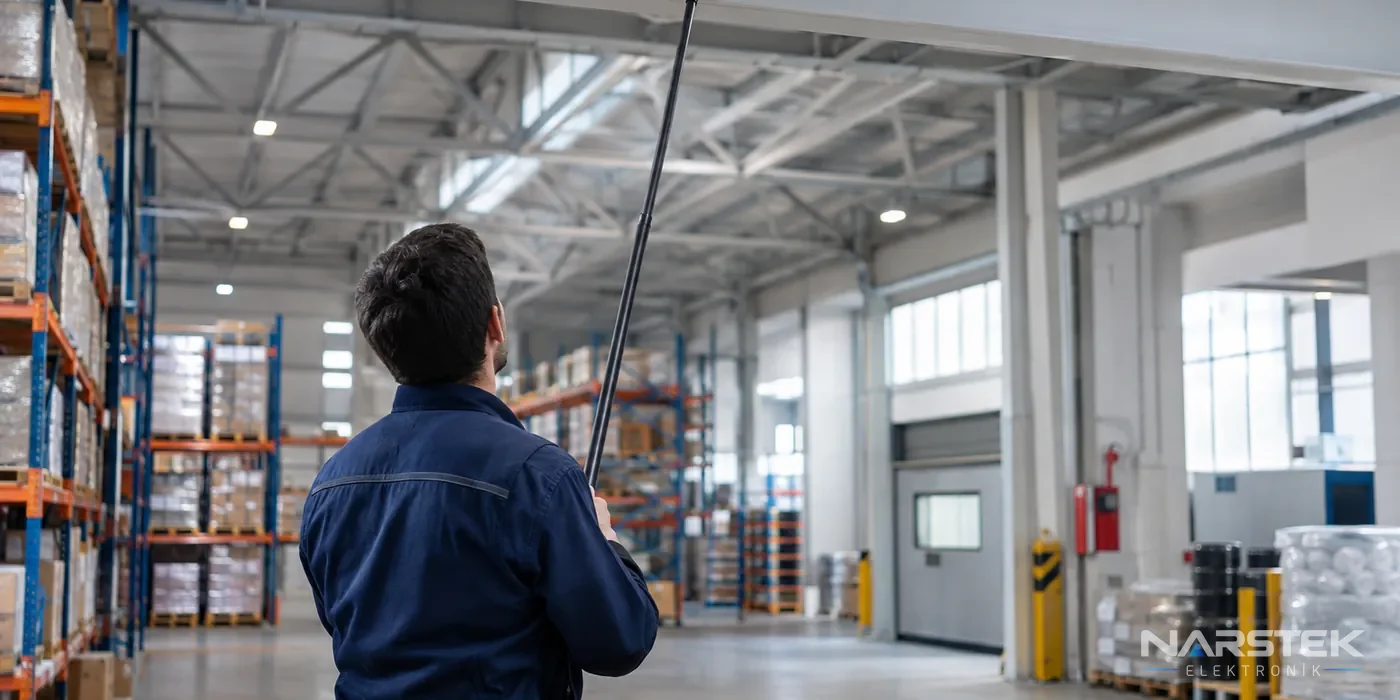
In factories and warehouses with high ceilings, the detection method is selected based not only on the height of the area, but also on how smoke moves, dust and temperature conditions, and machinery layout. When designing a factory fire detection system, beam detectors, aspirating systems and heat detectors should be assessed in relation to the facility’s operating conditions, rather than in isolation.
The first step is to divide the site into areas and identify the risks and operating conditions in each. Production lines, racked storage, loading areas, dust collection sections and areas classified as hazardous atmospheres may require different detection approaches.
Detection methods for areas with high ceilings
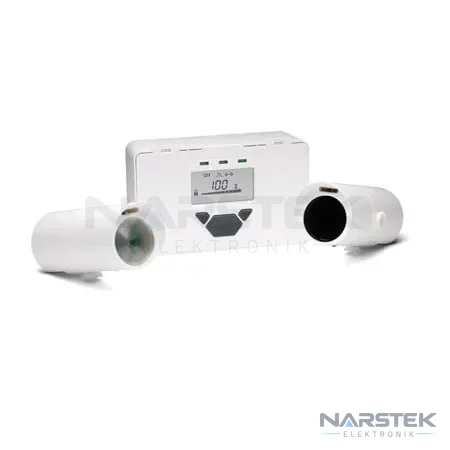
Beam detectors may be considered for large, high-volume spaces where access to ceiling-mounted point smoke detectors is difficult. These devices monitor changes caused by smoke along the beam path between the transmitter and receiver. Their position should be designed so that racking, crane routes and air movement inside the building do not obstruct the detection area.
Beam detectors require correct alignment and commissioning. Models that can be tested from floor level may make maintenance easier in areas with high ceilings; however, operating conditions and installation limits should be checked against the manufacturer’s documentation. For example, Apollo 29600-929 is a conventional end-to-end beam detector for large, high spaces. For a reflective type, Apollo 29650-069 may be considered, while the Mavili ML-1170 / ML-1173 series is an addressable option.
In aspirating systems, air samples are transported through a pipe network to the detector unit. This method may be considered as part of the design where direct access to the device is difficult or early warning is required. Pipe routing, sampling points, ambient dust and maintenance access should all be considered together. Aspirating detectors are covered by EN 54-20; the appropriate device and design depend on the project.
Consider dust, temperature and process conditions
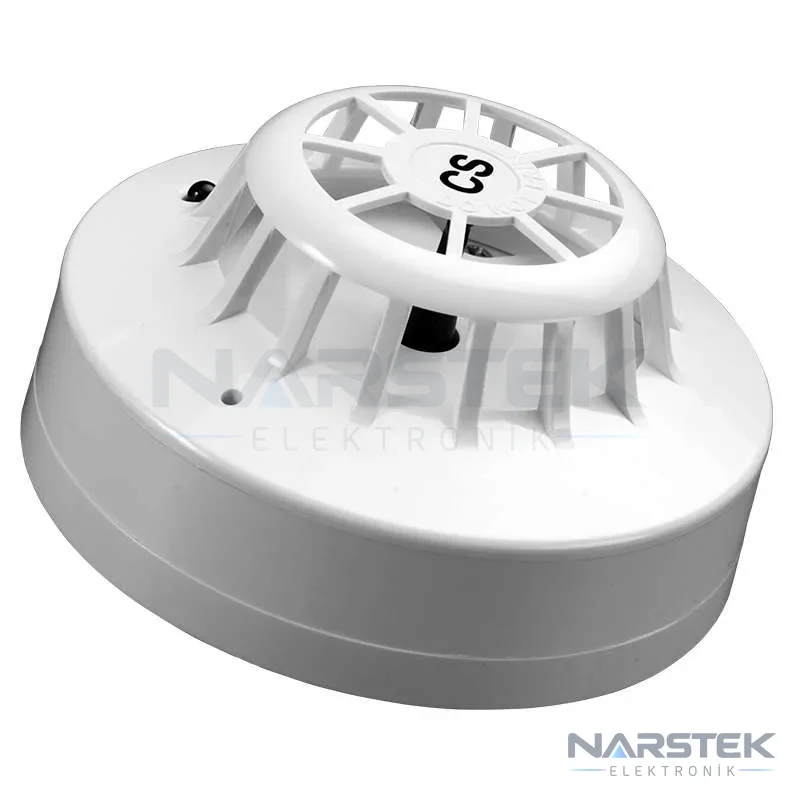
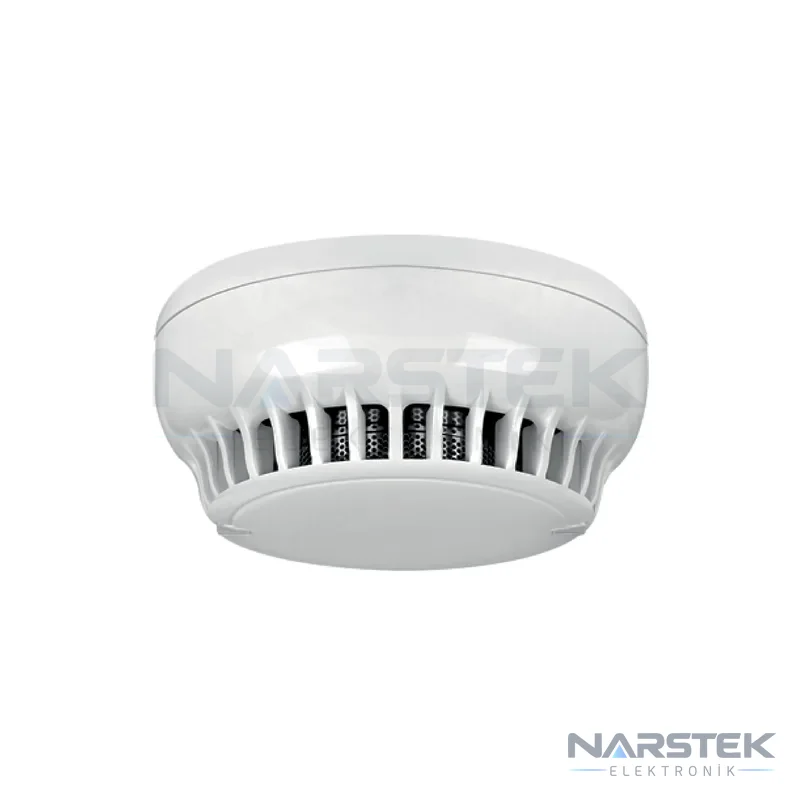
In dusty production areas, the selection and positioning of smoke detectors may lead to false alarms or increased maintenance due to particles present in the air during normal operation. The detector type, mounting point and cleaning schedule should be determined according to actual site conditions. A heat detector may be considered in areas where smoke detection is deemed unsuitable; this choice should take into account how early-stage fires will be detected and the normal temperature variations in the environment.
Fixed-temperature or rate-of-rise models are selected according to different operating conditions. For example, C-TEC 55000-137APO is a heat detector that responds to both fixed temperature and temperature rise. Teknim TFD-4245 is used to detect temperature rise in conventional systems. Their suitability for a particular area should be determined after verifying the product information and project requirements.
Steam, exhaust, hot air currents and machine-induced vibration should also be noted during the site survey, in addition to dust. If the detector location is selected using only the plan, site conditions may be overlooked. Find out more about our fire detection and alarm systems service for site surveys and design.
Device and system compatibility in hazardous areas
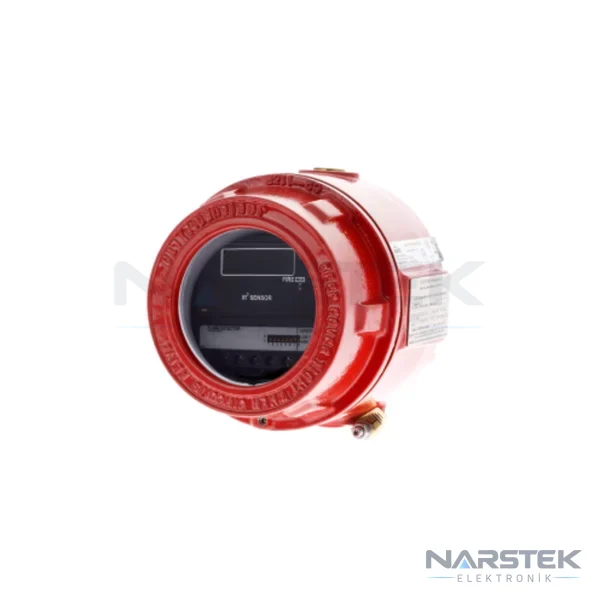
Devices used in areas with a risk of explosive atmospheres must be suitable for the area classification and the relevant project requirements. The term “explosion-proof” alone is not enough to make a selection; the device approvals, conditions of use and system connections should be checked against the manufacturer’s documentation. Projects and installations in these areas should be assessed by competent technical teams.
Bosch 016519 Ex d IR3 is designed to detect flames in areas where explosive atmospheres may be present, and its product information lists ATEX and IECEx approvals. If gas monitoring is required, the gas type and site conditions should be assessed separately. For example, Finder PE KAYO-3012 is a gas detector offered for the continuous measurement of LPG and other explosive gases in hazardous areas. Fire detection and gas detection are not the same function; they can be designed separately according to the facility’s requirements and integrated using suitable interfaces.
How alarms affect machinery and ventilation scenarios
The detection system should not be designed solely to activate sounders. The project and operating scenario should define which machines will stop, which ventilation or smoke-control equipment will operate, and which doors or processes will be affected in the event of a fire alarm. Stopping all machinery for every alarm may not be appropriate; production safety and process requirements should be assessed with the operating team.
The panel can run control scenarios through suitable input/output modules. The scenario should be tested on site to confirm that the alarm originates from the correct area and that the relevant equipment responds as expected. The status of flow switches in the sprinkler system can also be monitored at the fire panel. The way the flow-switch signal is incorporated into the alarm scenario should be clearly shown in the system design.
In an addressable system, each device appears at the panel with its own address; in a conventional system, devices are monitored by zone. Addressable detectors and modules depend on the panel protocol, and compatibility between devices from different brands should not be assumed. A loop circuit is a ring supplied from both ends; isolators help protect the remaining section of the circuit in the event of a short circuit. The use of fire-resistant, halogen-free cable for fire alarm circuits should be considered in accordance with the project requirements. You can also read about the differences between addressable and conventional systems when selecting a system.
Periodic inspection and project requirements
Under the 18 February 2022 amendment to the Regulation on Health and Safety Conditions in the Use of Work Equipment, fire detection and alarm systems in workplaces are subject to periodic inspection. The inspection is carried out once a year in accordance with the installation design and TS CEN/TS 54-14. It assesses the system’s compliance with its design, the regulation and relevant standards.
Under the amendment published in Official Gazette No. 33116 dated 23 December 2025, an installation design is required for the periodic inspection of fire mechanical installations and fire detection and alarm installations. Installations without a design must be designed by the employer in accordance with the Regulation on the Protection of Buildings from Fire and relevant standards. The professional groups eligible to carry out periodic inspections include electrical engineers, electrical and electronics engineers, relevant technical teachers and technicians, and authorised electronics engineers. For details, see our article on periodic inspection of fire detection systems in workplaces and the design requirement.
During maintenance and inspection preparation, compare the device addresses or zones shown in the project documentation with those displayed on the panel. Review the alarm, fault and monitored input records; check the sprinkler flow switch and the defined machinery and ventilation scenarios in accordance with the test procedure agreed with the client. Battery capacity is calculated based on the standby and alarm periods; panel batteries are generally 12 V VRLA type and are replaced approximately every 3-5 years, as recommended by the manufacturer. The power supply is covered by TS EN 54-4.
Request a Site Survey and Quote from Narstek
Narstek Elektronik provides site surveys, design, installation, maintenance and fault repair services for fire detection systems, based in Istanbul; design and product supply are available across Türkiye. When requesting a quote for a factory fire detection system, please share the site address, approximate floor area and ceiling height, areas of use, the make and model of the existing panel, and any existing installation drawings.
Please also specify any areas considered dusty or potentially explosive, sprinkler flow switch connections, and any machinery and ventilation equipment that should stop or operate when an alarm is raised. If a system is already in place, panel fault information and the latest inspection records can help with planning the site survey. You can complete the Survey and Quote Form, call 0212 424 07 24 or message us on WhatsApp at 0540 001 07 24.
Frequently asked questions
Should a beam detector or an aspirating system be selected for a high-ceiling warehouse?
The choice depends on the ceiling and racking layout, air movement, dust levels, access and the desired detection approach. These conditions should be assessed during a site survey, and the appropriate system selected as part of the design.
Can smoke detectors be used in a dusty production area?
Their suitability and placement are determined by assessing the dust and particulates generated during normal operation. Maintenance and cleaning requirements should also be included in the design; heat detection and other options can be considered if necessary.
How often should a workplace fire detection system undergo periodic inspection?
According to the regulatory information provided, a periodic inspection is carried out once a year and is based on the installation design and TS CEN/TS 54-14. The amendment dated 23 December 2025 also stipulates that the installation design must be available during the inspection.
Can addressable detectors from a different brand be added to an existing fire alarm control panel?
Addressable detectors and modules depend on the panel’s communication protocol; products from different brands should not be assumed to be compatible. The decision should be made after checking the panel model and the manufacturer’s compatibility information.
Share the panel brand, number of devices and address, and we’ll get back to you about a site survey and quote.