
A hospital fire alarm system should provide early warning of fire and support evacuation in accordance with the building’s evacuation plan. In hospitals, evacuation is often planned in phases, starting with the area affected by the fire and proceeding in a controlled manner, rather than evacuating the entire building at once.
How this plan works depends on the building’s compartmentation, fire strategy and clinical requirements. The alarm system, public address system and hospital teams should be considered together; implementation should be determined with the authorised project team and healthcare staff.
How phased evacuation is planned
In a phased evacuation, the area where the alarm was triggered is clearly identified on the panel. The initial response is carried out by the teams in the relevant area, in accordance with hospital procedures. Movement to areas around the zone affected by fire and smoke follows the sequence set out in the approved strategy. Where the building layout permits, patients may first be moved to a safe area on the same floor; subsequent evacuation steps depend on how the incident develops and the decisions of the responsible teams.
The fire alarm control panel should not be expected to make evacuation decisions on its own. It reports the location of the incident and activates the configured outputs; the scope and sequence of evacuation should be set out in the building’s fire strategy. The technical team, security, clinical leads and emergency response teams should agree in advance which announcements the alarm will trigger in each situation.
- Floor, clinic, ward and plant-room names are configured on the panel so that staff can understand them easily.
- The strategy describes each step separately, such as the initial alarm, staff alert and evacuation announcement.
- The relationship between the alarm and fire doors, smoke control and other relevant systems is defined as part of the project.
- The strategy is tested through drills and updated when responsibilities change or alterations are made.
Staged evacuation does not mean delaying the alarm. Detection and alarm operation must follow the principles set out in the project; any delay or staff approval step must be clearly defined in the authorised fire safety plan.
Alarm Strategy in Intensive Care Units and Operating Theatres
Patients in intensive care units, operating theatres and similar departments may have limited ability to evacuate independently. Evacuation plans should therefore be developed with clinical teams and define patient transfer responsibilities, the equipment required, safe routes and backup staffing arrangements. The fire alarm system does not replace these duties; it helps staff identify an incident promptly and receive accurate information about its location.
The audibility of audible warnings in operating theatres and intensive care units, how staff can receive alarms without disrupting their duties, and which areas announcements will cover should all be assessed. The selection and positioning of audible and visual warnings should reflect the use of the area and the project requirements. Operations such as silencing or disabling the alarm, or transferring it to another system, should be restricted by procedures for authorised personnel.
Patient rooms, corridors, nurses’ stations, laboratories, kitchens, storage areas and plant rooms do not have the same conditions of use. The choice of smoke, heat or other detection type should reflect the characteristics of the environment. For example, EN 54-7 covers smoke detectors, EN 54-5 heat detectors, EN 54-3 audible warning devices and EN 54-23 visual warning devices. The appropriate device type and positioning should be determined by the project calculations and manufacturer’s documentation.
Addressable Systems, Event Logging and Public Address
In an addressable system, each device appears at the panel under its own address. This makes it easier to identify which detector, call point or module has triggered an alarm or fault. In a conventional system, devices are monitored by zone, so the location of an event is limited to the relevant zone information. In buildings with many departments and areas of use, such as hospitals, an addressable system can make it easier to identify the location of an incident. The selection should be based on the size and design of the building.
Addressable devices and modules must be compatible with the panel’s communication protocol. Devices from different brands do not always work together, so compatibility information from the panel manufacturer should be verified before products are selected. A loop is a ring circuit fed from both ends. Isolators on the line help protect the remaining sections in the event of a short circuit. Fire alarm circuits should use fire-resistant, halogen-free cable in accordance with the project; FE180 or PH120 classes are examples that may be encountered in relevant applications.
Event logs are used to review alarm and fault history, identify recurring issues and document maintenance work. The retention of and access to records should be governed by the organisation’s procedures. System design should also address how events are displayed at the panel, how staff receive the information and who is authorised to review the records.
Public address integration can deliver messages suited to the alarm zones. The message content and the stage at which it is broadcast should be defined in the evacuation plan, using clear and general wording. EN 54-16 covers voice alarm control equipment. The scenario, interfaces and commissioning tests for the fire alarm and public address systems to operate together should be verified as part of the project. You can also read our article on public address and voice alarm systems.
Power Continuity and Cabling
The fire alarm control panel must have a power supply and battery arrangement that will keep the system operating in the event of a mains failure. Battery capacity is calculated according to the standby and alarm periods; the power supply is associated with the requirements covered by TS EN 54-4. Fire panel batteries are generally 12 V VRLA lead-acid batteries. Replacement timing should be determined in line with the manufacturer’s recommendations; an interval of approximately 3-5 years should be treated as general practice, not a fixed period for every battery.
During maintenance, the battery condition, connections, panel fault records and circuit operation are checked. The hospital management’s procedures should specify which areas will be affected in the event of a power failure or fault, and who will implement temporary safety measures. Changes to the system must be recorded, and at the end of testing it must be confirmed that any disabled sections have been returned to normal operation.
Testing and Maintenance Without Disrupting Patient Flow
Periodic inspection, testing and maintenance of the fire detection system are the responsibility of the building owner and manager, or a building representative appointed by them in writing. Article 84 of the Regulation states that maintenance and testing must be carried out in accordance with the requirements for the system set out in the relevant standards; it does not specify a fixed maintenance interval in days or months. The frequency of work should be determined in line with the system characteristics and relevant standards. At least two comprehensive maintenance visits a year, together with regular brief checks by users, are common industry practice; this should not be treated as a legally mandated frequency.
In a hospital, maintenance should be coordinated with clinical operations. Work areas should be planned in advance, the relevant department managers informed, and periods of lower patient activity considered. Before testing devices in any area, it should be agreed how alarm transmission will be maintained; if disabling part of the system is necessary, its scope, duration and responsible person should be recorded.
- The floor or department to be tested is planned together with the hospital’s technical team.
- Check alarm, fault and disabled statuses at the panel, and record the tests carried out.
- Test detectors, call points, audible and visual warning devices, and associated connections in accordance with the test plan.
- Once work is complete, check that the system is operating normally and review any remaining panel indications.
To avoid disrupting patient flow and clinical services during maintenance, planned work by section may be preferable to testing the entire system at once. The method depends on the system architecture and safety procedures. Our articles on Panel and Detector Maintenance and Choosing a Fire Alarm Panel provide further information on these technical topics.
Small facilities such as clinics and outpatient centres
In small clinics, the detection system should not be selected solely on the basis of floor area. The locations of consultation rooms, waiting areas, archives, storage rooms and technical areas should be considered together with visitor numbers and evacuation routes. A Conventional system may meet zone-based monitoring needs. An Addressable system can be considered when events need to be identified at device level or when the building layout requires it.
Before purchase, check that the existing design, panel and field devices are compatible. Adding new devices to an existing panel may not deliver the expected result if the protocols are incompatible. For site surveys, design, installation and maintenance of fire detection and alarm systems, see our fire detection services.
Request a Survey and Quote from Narstek
Narstek Elektronik Bina Teknoloji San. ve Tic. Ltd. Şti., based in Istanbul, provides site surveys, design, installation, maintenance and fault repair services for fire detection and alarm systems. Projects and products are supplied across Türkiye. To ensure the quote is prepared for the correct scope, please provide the site address, type of use, number of floors and sections, existing panel make and model, and the number of devices, if known. Please also include any existing design, maintenance report, panel fault log and details of the requested work, if available.
You can complete the site survey / quote form or call 0212 424 07 24. You can also reach us on WhatsApp at 0540 001 07 24. Narstek address: Tevfikbey Mah. Halkalı Cad. No:112 Nazlı İş Merkezi Kat:3 Ofis No:64 Küçükçekmece / İstanbul. Email: info@narstek.com.
Examples of fire panels from our catalogue
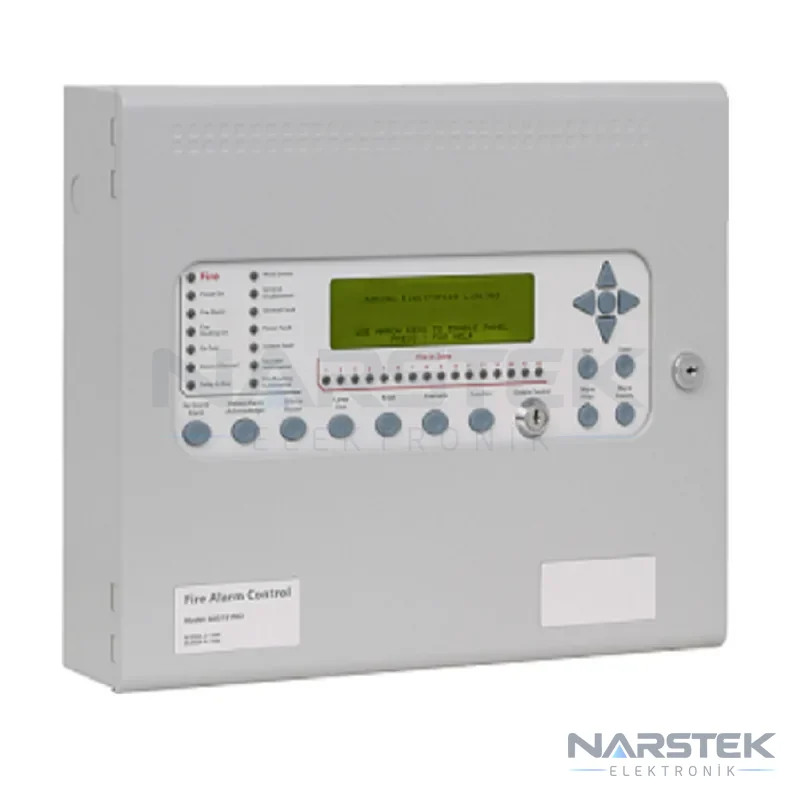
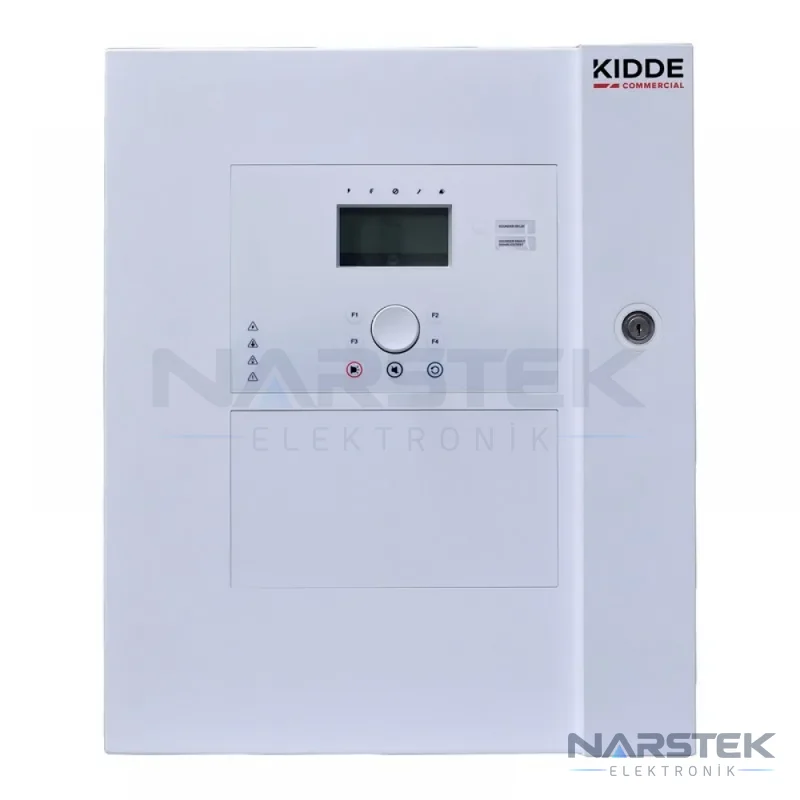
- A81161m2, Apollo Addressable fire alarm control panel.
- 2X-AF1-19, Aritech single-loop Addressable fire alarm panel.
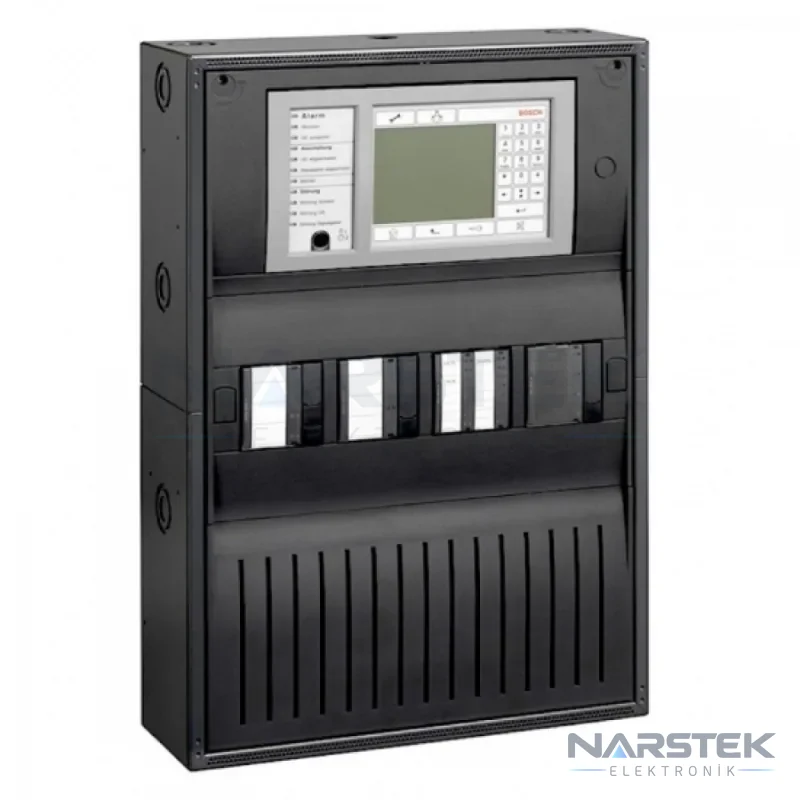
- FPA-1200-C, Bosch fire panel.
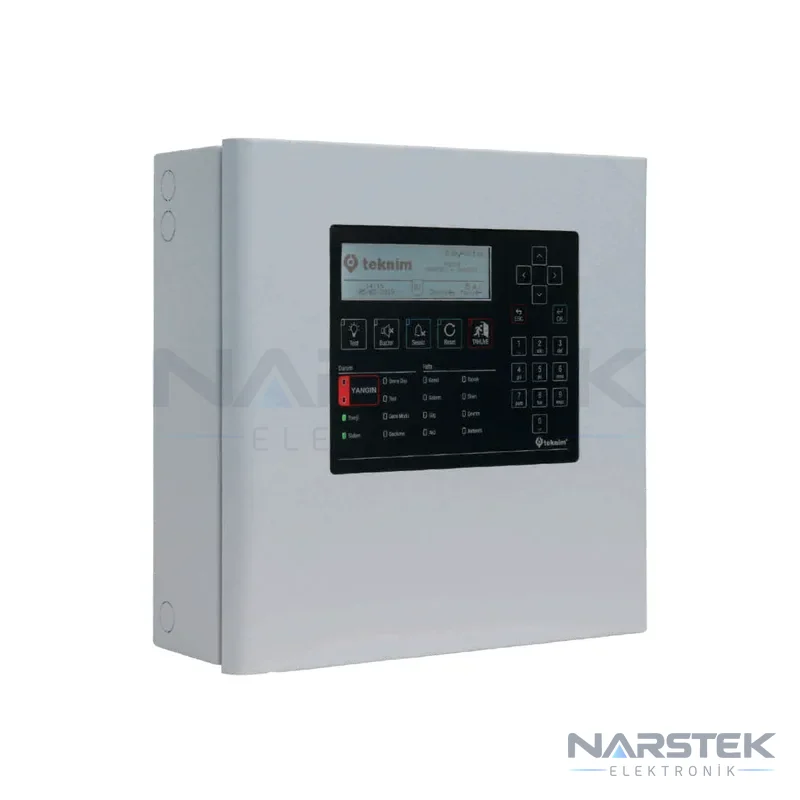
- TFP-1211, Teknim single-loop Addressable fire alarm panel.
These products may use different protocols and system architectures. Compatibility should be determined by checking the existing installation and panel details.
Frequently asked questions
Should hospitals use an addressable fire alarm system?
An addressable system identifies each device individually at the panel, which can make it easier to locate an incident. The choice should be based on the building’s size, layout, existing installation and approved project requirements.
Is the maintenance frequency for a fire alarm system fixed by regulations?
Article 84 of the Regulation defines the responsibility for periodic inspection, testing and maintenance; it does not specify a single interval in days or months. The frequency is determined in accordance with the requirements of the system and relevant standards.
When should the fire alarm panel battery be replaced?
Battery replacement is planned based on the manufacturer’s recommendations, the condition of the battery and the system’s power requirements. An interval of approximately 3-5 years is common practice; battery capacity is calculated according to the standby and alarm periods.
Can addressable detectors from different brands be connected to an existing panel?
The compatibility of addressable detectors and modules depends on the panel’s communication protocol. Do not assume that devices from different brands will work together; check the panel manufacturer’s compatibility information before making a selection.
Share the panel brand, number of devices and address, and we’ll get back to you about a site survey and quote.