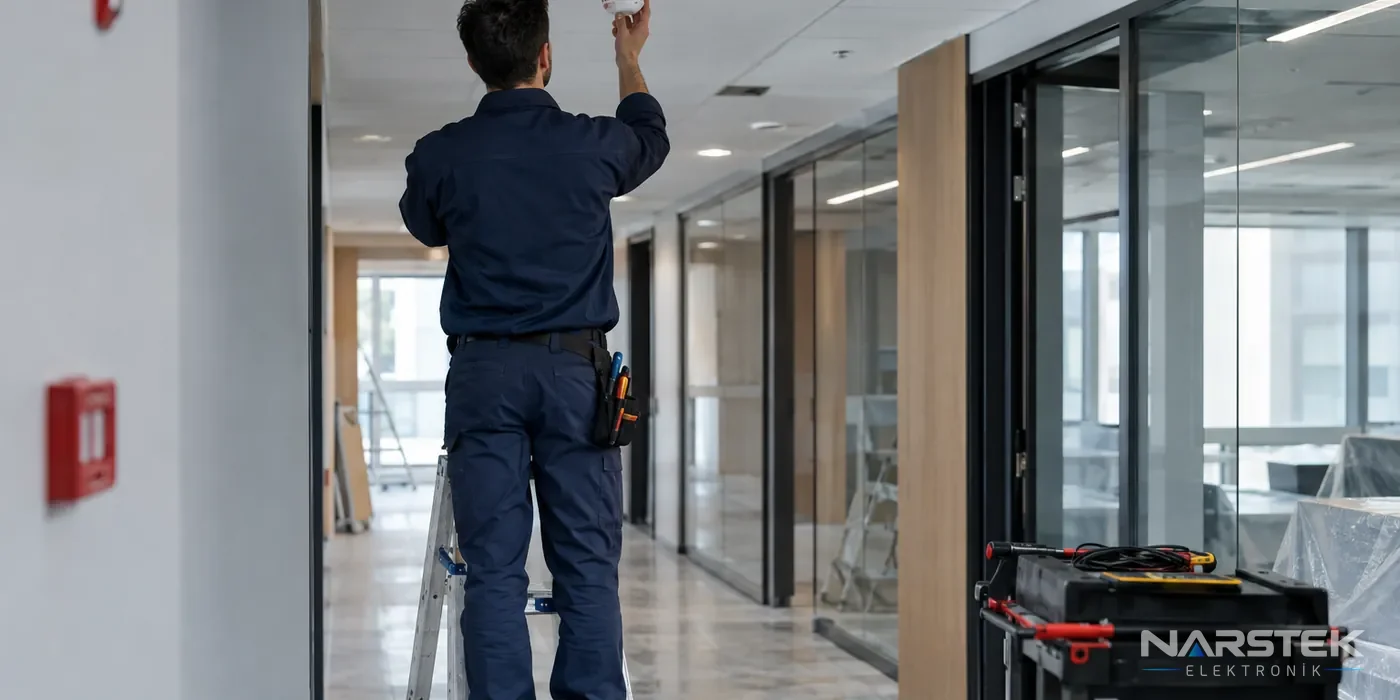
A plaza fire alarm system must remain operational during tenant fit-outs. Unauthorised removal, covering or disabling of detectors may cause a fault on the panel or prevent an alarm from being detected. Before and after the fit-out, detection points, cabling and fire scenarios should be checked together.
In offices and shopping centres, common areas and tenant areas may be managed by different teams. It is therefore important for the building management, the tenant's technical team and the fire alarm system maintenance provider to draw up a written work plan and record any changes.
How are detectors protected during a tenant fit-out?
During ceiling renovations, the addition of partition walls, lighting changes or painting, detectors may be removed or covered to protect them from dust. If a detector is not re-enabled after the work, it may appear faulty on the panel or detection may remain disabled. Covering a detector can also affect its performance.
Before work begins, identify the existing devices and circuits in the tenant area. The building management should agree which devices will be disabled, why and for how long; an authorised technical team must carry out the disabling. If this could affect alarms in other parts of the building, the affected areas and any temporary precautions should also be planned.
- Record the condition of detectors, manual call points, sounders and modules before the fit-out.
- Decide how devices will be protected during dusty work and when protective covers will be removed.
- Once the work is complete, verify that the devices have been refitted and are in their normal state on the panel.
- If new partition walls or changes in use affect the detection layout, check the design and fire scenarios.
A device appearing on the panel does not, by itself, mean that detection at that point is working correctly. After the fit-out, test the devices and check the panel; record the results in the maintenance or commissioning records. A site survey, installation, maintenance or fault repair can be arranged through our fire detection and alarm services.
Assess suspended ceilings and ceiling voids together
A new suspended ceiling may sit between a detector and the space it is intended to protect, changing the detector's location and how it detects a fire. The detector may end up at the wrong level relative to the ceiling, a new partition may separate it from the area it needs to cover, or the work may create an enclosed void containing cables and equipment. Compare the existing layout with the new architectural plans.
It would not be accurate to state that every ceiling void automatically requires a detector. The void's construction, the services running through it, the fire load and the approved design must be assessed. If necessary, detection above the ceiling should be considered separately; during maintenance, check access to and test both the visible ceiling devices and any concealed-void devices shown in the design.
Before closing up a ceiling in a tenant area, inform the building management or maintenance provider. If a detector needs to be relocated, do not extend its cable or move it to a nearby location without proper assessment. Any change should be evaluated in line with the system design and panel compatibility.
Fire scenarios and building systems
The purpose of an alarm is not simply to activate the sounders. The fire scenario defined in the design may include the operation of lifts, stairwell pressurisation, ventilation or smoke control equipment, and evacuation announcements, depending on the area where the fire is detected. Which outputs control which equipment is determined by the connections between the fire panel, building management system and relevant control panels.
If zone names, tenant area boundaries or equipment connections have changed during a tenant fit-out, the fire scenario list should also be reviewed. For example, new partition walls may make the address descriptions misleading. Status indications from lifts, dampers, ventilation and pressurisation systems should also be checked as part of the commissioning and maintenance plan.
Even when the public address system is separate from the fire alarm, it may form part of the evacuation arrangements. The interface between the voice alarm equipment and the fire alarm system should operate as specified in the design. Building management should coordinate in advance which areas will receive voice evacuation messages and how tenants will be notified during testing.
In buildings where multiple panels are networked, communication between panels and the point at which events are monitored must also be considered. A network connection does not mean that devices from different manufacturers are compatible. Addressable detectors and modules depend on the panel protocol; products from different manufacturers are often incompatible. Before replacing or expanding a panel, review the existing system’s manufacturer documentation and project information.
In an addressable system, each device appears at the panel under its own address; in a conventional system, devices are monitored by zone. A loop is a ring circuit fed from both ends, and isolators help protect the remaining circuit in the event of a short circuit. Fire alarm circuits use fire-resistant, halogen-free cable suitable for the project. For more information about system architecture and panel selection, see fire panel selection and loop capacity.
Clarify responsibility for common areas and tenant areas
The panel, main circuits, stairwells, car parks and devices in common areas generally fall under the building management’s maintenance coordination. Access to devices in tenant areas and changes arising from refurbishment should be monitored in coordination with the tenant. The precise division of responsibilities should be clearly defined in the building management plan, contracts and written allocation of duties.
Article 84 of the Regulation, entitled “Periodic Testing, Maintenance and Inspection”, states that emergency lighting, signage, fire detection and alarm systems must be periodically inspected, tested and maintained in accordance with the relevant standards, under the responsibility of the building owner and manager or a building representative to whom responsibility has been delegated in writing. The article does not set a fixed interval in days or months; frequency is determined according to the relevant standard and the system.
At least two comprehensive maintenance visits per year, together with regular brief checks by users, is common industry practice; this is not a fixed statutory requirement. Building management should establish a maintenance plan based on the system scope and manufacturer documentation, and set out responsibilities and record-keeping procedures in writing. For practical guidance, see the fire alarm system maintenance checklist and what to include in a maintenance contract.
What Checks Are Included in Maintenance Coordination?
A maintenance visit involves more than simply checking whether the panel has any faults. The scope should cover the panel, devices, warning appliances, connections, standby power and building cause-and-effect scenarios. Battery capacity is calculated based on the standby and alarm durations. Panel batteries are generally 12 V VRLA lead-acid batteries and are replaced approximately every 3-5 years in line with the manufacturer’s recommendations; the actual decision should be based on an assessment of battery condition and system requirements. Power supply design is covered by TS EN 54-4.
- Check that addressable devices appear at the panel with the correct address and description, and that conventional zones are correctly configured.
- Detectors, manual call points, audible and visual warning devices are tested using an appropriate method. The relevant product standards include EN 54-7 for smoke detectors, EN 54-5 for heat detectors, EN 54-11 for manual call points, EN 54-3 for audible warning devices and EN 54-23 for visual warning devices.
- Inspect loops, isolators, module connections and the panel’s fault logs.
- Verify the interfaces for lifts, ventilation, pressurisation and public address in the fire cause-and-effect scenario through planned testing.
- Assess battery condition, charging information and maintenance records.
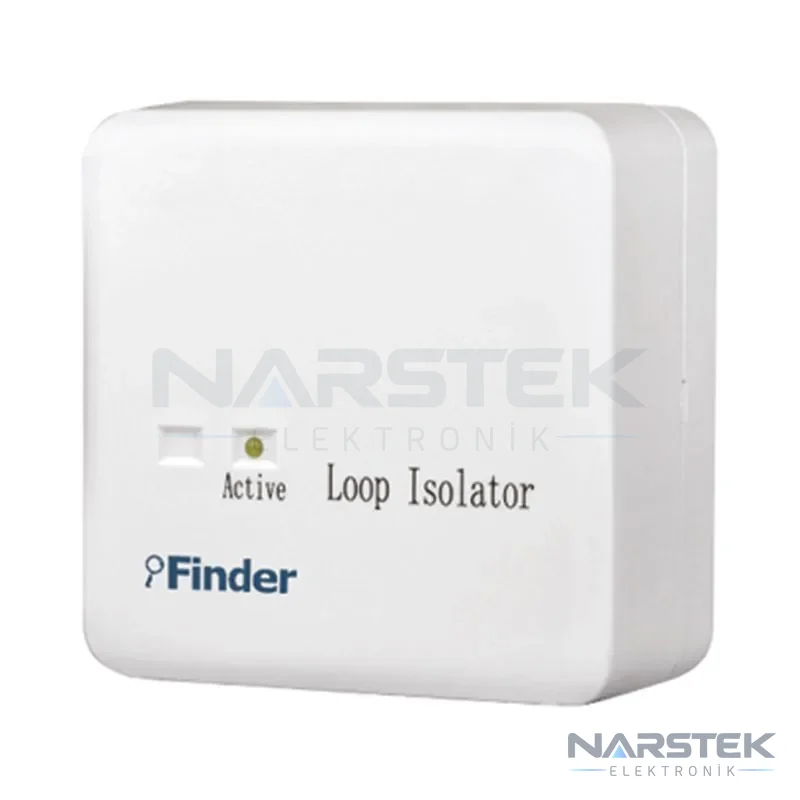
During maintenance, verify that the protocol of the module being used is compatible with the existing panel. For example, Finder FF LI500 is an isolator used to limit the impact of a short circuit on the loop. Honeywell 804867 is designed for the control and monitoring of external equipment, such as fire dampers, doors and lifts. The use of these products in a project should be assessed against panel compatibility and the system design.
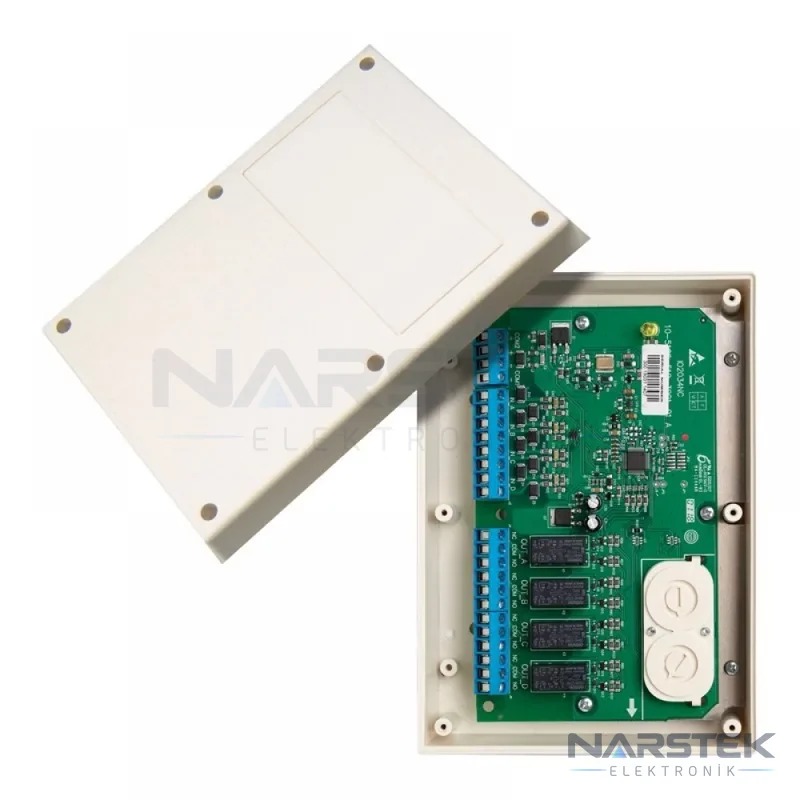
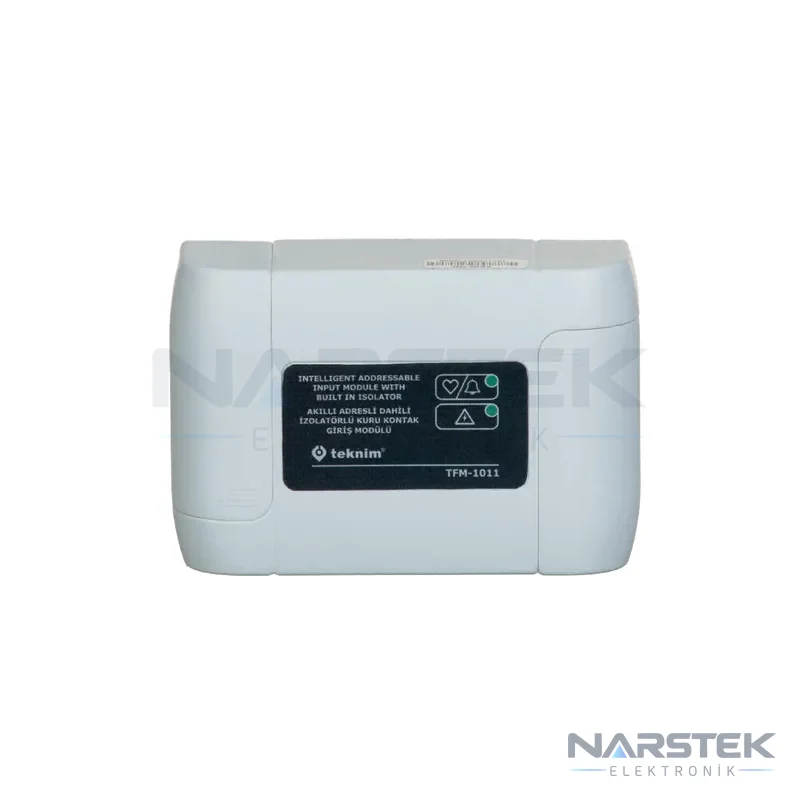
Teknim TFM-1011 is an addressable dry contact input module for monitoring external contacts. Aritech IO2034NC, with four supervised inputs and four relay outputs, was developed for Aritech 2000 series addressable systems. Do not select products without first verifying the existing panel protocol and system design.
Request a Site Survey and Maintenance Quote from Narstek
Narstek Elektronik provides site surveys, design, installation, maintenance and fault repair services for fire detection and alarm systems, based in İstanbul. Projects and products can be supplied across Türkiye. When requesting a quote or service, provide the building type, full address, panel make and model, number of panels, approximate number of devices and tenant areas. If refurbishment is planned, also specify the affected floors, work to be carried out, existing fault records and requested tests.
For a site survey and quote, fill in the form or call 0212 424 07 24. For a technical service request, use the service form or contact us on WhatsApp at 0540 001 07 24. Narstek Elektronik’s address is Tevfikbey Mah. Halkalı Cad. No:112 Nazlı İş Merkezi Kat:3 Ofis No:64 Küçükçekmece / İstanbul, and its email address is info@narstek.com.
Frequently asked questions
Can a fire detector be temporarily disabled during a tenant fit-out?
Beforehand, the building management and fire alarm system maintenance provider should identify the affected devices and areas. Disabling must be planned by an authorised technical team; once the work is complete, verify that the device has been re-enabled and appears normal on the panel.
Is a detector also required in the ceiling void when a suspended ceiling is installed?
A detector is not automatically required in every ceiling void. The decision depends on the construction of the void, the services within it, the conditions of use and the approved design.
How many times a year does the regulation require fire alarm maintenance?
Article 84 of the Regulation defines responsibility for periodic inspection, testing and maintenance, but does not specify a fixed interval in days or months. The frequency is determined according to the relevant standards and system requirements; common maintenance practice should not be presented as a fixed statutory number.
Can an addressable module from a different brand be connected to the existing fire panel?
Compatibility of addressable detectors and modules depends on the panel's communication protocol; devices from different brands are often incompatible. Check the panel model, manufacturer's documentation and project information before selecting products.
Share the panel brand, number of devices and address, and we’ll get back to you about a site survey and quote.