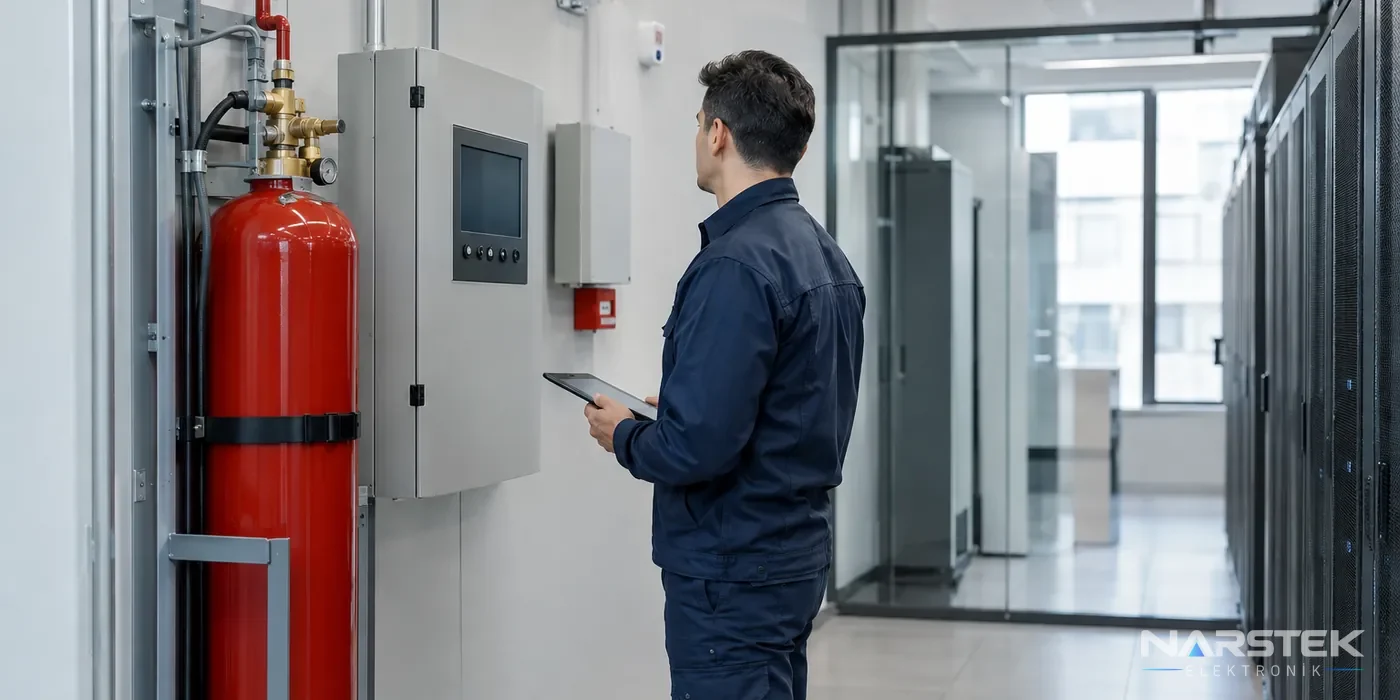
Gas fire suppression may be considered for areas such as server rooms, archives and electrical panels, where water could damage equipment. The right solution involves more than simply choosing a extinguishing gas; detection, the control panel, evacuation warnings, room integrity and regular maintenance must all be planned together.
For a building manager or technical officer, the first questions are: could people be inside the area, what equipment needs protection, and what should happen when a fire is detected? The answers determine the agent and system scenario.
Where is gas fire suppression used?
Spaces where water or foam could damage equipment or archival materials may be considered for gas fire suppression. Common examples include server and telecommunications rooms, electrical panels, control rooms and archives. However, no product should be selected without assessing the use of the area, its volume and openings, and whether people may be present.
The gas is discharged into the protected enclosure to suppress the fire in accordance with the design scenario. A system may comprise fire detectors, a fire suppression control panel, cylinders and distribution pipework, audible or visual warning devices, and manual control devices. The function and connection of each component should be clearly shown in the design. Site survey, design, installation and maintenance requirements can be assessed as part of Narstek’s fire suppression systems service.
Key Differences Between Fire Suppression Agents
FM-200 (HFC-227ea), Novec 1230 (FK-5-1-12), CO₂ and inert gases do not have the same operating or application characteristics. Selection takes into account not only the equipment to be protected, but also occupancy, reuse of the area after discharge and the facility’s operating conditions.
| Agent | General characteristics | Points to consider |
|---|---|---|
| FM-200 (HFC-227ea) | One of the clean agent options used in areas containing electronic equipment. | Suitability is determined in accordance with the design and manufacturer’s documentation. |
| Novec 1230 (FK-5-1-12) | One of the clean agent fire suppression options. | Assessed in conjunction with the protected enclosure and system design. |
| CO₂ | Can be used for fire suppression, but presents particular risks where people may be present during discharge. | Access to the area and evacuation arrangements must be carefully considered. |
| Inert gases | Suppress fire by changing the atmospheric conditions using gases such as nitrogen or argon. | Cylinder location, site conditions and the evacuation plan are assessed in the design. |
The term “clean agent” describes an agent that leaves no solid residue after discharge; it does not, by itself, mean that the agent is suitable for every enclosure or occupant. For CO₂ and inert gas applications, the area must be evacuated, warnings must be clear, and procedures for intervention in the system must be defined. The agent should be selected based on the application design and manufacturer’s information.
How Do Cross-Zone Detection and Fire Suppression Control Panels Work?
With cross-zone logic, the system waits for confirmation from two separate detection zones before issuing a suppression command. For example, when the first detector raises an alarm, the panel may enter a warning state; when an alarm is also received from the second zone, the discharge sequence defined in the project begins. This approach helps prevent gas release in response to a single detector alarm. The panel sequence, delays and outputs are programmed in accordance with the site project.
The fire suppression control panel monitors detector inputs, displays alarm and fault conditions, and controls warning devices and the suppression output. Audible and, where necessary, visual warnings must be given before the gas is discharged, allowing people time to leave the area. Additional actions, such as stopping fans or controlling doors, are included in the system only if specified in the project scenario.
The manual fire suppression release button allows an authorised person to start the discharge process manually. The hold-off button is used to delay automatic activation in accordance with the defined scenario. Staff should be briefed on the function and location of both buttons; they should be positioned so they are easy to find in an emergency but unlikely to be operated accidentally.
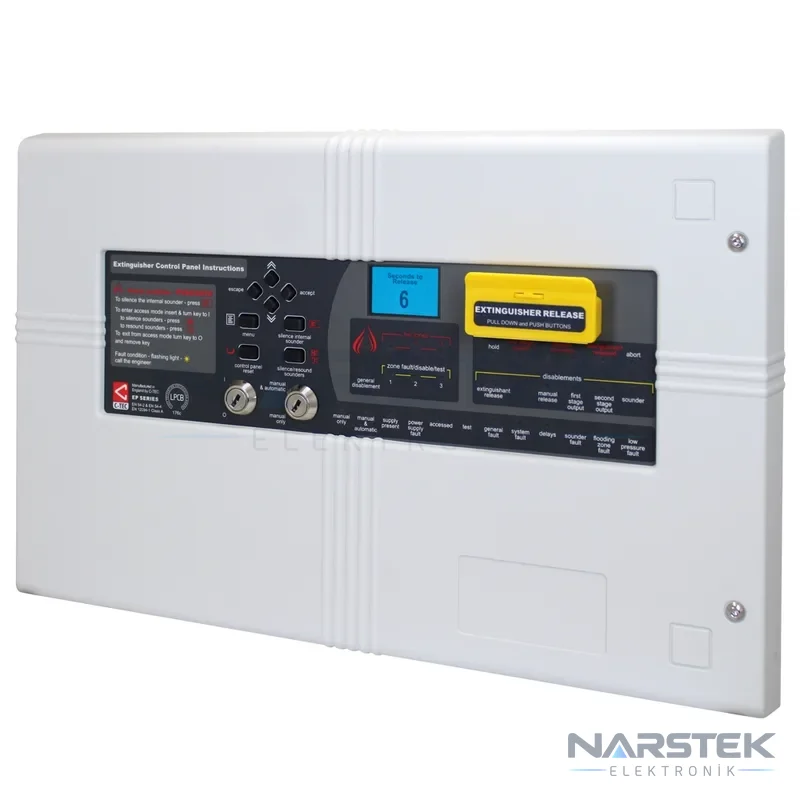
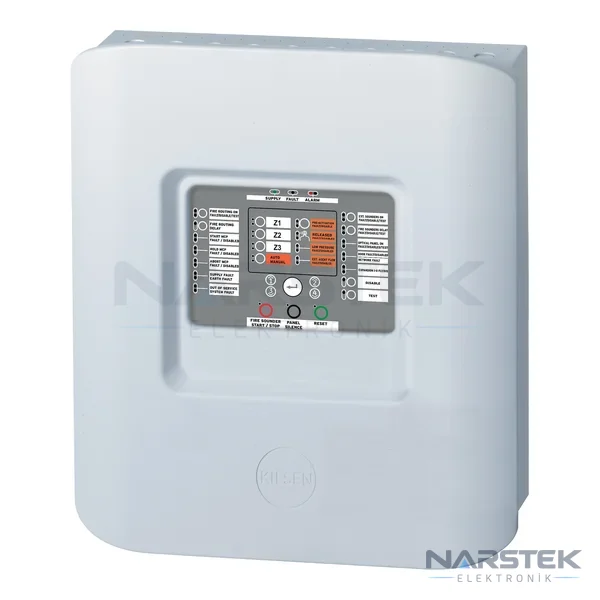
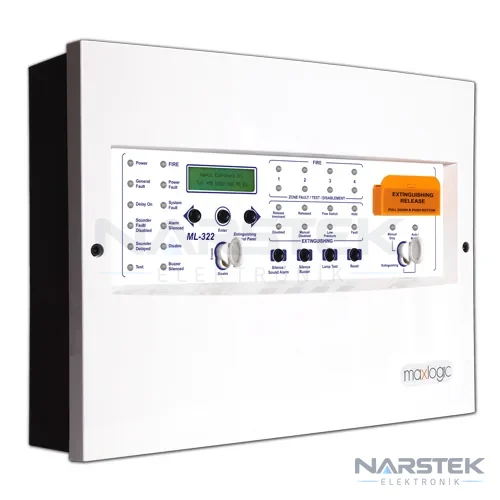
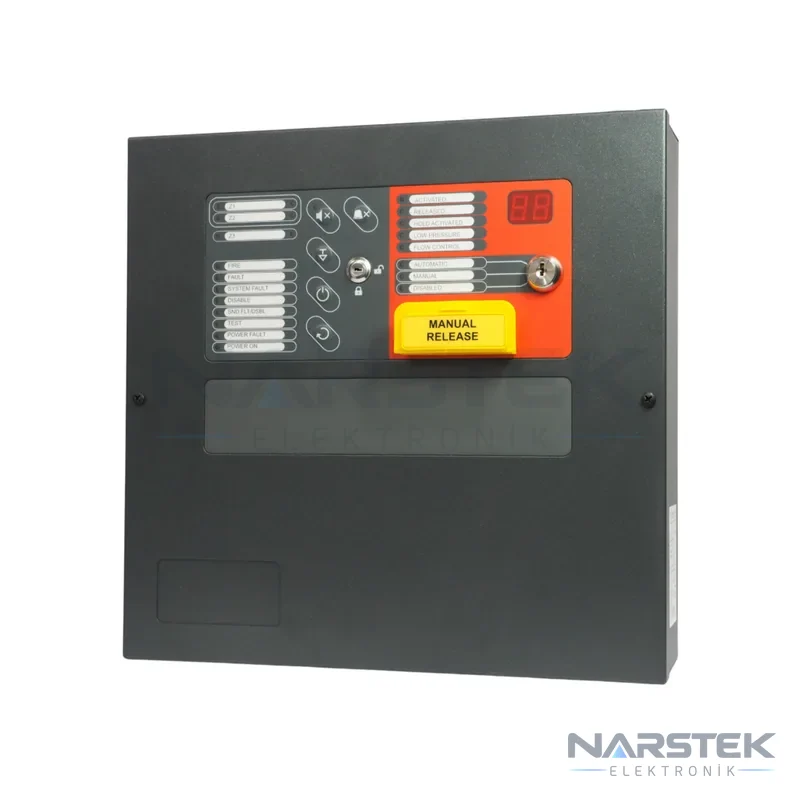
In conventional panels, detection devices are monitored by zone. In addressable systems, each device appears on the panel with its own address; addressable detectors and modules are compatible with the panel depending on the protocol used. When selecting a fire suppression panel, check the number of zones, operating scenario, manual buttons and outputs to be monitored together. For example, Mavili ML-322 is a fire suppression control panel that operates on a cross-zoning principle. C-TEC EP203 is offered as a three-zone automatic fire suppression panel. For other options, see the fire panels page.
Why is room integrity checked?
To ensure the extinguishing gas remains in the target enclosure, doors, cable penetrations, ducts and other openings must be assessed. Open vents, cable penetrations added later or deteriorated door seals can affect the designed suppression performance. For this reason, the room structure and ventilation arrangements are recorded during the site survey.
After installation, check that the room conditions comply with the project. Reassess room integrity after any alterations or new service penetrations. The room integrity test and acceptance criteria are determined in accordance with the project and relevant manufacturer documentation. Increasing cylinder capacity does not, on its own, resolve an integrity problem.
What checks are carried out during maintenance?
Simply checking whether a fault light is showing on the panel is not enough during maintenance. The detection, warning and suppression circuits must be checked for correct operation together, along with the condition of the cylinders and mechanical connections and the current condition of the room. To prevent accidental gas discharge, functional tests must be carried out by authorised technical personnel using appropriate test arrangements and operating procedures.
- Cylinder inspection: The cylinder is weighed or its pressure is checked using a suitable indicator on the system. The result is compared with the acceptance values in the manufacturer’s documentation; leaks, damage and connection issues are also inspected.
- Panel and circuits: Alarm, fault and suppression conditions are checked, along with detector inputs, warning devices, manual release and hold-off buttons, and monitored outputs.
- Room and pipework: Door closure, new openings, the condition of pipes and nozzles, ventilation and the relevant project scenario are reviewed.
- Records and notification: Checks carried out, deficiencies found and functions taken out of service are recorded. If the system may be left without protection during maintenance, the site’s responsible personnel are informed.
The method of cylinder weighing, pressure checks and maintenance interval depend on the manufacturer’s instructions and project conditions. It is not appropriate to assume the same inspection interval or acceptance values for every system. Requesting a written record of the tests and measurements from the maintenance team makes it easier to compare them with those from future inspections. For checks relating to the fire detection system, our articles fire alarm system maintenance checklist and fire panel maintenance may also be helpful.
Examples of control panels and buttons from the catalogue
Products should be selected by comparing panel features with project requirements. The models below are examples from the product catalogue; compatibility with every installation should not be assumed.
- Kilsen KFP-CX3 is a three-zone conventional fire suppression control panel.
- Teletek IVY offers two fire suppression detection zones and automatic or manual operating options.
- Mavili ML-2710.ES is a button used to release fire suppression manually.
- Kilsen DMN700B is a button used to hold off automatic fire suppression activation.
When selecting a button and panel, verify the connection type, operating scenario and compatibility with the existing system using the manufacturer’s information. You can browse manual button options in the buttons category.
Request a Survey and Quote from Narstek
Narstek Elektronik, based in Istanbul, provides site surveys, design, installation, maintenance and fault repairs for fire detection and suppression systems, as well as project services and product supply across Türkiye. To prepare an accurate quote, please share the approximate dimensions of the protected area, its purpose, whether people are present inside, and the make and model of the existing suppression system and panel. Cylinder label details, the latest maintenance record, a room plan and any known faults can also help with the assessment.
You can complete the Site Survey / Quote form or request maintenance and fault checks through a technical service request. You can reach us by phone at 0212 424 07 24 or on WhatsApp at 0540 001 07 24.
Frequently asked questions
Is a gas fire suppression system suitable for an electrical panel?
It may be suitable; however, the panel enclosure volume, the possibility of people being present and the agent selected must all be assessed together. Please share the panel layout and the boundaries of the area to be protected during the site survey.
Why does a cross-zone system wait for signals from two detectors?
A cross-zone scenario requires confirmation from two separate detection zones before the suppression output is activated. The panel’s alarm, delay and discharge sequence is set according to the project scenario.
How are gas cylinders maintained?
During maintenance, the cylinder is weighed or its pressure gauge is checked as appropriate, and the result is compared with the values in the manufacturer’s documentation. The cylinder, connections and pipework are also inspected for signs of damage or leakage.
Can room integrity deteriorate over time?
Worn door seals, new cable penetrations or gaps created during alterations can change the condition of the room. The room should therefore be reassessed after any changes.
Share the panel brand, number of devices and address, and we’ll get back to you about a site survey and quote.