
Fire alarm maintenance prices are determined by the number and type of devices in the system, access conditions at the building, visit frequency and the services specified in the contract. For this reason, a quote based solely on the building’s floor area may not reflect the actual scope of maintenance.
When comparing quotes, clarify which checks will be carried out, how faults will be handled and whether spare parts are included in the price. These details determine not only the price of the quote but also whether the maintenance meets your organisation’s needs.
Key factors that determine maintenance prices
When preparing a maintenance quote, the system inventory and operating conditions are assessed first. A building may contain different types of devices or separate control areas. The time technicians spend on site and the work to be carried out depend on these details.
| Factor | Effect on the quote |
|---|---|
| Number and variety of devices | The quantity of detectors, manual call points, sounders, modules and other field devices to be checked affects the time required. |
| Addressable or conventional system | The panel design, how devices are monitored and the checks required all affect the maintenance plan. |
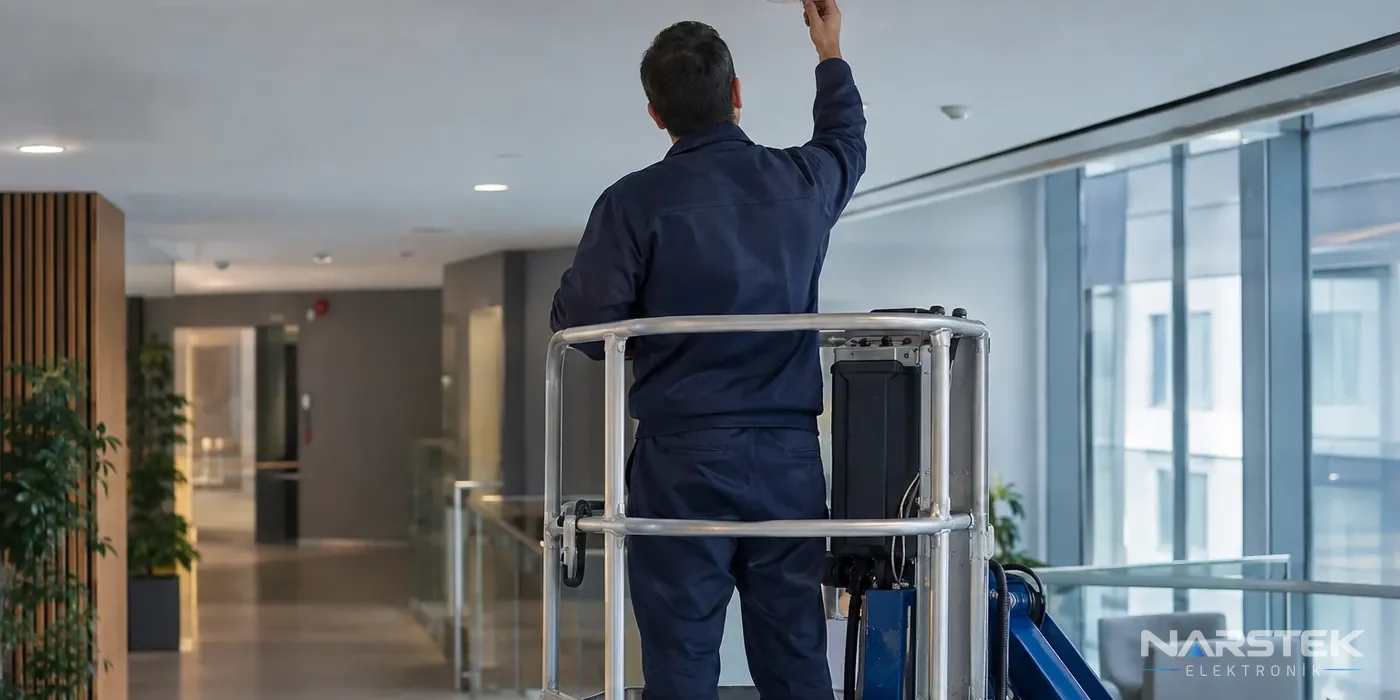
| Ceiling height and access | Suitable access equipment or a lift may be required for high-level areas. This affects site planning and the time required. |
| Building type and operating hours | The hours during which tests can be carried out may vary between production areas, offices, hotels and shared living spaces. |
| Visits and fault response | Planned maintenance visits and the expected response arrangements in the event of a fault define the scope of the quote. |
| Spare parts and reporting | Whether parts are included and which records will be provided after each visit should be specified separately. |
The device count may include more than just detectors. Manual call points, sounders, input/output modules and panel connections should also be included in the inventory. If the number of devices is unknown, an existing list, project documentation or general photographs of the site can help with the initial assessment.
In addressable systems, the panel monitors devices using individual addresses. In conventional systems, detection areas are monitored by zone. This difference does not mean that maintenance is carried out in the same way; the inspection plan is drawn up with due regard to the panel's features, the system's condition and the manufacturer's documentation. You can explore the differences in how the two systems work in the comparison of addressable and conventional fire alarm systems.
How building conditions and work schedules affect costs
Ceiling height can affect site work independently of the number of devices. If a lift or other access arrangement is needed to reach detectors safely, ask how this is covered in the quote. Clearly stating the equipment required and whether it is included in the scope helps avoid uncertainty later.
The type of building also affects the work plan. Tests in an office may be carried out during working hours, whereas in a facility where production is ongoing or in accommodation premises, working hours may need to be planned around the site's operations. The way the alarm signal will be communicated to building occupants during testing, and how the person responsible for the premises will be involved, should also be discussed in advance.
When choosing visit frequency, do not look only at the quoted price. Under Article 84 of the Regulation, emergency lighting, directional signs, and fire detection and alarm systems must undergo periodic inspection, testing and maintenance as required by the relevant standards, under the responsibility of the building owner and manager or an authorised building representative to whom responsibility has been formally delegated in writing. The Regulation does not set a fixed maintenance frequency in months or days; frequency is determined according to the requirements of the system and the relevant standard.
At least two comprehensive maintenance visits per year, together with regular brief checks by the user, are common industry practice; this is not a number mandated by the Regulation. Determine the plan appropriate for your building based on the system's configuration, how it is used and the relevant documentation. For more information on maintenance procedures, see the fire alarm system maintenance checklist.
Fault response and spare parts in the contract
Periodic maintenance and fault response are not the same service. Periodic maintenance covers scheduled inspections and tests. The conditions under which faults will be attended to, the expected response time and whether this service is included in the maintenance fee should be specified separately in the contract.
Instead of vague terms such as “rapid response”, ask which channel should be used to report a fault, how the response time is defined and in which cases an additional service charge may apply. A response-time commitment can affect the scope and price of a quote. It is therefore best to agree on conditions that suit your business during the quotation stage.
Spare parts may not be included in a maintenance quote. Ask how the cost of parts, labour and the approval process will be handled if a battery, detector or other component needs replacing. Setting out procedures in writing in the contract, such as providing notice and obtaining approval before replacement, helps distinguish maintenance from repair costs. You can find the key points to include in the contract in the fire alarm maintenance contract clauses.
Reporting is also part of the quote. After each visit, the areas inspected, faults identified and recommended actions should be recorded, and outstanding issues should be shared in a way that makes them easy to track. Clarify not only whether the report contains more than a simple “maintenance completed” statement, but also what details it provides about the condition of devices and the panel.
What questions should you ask when requesting a quote?
To compare quotes on a like-for-like basis, ask every company about a similar scope. One quote may cover only planned visits, while another may also include fault response or spare parts. Making a decision based only on the total price without understanding differences in scope can be misleading.
- Which devices and inspection procedures are included in the quote?
- How is the pricing affected by whether the system is addressable or conventional?
- Is access equipment or a lift required for high ceilings, and is this cost included in the quote?
- How often will planned visits take place, and which inspections will be carried out at each visit?
- How should faults be reported, and is there a response-time commitment?
- Under what conditions will spare parts, labour and fault repairs be charged separately?
- What information will be included in the service or maintenance report provided after each visit?
Also check how the device count and scope are defined in the quote. If devices have been added to the building, areas have changed following alterations, or there are locations that are difficult to access, point these out during the site survey. This will help ensure the quote more accurately reflects the actual site conditions. For information about the service scope for fire detection systems, visit the Security Systems Service and Maintenance page.
Hidden costs of low-cost maintenance
A low-priced quote may cover a limited scope. For example, not every device may be inspected individually, lift requirements may be excluded, or fault response may be charged separately, changing the overall cost. If the maintenance procedures are not set out in writing, you may find that the inspections you expected were not carried out during the visit.
Incomplete reporting can also make the next maintenance visit more difficult. If there is no record of which device was tested, which fault remains unresolved and which part has been recommended for replacement, building management may find it difficult to track the work to be done and the approvals required. If one quote is noticeably lower than the others, ask which services are excluded.
A low-cost quote does not always mean inadequate service. What matters is whether the quote covers the same devices and service conditions. List and compare items such as the number of visits, reporting, parts costs and fault support side by side.
To request a maintenance quote from Narstek
Based in Istanbul, Narstek Elektronik provides site surveys, design, installation, maintenance and fault repair services for fire detection and alarm systems. To speed up quote preparation, simply share the information you have; if the inventory is incomplete, mention this at the outset. Site conditions can also be assessed if necessary.
- The make and model of the fire alarm control panel
- Approximate number of devices, including detectors, manual call points, sounders and modules
- Building address and type
- Photos of the panel and, if possible, areas showing the ceiling height
- Whether the system is Addressable or Conventional, if known
- Preferred visit schedule, working hours and fault response requirements
To request a quote, you can use the survey / quote form or call 0212 424 07 24. You can send photos of the panel and site to 0540 001 07 24 via WhatsApp. For an existing fault, you can submit a technical service request.
Frequently asked questions
What information determines fire alarm maintenance prices?
The number and type of devices, whether the system is addressable or conventional, access conditions and the building’s operating schedule are all assessed. The visit schedule, fault response commitment, spare parts coverage and reporting also affect the scope of the quote.
Does the regulation specify how often fire alarm maintenance must be carried out?
Article 84 of the Regulation requires the system to undergo periodic inspection, testing and maintenance as specified in the relevant standards. It does not set a fixed interval in months or days; the frequency is determined according to the system and the relevant standard.
Should I mention the need for a lift when requesting a maintenance quote?
Yes. A lift or other access equipment may be required for high ceilings or areas that are difficult to reach. Confirm the site conditions in advance and whether this equipment is included in the quote.
What information should I send to get a quote from Narstek?
Share the panel make and model, approximate number of devices, building address and building type. Photos showing the panel and access conditions, as well as whether the system is addressable or conventional, will also help with the initial assessment.
Share the panel brand, number of devices and address, and we’ll get back to you about a site survey and quote.