If a fire alarm system is not maintained, it may sound an alarm, but some devices may fail to operate in a real fire. Dirty detectors, exhausted batteries, disabled zones, and cables left exposed after alterations are among the issues we encounter on site.
These issues can often be identified from panel warnings, tests, or a physical inspection. In the following nine sections, we explain what to check and when it is appropriate to call a technical service team.
Nine Common Issues Seen on Site
- A dirty detector causing false alarms. Dust, construction debris, or deposits from the operating environment can affect a detector’s response. If repeated alarms are recorded from the same point on the panel, review the event log, clean the detector in accordance with the manufacturer’s instructions, and test it. If the problem persists, a qualified technician should assess the device’s measurements and operation.
- An exhausted battery or one with reduced capacity. If the mains supply fails, the panel’s backup power may not provide the expected operating time. During maintenance, the batteries’ physical condition, connections, and performance under load are checked; unsuitable batteries are replaced in accordance with the system requirements and manufacturer’s documentation. Do not assume that a battery is in good condition simply because there is no fault light on the panel.
- A silenced or disabled zone. If a zone is disabled on the panel, alarms may not be received from devices in that area. Check the records for the reason and duration of the disablement; once the necessary tests are complete, the zone should be re-enabled by authorised personnel. Also check whether an area that appears to be out of use has in fact been left unprotected.
- A painted detector. Paint can cover the detector’s sensing element or impair its operation. Simply wiping the outside of a painted device may not be sufficient. A technical inspection should determine whether the detector can be cleaned and used again; if necessary, replace it with a suitable device and test it.
- A device removed during alterations and not refitted. Detectors and manual call points may be removed during ceiling refurbishment, partitioning, or decoration work. Once the work is complete, the devices must be installed in the correct locations, and the cable connections and address or zone information on the panel must be checked. Updating the drawings and device list to reflect the post-alteration system is also important.
- A cut or broken sounder cable. A break in a sounder circuit can prevent the alarm devices on that circuit from sounding. Check the panel for a circuit fault and inspect the cable route and connection points. After repairs, test the sounders connected to the circuit and inform building occupants before testing.
- Earth Leakage Fault. An earth leakage warning on the panel may indicate an electrical problem with the cabling or field devices. Rather than shutting down the system until the fault clears or ignoring the warning, the circuits should be inspected in a controlled manner. Testing and repairs should be carried out by technical personnel familiar with the system and the relevant electrical safety requirements.
- Out-of-date system drawings. New devices may have been added to the building or some areas altered without the drawings being updated. In this situation, the maintenance team cannot compare device locations, circuit connections or protected areas against the project documentation. The site should be checked and the drawings updated to reflect the changes made.
- Failure to keep a logbook. If faults, isolated devices, tests and replaced parts are not recorded, it is difficult to track recurring problems. Each service visit should record the date, findings, work carried out, outstanding tasks and the person responsible. Panel event logs should also be reviewed alongside the maintenance report.
What Checks Should Be Carried Out During Maintenance
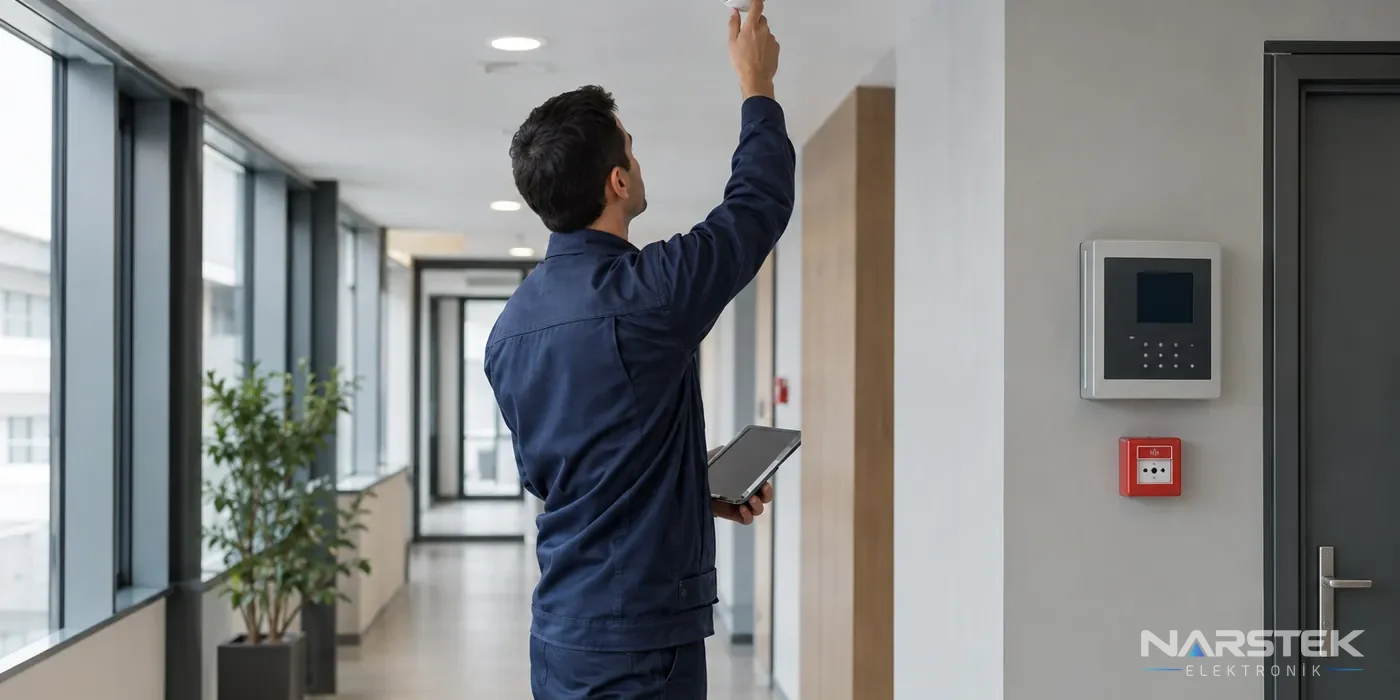
Maintenance is not just a matter of checking whether a fault light is showing on the panel. Devices, circuits, alarm notifications and standby power should all be assessed through checks that follow the system type, project documentation and manufacturer’s instructions. Tests such as detector testing should be planned to suit the building’s use, and people in areas where the alarm can be heard should be notified in advance.
- Check the alarm, fault and disabled indications on the panel, along with the event history.
- Compare detectors, manual call points, sounders and other connected devices with their locations in the project documentation.
- Have the batteries, circuit conditions and fault indications such as earth leakage checked.
- Record tests, faults and corrective work in the report and logbook.
The scope and frequency of maintenance are determined by the system’s characteristics and the relevant standards. At least two comprehensive maintenance visits per year is common practice in the sector; this frequency is not stated as a fixed mandatory requirement for every building in Article 84 of the Regulation. Users’ regular brief checks do not replace service maintenance.
For detailed inspection steps, see our fire alarm system maintenance checklist article; for panel and detector procedures, see our maintenance of panels and detectors in addressable systems guide.
Legislation and Project Records
Article 84 of the Regulation on the Protection of Buildings from Fire makes the building owner and manager, or a building representative to whom responsibility has been transferred in writing, responsible for ensuring that emergency lighting, exit signage, and fire detection and alarm systems undergo periodic inspection, testing and maintenance in accordance with the system requirements specified in the relevant standards. The Article does not set a fixed number of days or months between maintenance visits for all systems.
Fire detection and alarm systems in workplaces are subject to periodic inspection under the Regulation on Health and Safety Requirements for the Use of Work Equipment. Under the amendment dated 18 February 2022, the inspection is carried out once a year in accordance with the project and TS CEN/TS 54-14. The amendment dated 23 December 2025 states that the installation project must be available during the periodic inspection and that the employer must arrange for installations without a project to be designed in accordance with the legislation and standards.
The amendment made in 2026 under Law No. 7579 provides for periodic fire safety inspections and reports for buildings with occupancy permits. As inspection intervals and implementation details are to be determined by Ministry regulations, an interval that has not yet been finalised should not be treated as mandatory. Periodic inspection requirements applicable to workplaces should also be monitored separately.
Insurance policy terms also vary. Maintenance reports, fault records and documentation of corrective work can provide information about the condition of the system following a claim; they do not, on their own, guarantee cover or payment. Check your policy terms with your insurer.
If Parts Need Replacing
Not every fault requires the panel or all the detectors to be replaced. First, it should be established whether the fault is caused by a device, a circuit connection, the power supply, or a change to the project or building. Any replacement part must be compatible with the existing system, and the system should be tested after the work is completed.
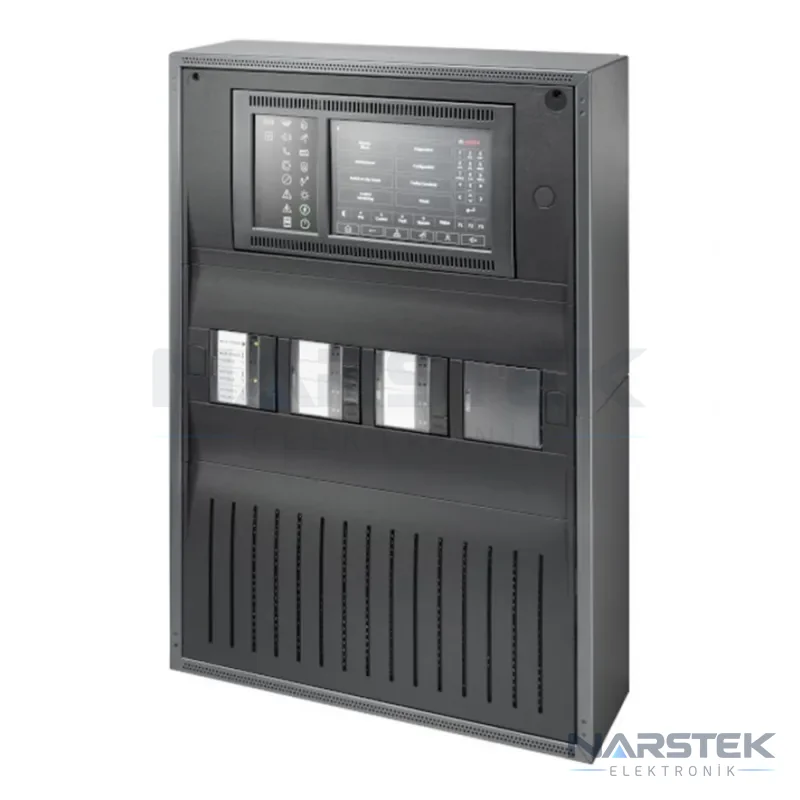
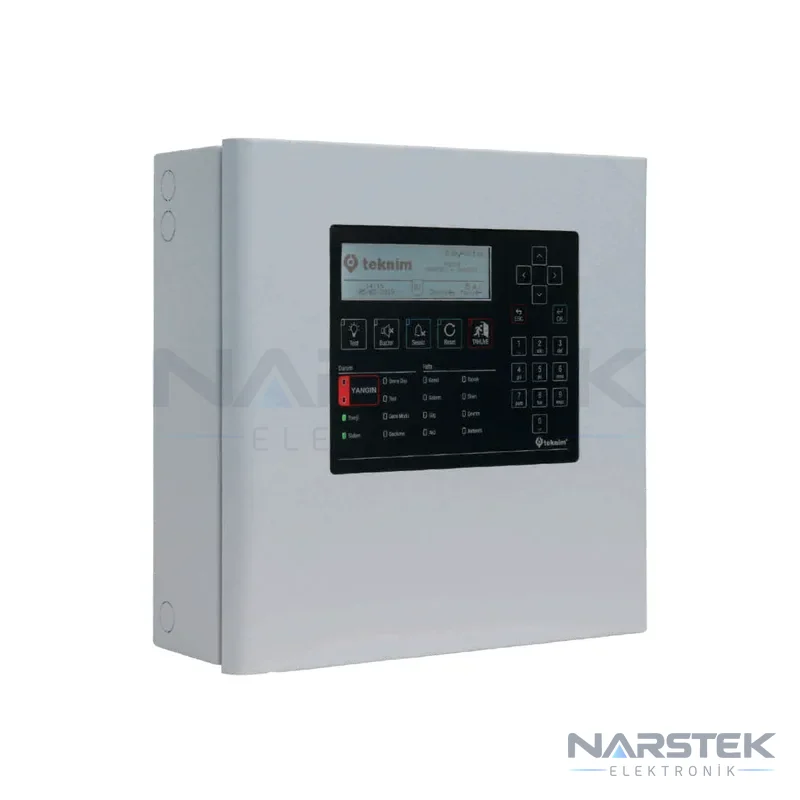
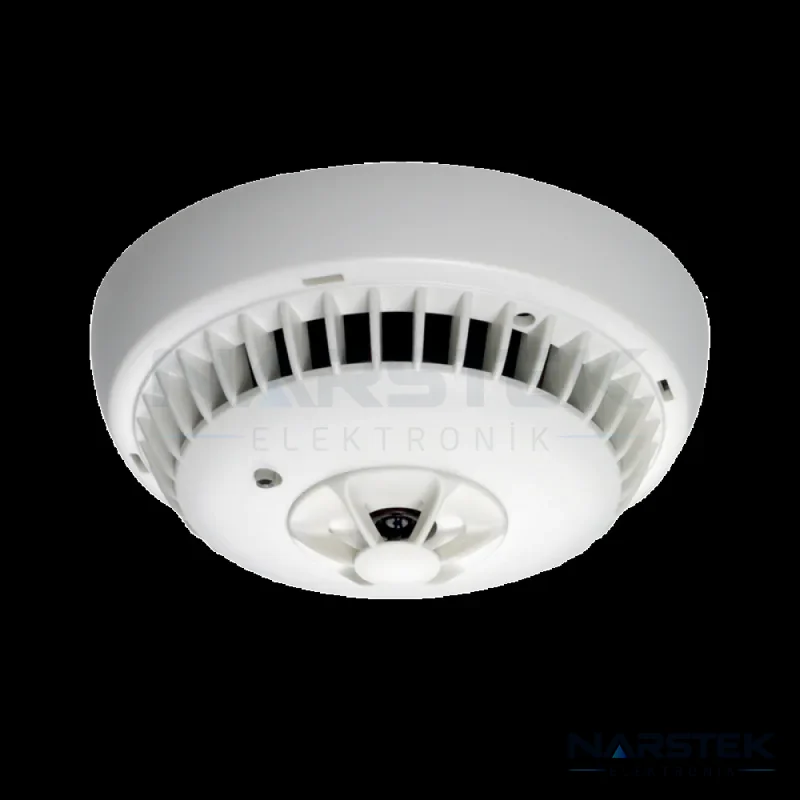
Examples in our catalogue include the Detectomat PL 3300 OTI multisensor detector, the Bosch AVENAR panel 2000 and the Teknim TFP-1211. These are not direct replacement recommendations for every system; suitability is determined by inspecting the existing panel, devices and project documentation.
Request a Maintenance Quote from Narstek
Narstek Elektronik, based in Istanbul, provides site surveys, design, installation, maintenance and fault repair services for fire detection and alarm systems. Projects and products are also supplied across Türkiye. For maintenance or fault support, visit our security systems service and maintenance page or submit a technical service request.
When requesting a quote, please provide the building’s district and type of use, approximate number of floors or area, and the panel make and model. If you know whether the system is addressable or conventional, please include that too. The current project documentation, latest maintenance report, fault message shown on the panel and number of devices, if available, will also help determine the scope of the site survey.
You can contact us on 0212 424 07 24, message us on WhatsApp at 0540 001 07 24, or complete the site survey and quote form.
Frequently asked questions
How often should I have my fire alarm system maintained?
The frequency depends on the system’s characteristics and the relevant standards. For workplaces, periodic inspection is carried out once a year; this inspection may not be the same as a maintenance service. Confirm the maintenance plan for the building with a qualified technical team and refer to the relevant design.
What should I do if a zone on the panel has been silenced or disabled?
First, find out which area has been disabled and why. Have it checked to determine whether the area is left unprotected, and have the zone re-enabled by authorised personnel after the necessary tests. Record the work carried out.
Can I clean a detector myself?
Follow the manufacturer’s instructions rather than removing or interfering with the device, and ask the maintenance team for support. The detector must be tested after cleaning to confirm that it is working correctly. Request a technical assessment if the device is painted or damaged.
Which documents should I send when requesting a maintenance quote?
If available, share the current system drawings, previous maintenance report, and a photo of any fault message on the panel. The panel make and model, building use, and approximate floor area or number of floors will also help determine the scope of the quote.
Share the panel brand, number of devices and address, and we’ll get back to you about a site survey and quote.