
Selecting a fire panel starts with identifying a detection system suited to the size and use of the building. A conventional panel may be sufficient for a small building divided into a limited number of sections; in multi-storey buildings or those with different areas of use, an addressable panel can make fault-finding and response easier by showing which device has triggered the alarm.
When making your decision, do not consider only the number of devices required today. Loop capacity, areas that may be added in the future, commands sent to the building management system, the user interface and access to service should also be assessed together. The criteria below will help you compare quotes against the same requirements.
Should you choose an addressable or conventional system?
In an addressable system, each detector, manual call point or module is shown on the panel under its own address. When an alarm occurs, the panel identifies the device that triggered it. In a conventional system, devices are monitored by zone. The panel shows which zone has an alarm, but does not identify individual devices within that zone.
This difference should be considered alongside how the building is used. In a small building with a few rooms and easily identified areas, zone information from a conventional system may be sufficient. As the number of floors, rooms and different areas of use increases, the device-level location information provided by an addressable system can make operation and maintenance easier.
Compatibility between detectors and modules in an addressable system depends on the panel’s communication protocol. Do not assume that devices from different manufacturers will work on the same loop; verify device and panel compatibility against the manufacturer’s documentation and the project design. When expanding an existing system, also check the panel protocol and the devices in use. For a more detailed comparison, see our article on the difference between addressable and conventional fire alarm systems.
How to calculate loop capacity and expansion allowance
A loop is a circuit that runs from the addressable panel and returns to it, forming a ring. In the event of a short circuit, isolators help limit the impact on devices in the remaining section of the circuit. However, the number of devices alone is not a sufficient selection criterion. The number of devices supported by the panel, the types of devices to be used and the manufacturer’s capacity requirements must all be considered.
List the existing detectors, manual call points and modules in the project. Then identify any floors, areas or control points that may be added in future. If the panel’s spare capacity cannot accommodate this plan, check the project and manufacturer’s documentation to determine whether an additional loop or expansion hardware is required. Panel capacities vary, so it is not appropriate to generalise the specifications of one product to other models.
For example, the product information states that Teknim TFP-1211 supports 240 devices per loop and that capacity can be increased to 480 devices with an additional loop card. These figures apply only to the specified model; check the technical documentation for the model you are considering. When designing a loop, also consider cable routes, device locations and the areas that could be affected in the event of a fault.
The use of fire-resistant, halogen-free cable on fire alarm circuits should be assessed in line with the project. FE180 or PH120 class cables are examples cited in verified technical information. Confirm the cable type, cross-sectional area and installation method against the project and manufacturer’s documentation. You can also read our article on choosing fire alarm cable.
Determine whether network connectivity and repeater panels are required
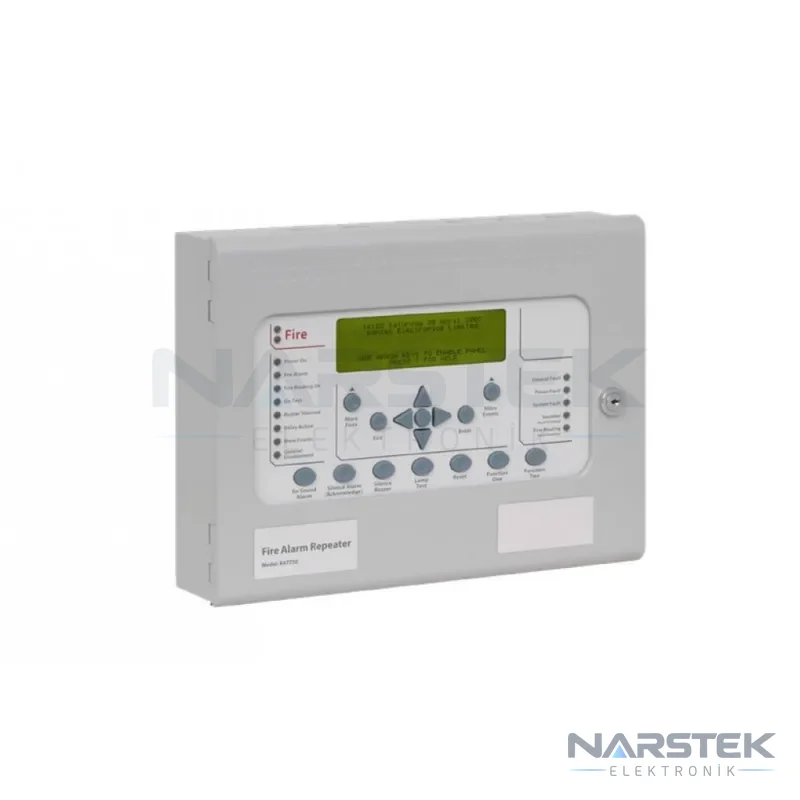
For projects with multiple panels, or where event information needs to be monitored from different points in a building, assess whether a network and repeater panels are required. A repeater panel allows the information displayed on the main panel to be monitored from another location. For example, security staff or the technical team can check the system status without going to the room where the panel is installed. The repeater panel must be compatible with the selected panel and network architecture.
The network plan should specify which panels will communicate, where events will be displayed and where users will operate the system. Do not select a repeater panel based solely on distance; also check manufacturer compatibility and the functions required. Examples in the catalogue include the Apollo K67000M1 and Global Fire CHAMELEON REP repeater panels. Confirm that the products are suitable for the system in which they will be installed.
Include control scenarios in your panel selection
A fire alarm system may do more than activate sounders. The project may define scenarios such as lift operation, the position of fire dampers, ventilation shutdown or the control of specific doors. For each scenario, the required response to each alarm source and the equipment to be controlled should be specified as part of the design, together with the input and output modules to be used.
Before purchasing, ask your technical team to prepare a cause-and-effect matrix. This can clearly show the alarm source, the action the panel will perform and the equipment to be controlled. The panel must support the required modules, and those modules must be compatible with the selected system. The scenarios should also be planned so they can be tested during commissioning and maintenance.
If voice alarm is required, assess separately the functions of the fire alarm panel and the public address system, and how they will be connected. Verified standards information lists EN 54-16 for voice alarm control equipment, EN 54-3 for sounders and EN 54-23 for visual alarm devices. The standards listed for smoke detectors, heat detectors, manual call points, beam detectors, aspirating components and wireless components are EN 54-7, EN 54-5, EN 54-11, EN 54-12, EN 54-20 and EN 54-25, respectively. Check that the equipment to be used complies with the project requirements and manufacturer’s documentation.
User interface, power supply and servicing
Identify who will use the panel on a day-to-day basis. Users need to be able to understand how to silence alarms, view events and check faults. A Turkish-language interface can make operation easier in some organisations. For example, the product information for Ziton 2X-AF1-19 specifies a Turkish-language user interface, a touchscreen graphic LCD and a jog dial. Verify these features in the documentation for the product you have been quoted.
The panel’s power supply and battery capacity should also be considered during selection. Battery capacity is calculated according to the required standby and alarm durations; the power supply is assessed in accordance with TS EN 54-4. Panel batteries are generally 12 V VRLA lead-acid batteries and are replaced approximately every 3-5 years, subject to the manufacturer’s recommendations. The exact replacement time should be determined based on battery condition, maintenance findings and the manufacturer’s advice. For details, see our article on fire panel battery replacement.
Ask about spare parts and service availability when selecting a panel. Clarify how the supply of panels, cards or compatible devices will be handled in the event of a fault, who will carry out maintenance and whether technical documentation will be provided. During maintenance visits, we find that devices added without checking model compatibility, or incomplete system records, can delay subsequent work. To arrange maintenance for your existing system, you can submit a technical service request.
Example products from the catalogue
The products below are examples for comparing conventional and addressable panel options against different project requirements. Product quantity or feature information does not replace an assessment of suitability for the project. Before selecting a product, check the manufacturer’s documentation and confirm compatibility with the existing system.
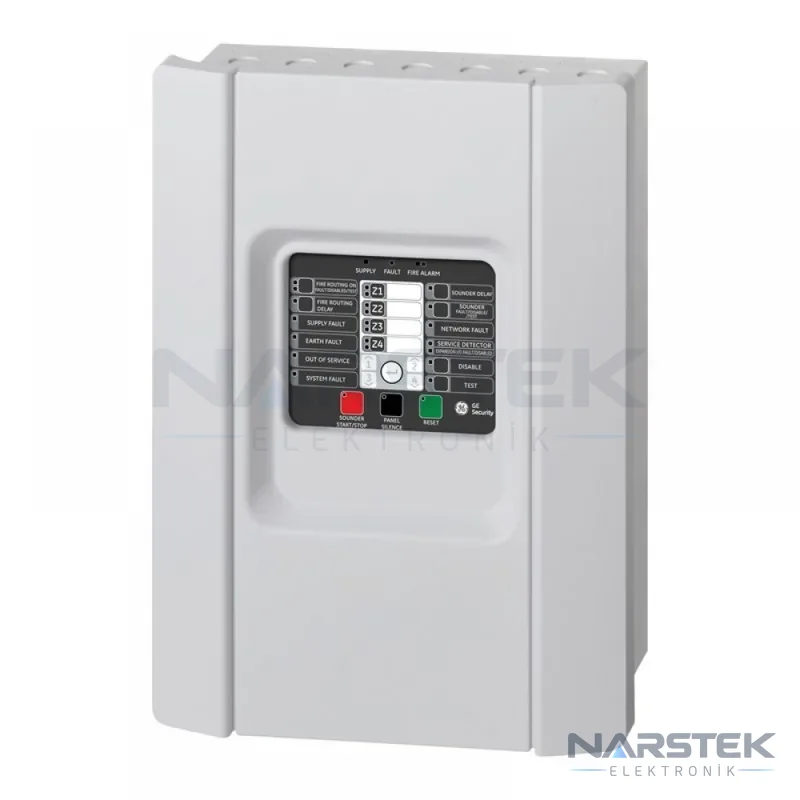
- Aritech 1X-F4, a 4-zone conventional panel.
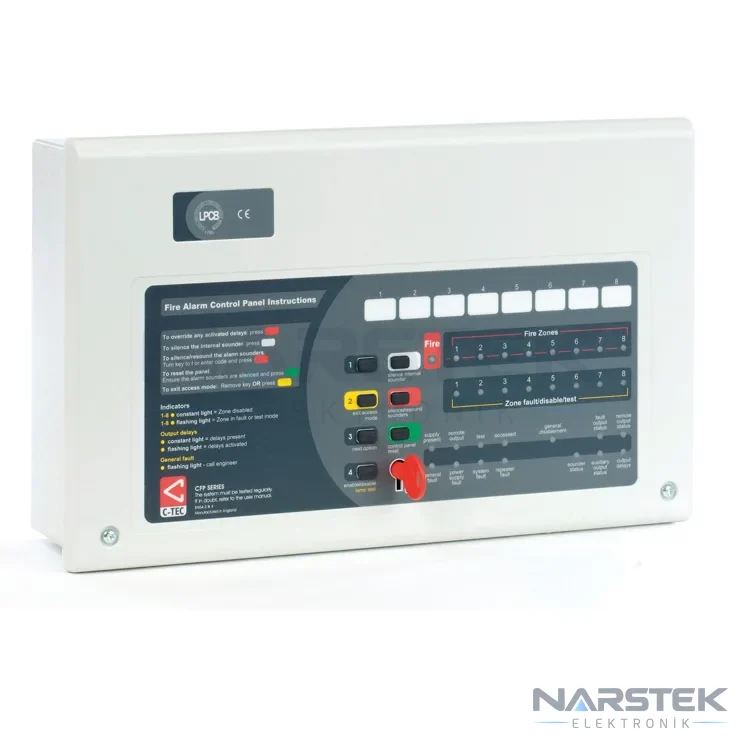
- C-TEC CFP702-2, a two-zone panel designed to work with Apollo AlarmSense devices.
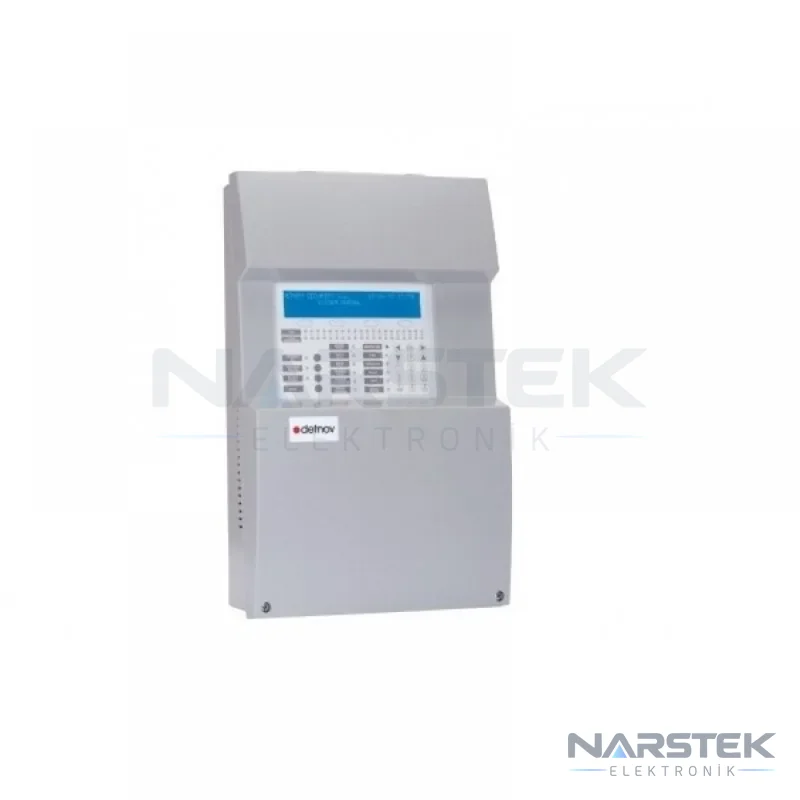
- Detnov CAD-150-1, an addressable panel specified as a 1-loop panel in the product information.
- Kilsen KFP-AF1, a single-loop addressable panel.
- Teknim TFP-1211, an addressable panel for which the product information specifies loop capacity and an expansion option.
Compare other models in the Fire Panels category, or request a site survey for fire detection and alarm systems services tailored to your project.
Contact us to arrange a site survey
Narstek Elektronik, based in Istanbul, provides site survey, design, installation, maintenance and fault repair services for fire detection and alarm systems. Projects and products can be supplied across Türkiye. To start an initial assessment, simply share the type of existing system, the building’s use and the changes you need.
Include the building type and number of floors, approximate area to be protected, make and model of the existing panel, whether the system is addressable or conventional (if known), the number of existing devices and any planned expansion in your quote request. Also mention any required connections to lifts, dampers, ventilation, doors or public address systems. Existing drawings, device lists and panel fault logs, if available, will help with the assessment.
You can use the Request a Survey / Quote form, call us on 0212 424 07 24 or message us on WhatsApp at 0540 001 07 24.
Frequently asked questions
Which buildings are addressable fire panels suitable for?
On an addressable panel, each device is displayed under its own address. In buildings with multiple floors, many sections or different areas of use, identifying the location of an event by device can make maintenance and response easier. Suitability depends on the project and the number of devices.
Is device count alone enough when choosing loop capacity?
No. The capacity specified by the manufacturer, the types of devices and any future expansion should all be considered. The selected devices must also be compatible with the panel’s protocol.
When should a fire panel battery be replaced?
Batteries are typically 12 V VRLA lead-acid types and are replaced approximately every 3–5 years, in accordance with the manufacturer’s recommendations. The exact timing should take account of the battery’s condition, maintenance findings and the manufacturer’s advice.
Can a detector from a different brand be added to an existing fire panel?
The compatibility of addressable detectors and modules depends on the panel’s communication protocol. Do not assume that devices from different brands are compatible; check the panel model and device technical documentation.
Share the panel brand, number of devices and address, and we’ll get back to you about a site survey and quote.