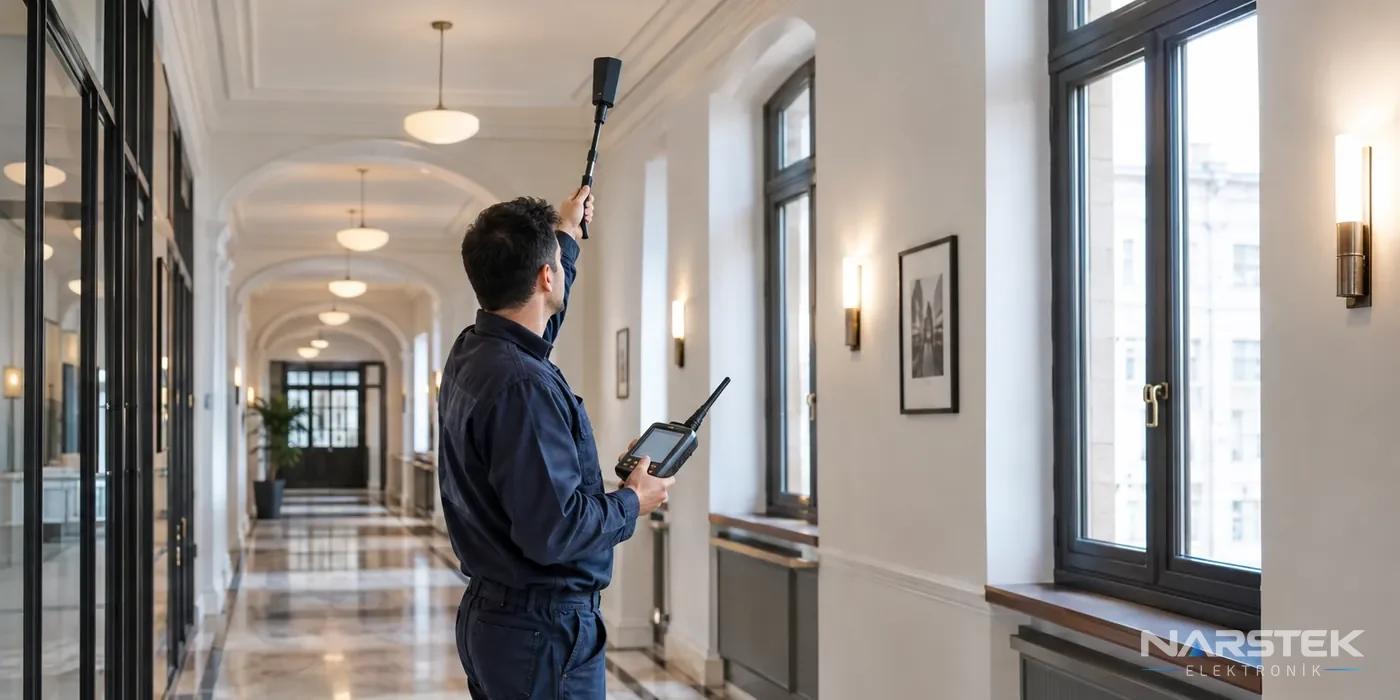
A wireless fire alarm system may be the right choice in areas where it is difficult to install cable routes, alterations to the building are undesirable, or the business cannot be shut down. However, the decision should not be based solely on avoiding cables. The building layout, radio signal propagation, the panel to be used and maintenance arrangements should all be assessed together.
In historic buildings, temporary structures and businesses that remain operational, wireless devices can make installation easier. Some projects combine wired infrastructure with wireless components rather than using a fully wireless system across the entire site. Before making this decision, a site survey should be carried out to assess signal coverage, and product compatibility with the panel should be verified.
Which buildings are wireless systems suitable for?
In buildings where historic or architectural features must be preserved, it may be undesirable to create new cable routes in walls, ceilings or floors. Wireless detectors and manual call points can reduce the need for cable routes, offering an installation option in these settings. However, device locations and communication conditions should still be assessed during the project.
In businesses where production, patient admissions, accommodation or customer services cannot be interrupted, cable installation can be constrained by time and access to work areas. Using wireless devices may help reduce these constraints during some refurbishment projects; however, which areas to cover and the installation sequence must be planned according to site conditions. When expanding an existing system, the new section must also work alongside the existing infrastructure.
- Historic buildings where creating cable routes could damage the structure,
- Offices, shops, hotels or production areas that cannot cease operations,
- Temporary buildings and work areas with a limited period of use,
- Areas where cable routes cannot be created for technical or architectural reasons.
None of these examples alone proves that a wireless system is suitable. Metal surfaces, thick walls, floors and the distance between devices can affect signal transmission. Decisions should not be based on the product’s stated open-field communication range without first assessing these conditions on site.
How should EN 54-25 and panel compatibility be assessed?
EN 54-25 relates to wireless components used in fire detection and alarm systems. A product’s stated compliance with this standard does not, by itself, mean that it will be compatible with every panel or suitable for every project. The devices, gateway and panel should be checked for compatibility using the manufacturer’s documentation and project requirements.
In Addressable systems, each device appears at a separate address on the panel. In Conventional systems, devices are monitored by zone. The fact that a wireless device is Addressable does not mean it will work with any Addressable panel; Addressable detectors and modules depend on the panel’s protocol. Devices from different brands are often not directly compatible.
Before purchasing, confirm the make and model of the existing panel, its available capacity and which wireless components it supports. For a new installation, select the panel, wireless gateway and field devices to suit the same system architecture. For site surveys, design and installation services for fire detection systems, see our Fire Detection and Alarm Systems page.
Why is a signal coverage survey necessary?
Communication between wireless devices should be assessed in the actual building. The range stated for open areas does not guarantee the same result in a building with walls and floors. Device locations should therefore not be determined from plans alone; structural elements and operating conditions that could weaken the signal should be noted during the survey.
The following information is useful for the survey:
- Floor plans, ceiling heights and areas that need to be protected,
- The potential effects of walls, doors and metal surfaces between devices,
- The make and model of the existing fire alarm control panel and its available capacity,
- The business’s operating hours and the times when installation work can be carried out,
- Whether existing wired devices are to be retained and the boundaries of new sections.
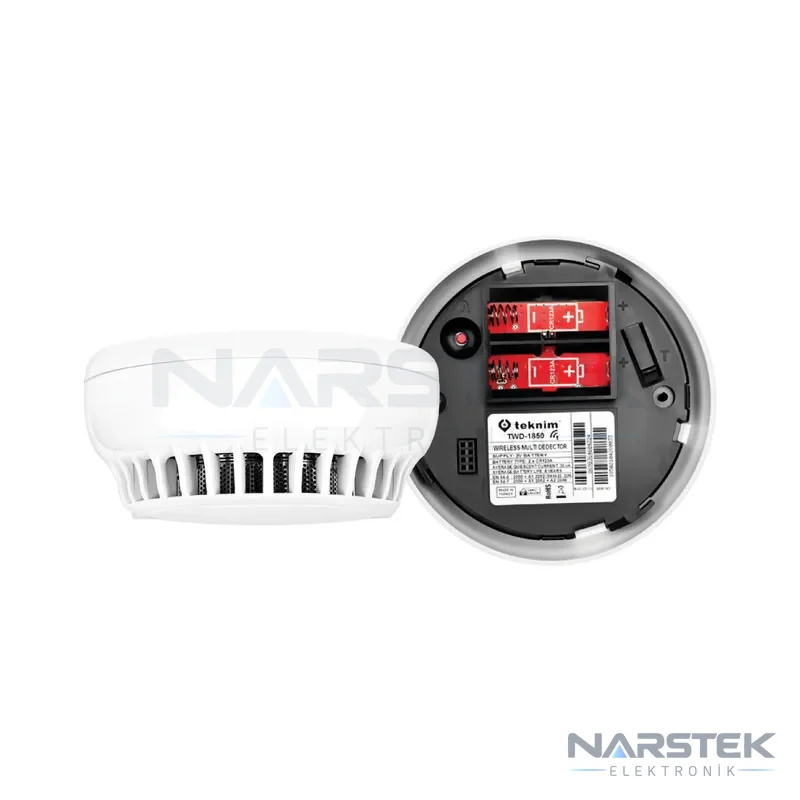
For example, the Teknim TWD-1850 product information states a communication range of up to 500 metres in open areas. This should not be interpreted to mean that the same range will be achieved at every point inside a building. Device locations and coverage should be verified at the installation site.
How should battery life and maintenance be planned?
The battery status of wireless devices should be included in the system maintenance plan. Battery life should not be treated as a single fixed period; the value stated in the selected product’s manufacturer documentation, operating conditions and system alerts should all be taken into account. The appropriate battery type and replacement method should also be determined in accordance with the device documentation.
During maintenance, check fault and battery alerts on the panel, and test the operation of detectors, manual call points and wireless communication in accordance with the manufacturer’s instructions. If a device shows a battery warning, identify the cause rather than simply silencing the alert. After replacing the battery, also check that the device has returned to the system correctly.
Although maintenance for wireless systems involves some different considerations from wired systems, devices still need to be checked regularly to confirm they are operating correctly. When preparing a maintenance plan for your existing system, you can use our fire alarm system maintenance checklist. Panel battery capacity and replacement are separate from the batteries in wireless field devices; for more information, see our article on panel battery replacement.
When is a hybrid installation useful?
A hybrid system uses wired and wireless components in the same project. Wired infrastructure can be retained in the main areas where cable routes are suitable, while a historic section or an additional area where cabling is difficult can be covered with wireless devices. This means that the entire building does not have to rely on a single connection method.
Compatibility between the panel and wireless components must also be confirmed in advance for a hybrid design. The existing panel’s protocol and the compatibility of the gateway and field devices are part of the system design. In wired fire alarm circuits, fire-resistant, halogen-free cable should be used, for example cable rated FE180 or PH120. Cable selection and routing in wired sections should also be specified to suit the project.
When upgrading an older system, replacing everything with wireless products without first checking the existing cabling and equipment may not be the right starting point. You should first determine which components can be reused, where new cabling is needed and which areas are better suited to a wireless solution. Our article Upgrading an Old Fire Alarm System can help with this assessment.
Examples of Wireless Products from Our Catalogue
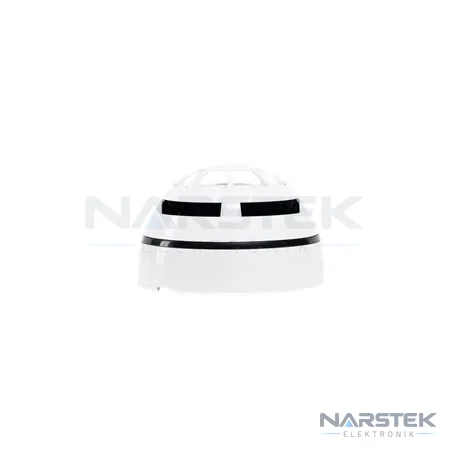
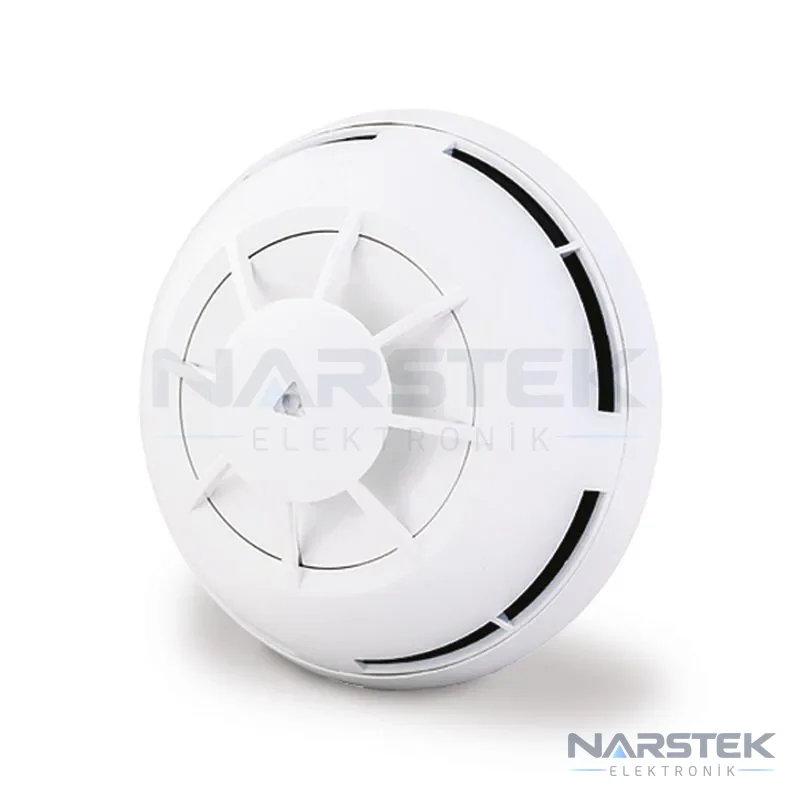
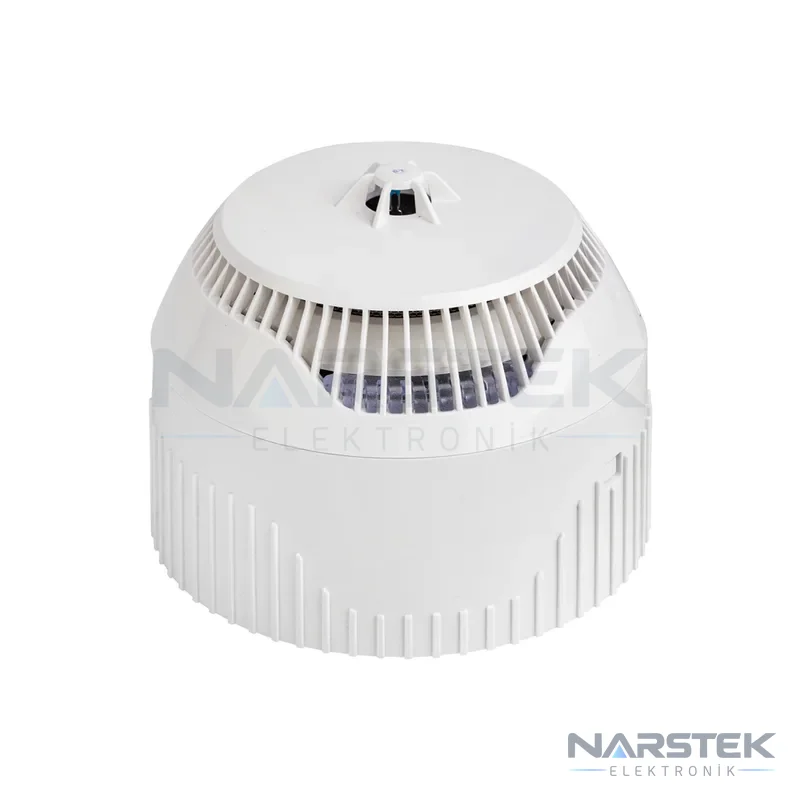
The products below are examples of devices used in different wireless fire detection systems. Selection should be based not only on the type of device, but also on its compatibility with the fire panel and wireless gateway. Check each product’s features in the manufacturer’s documentation and against the project requirements.
- Teknim TWD-1850, a wireless multi-detector with programmable options for smoke and heat detection.
- Teknim TWB-1866, a resettable wireless manual call point.
- Teletek Natron MD, a detector combining optical smoke and heat detection, compatible with Natron WE-A and WE-C gateways.
- Apollo RW1000-400APO, a wireless addressable heat detector with A1R or BS configuration options.
- Finder L-OP-SG, a wireless addressable optical smoke detector with two-way communication in the 868–870 MHz band.
Features listed on a product page should not be taken as a guarantee of compatibility with a fire panel or gateway from another brand. You can also browse our Teknim Products page to compare Teknim products.
Request a Site Survey and Quote from Narstek
Narstek Elektronik is based in Istanbul and provides site surveys, design, installation, maintenance and fault repairs for fire detection systems. We can also assess requests for projects and product supply across Türkiye. The choice of a wireless or hybrid solution can be determined only after checking the building’s signal conditions and the compatibility of the existing system.
When requesting a quote, please share the building’s intended use, address, floor plans, areas to be protected, the make and model of the existing fire panel, and the business’s operating hours. A list of existing devices, the system design if available, and photos of areas where cabling cannot be installed will also help us prepare for the site survey. Use the site survey / quote form, or call us on 0212 424 07 24 or contact us on WhatsApp at 0540 001 07 24.
Frequently asked questions
Can a wireless fire alarm system be used in any building?
It should not be assumed to be suitable for every building. Walls, floors, metal surfaces and compatibility with the existing panel should be assessed during a site survey.
Will a device compliant with EN 54-25 connect to my existing fire panel?
This information alone does not confirm compatibility. The device, wireless gateway and panel must be verified as compatible in accordance with the manufacturers’ documentation.
When should the batteries in wireless detectors be replaced?
Rather than assuming a fixed battery life, follow the values in the product’s manufacturer documentation and monitor battery status warnings on the panel. After replacement, check that the device is operating normally in the system.
Can wired and wireless devices be used in the same system?
A hybrid installation can include both connection types in the same project. Compatibility between the panel, gateway and field devices, as well as the requirements for wired sections, should be verified at the design stage.
Share the panel brand, number of devices and address, and we’ll get back to you about a site survey and quote.