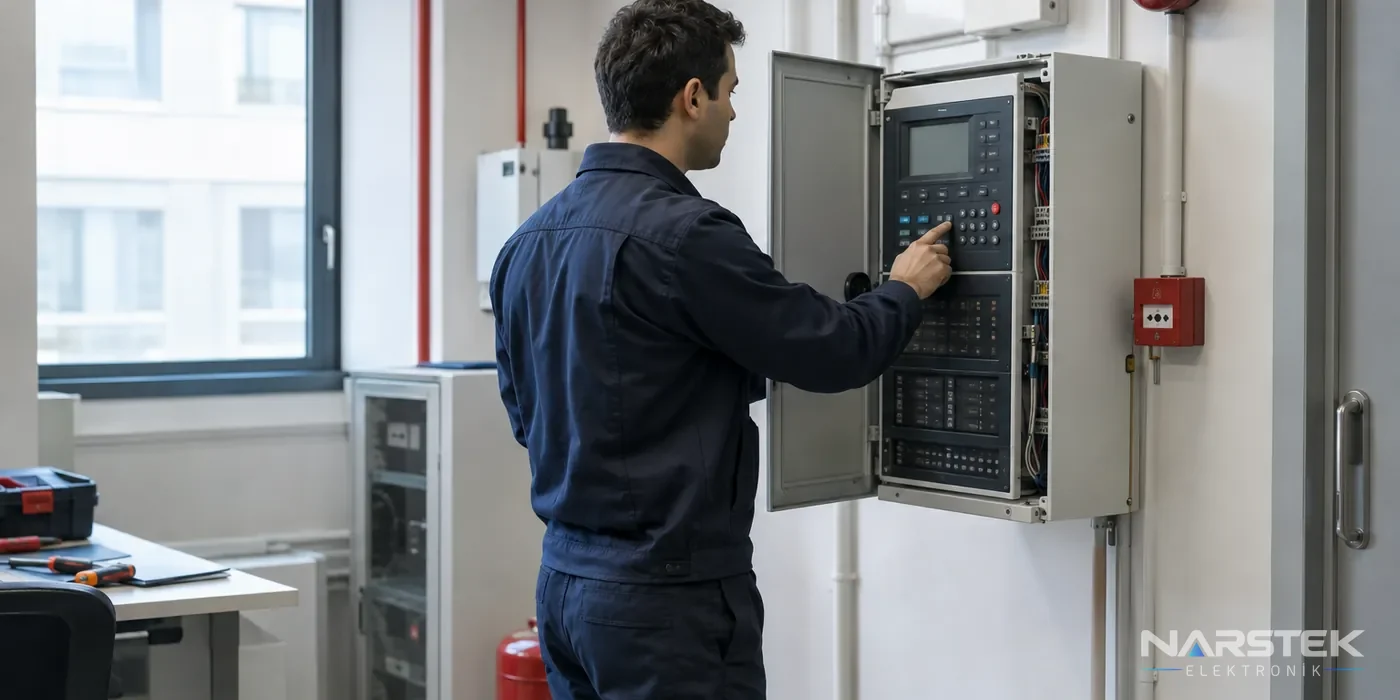
Choosing the right panel and detector for a Ziton fire alarm system depends on the devices in the building working together compatibly. Model names such as ZP, ZP7 or ZX do not establish compatibility on their own, so the device’s full model code and the panel protocol must be checked together.
When selecting a panel, consider not only the size of the building but also loop capacity and planned future expansion. If CO detection is required, Carbon Monoxide (CO) control panels such as KM302 and KM304 can also be considered as part of the project.
Panel and detector compatibility in Ziton systems
In addressable systems, each detector and module appears on the panel under its own address. This allows the panel to show which device has triggered an alarm. In conventional systems, devices are not individually addressed; instead, the panel monitors them by their connected zone.
Addressable detectors and modules should be selected according to the protocol used by the panel. Devices from different brands are often incompatible, and having the same brand name is not sufficient proof of compatibility. Before installing a detector described as ZP7 or ZX, check its label, full product code and the panel documentation. The DP2061N in our product range is an addressable optical smoke detector that operates using the Aritech 2000 series protocol. This does not mean that every device named ZP7 or ZX operates using this protocol.
When upgrading an existing system, record the make and model of the panel, the detector labels and the loop connections. If the model code cannot be read on site, a photo of the device and the fault or device list from the panel can help with compatibility checks. Products listed on the Ziton products page can also be checked by their model codes before selection.
Capacity and loop planning for ZP panels
In an addressable system, a loop is a ring circuit to which devices are connected and which is fed from both ends. In addition to the number of devices to be connected, it is important to consider how the circuit will be divided and how the rest of the system will be protected in the event of a short circuit. Isolators help to isolate the affected section in the event of a short circuit, helping the rest of the loop to continue operating.
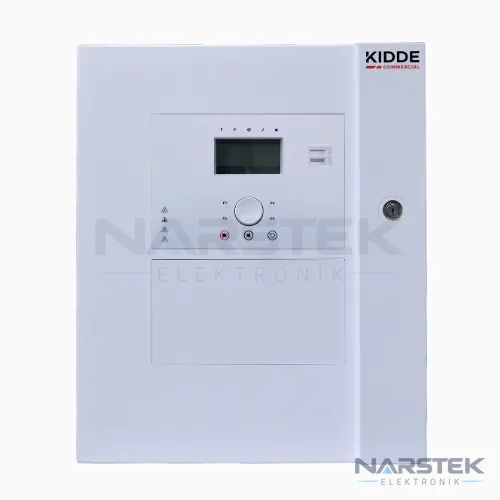
When selecting a panel, consider the existing number of devices, any planned additional devices and the panel’s loop capacity together. Examples in the catalogue include the single-loop 2X-AF1-19 and the two-loop 2X-AF2-19, which can be expanded to four loops. The compact, two-loop 2X-AF2-S-19, which can also be expanded to four loops, is another option. This product information does not indicate the capacity of a different ZP panel model; the manufacturer’s documentation should be consulted for that model.
Loop cabling is also part of the design. Fire alarm circuits use fire-resistant, halogen-free cable, such as cable in the FE180 or PH120 class. The cable type and installation method should be specified for the project; before adding devices to an existing circuit, check its capacity and connection suitability. For more information on panel and loop selection, see our fire panel selection guide.
Selecting detectors, modules and notification appliances
The detector type is selected according to the fire indicators expected to be detected and the environmental conditions. Optical smoke detectors, heat detectors and combined devices are not interchangeable at every point in an installation. DP2061N detects optical smoke; DP2061T is an addressable device that combines optical smoke and heat detection. Five operating modes can be selected on DP2061T; the appropriate mode should be assessed according to the area where the device will be used.
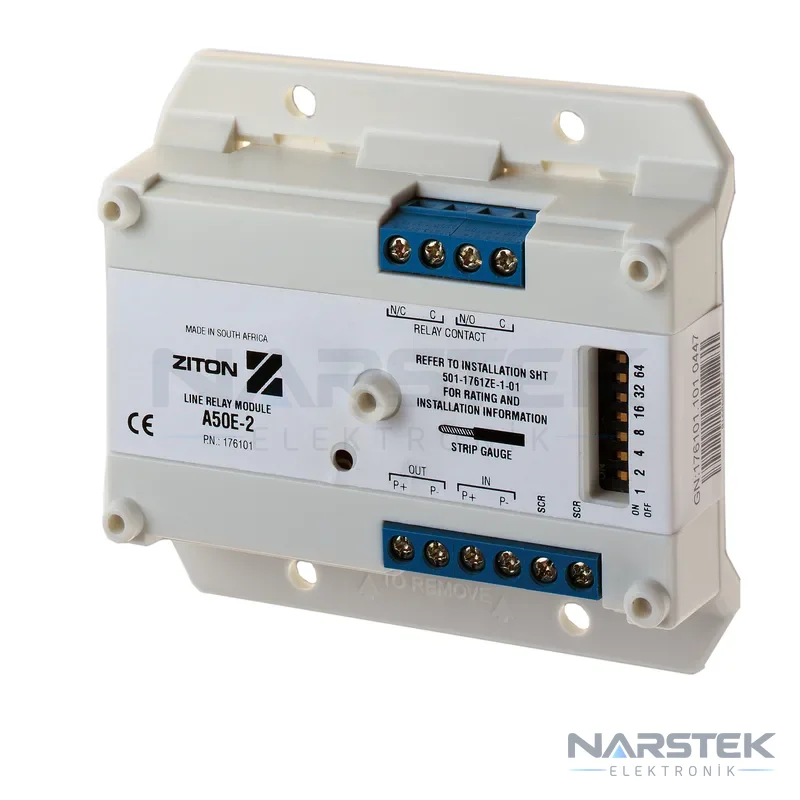
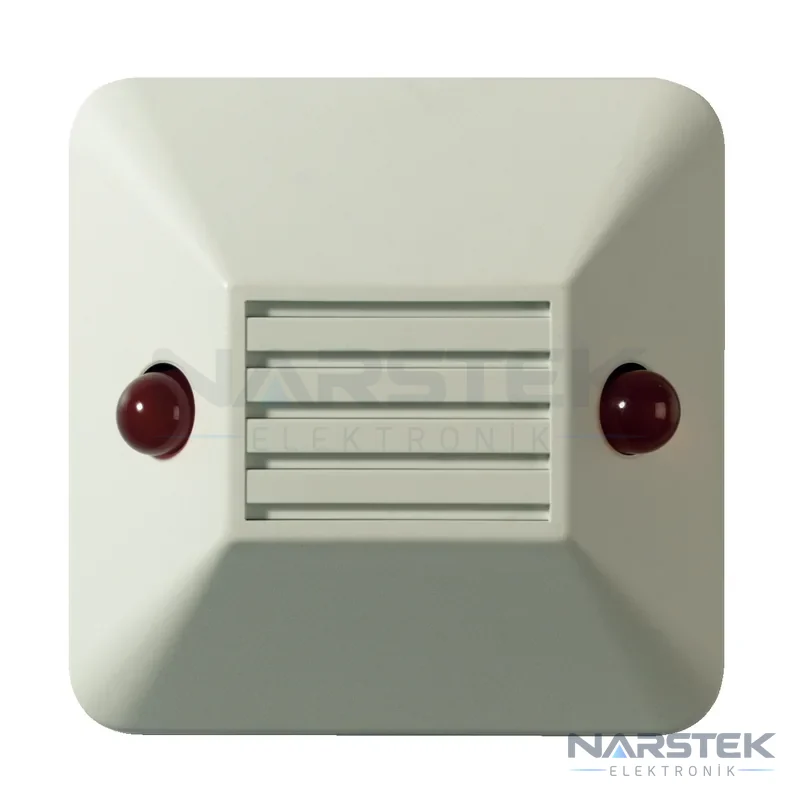
Detector base and connection compatibility should also be checked during installation. DB2002 is the standard base listed for mounting Aritech 2000 Series addressable detectors. To indicate an alarm from a compatible detector at another location, the AI672 remote LED alarm indicator may be considered. Where auxiliary equipment needs to be controlled, A50E-2 is listed in the catalogue as a single-output volt-free contact relay module.
Audible and visual warning devices are also considered separately in system design. The relevant product groups use EN 54-3 for audible warning devices and EN 54-23 for visual warning devices. The AS363 in the catalogue is a multi-tone fire sounder. When selecting a sounder and beacon, verify the device's compatibility with the panel and its intended application as part of the project. You can view other options in the Sounders and Beacons category.
Carbon Monoxide detection with KM302 and KM304
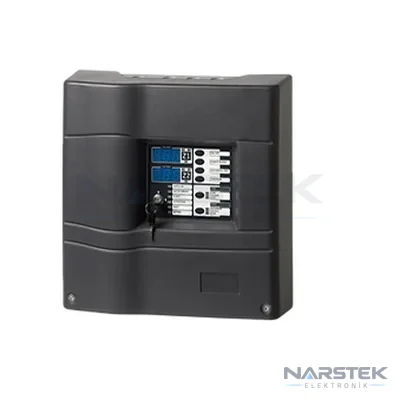
In areas where CO needs to be monitored, such as enclosed car parks, a carbon monoxide system performs a detection function distinct from the fire alarm system. KM302 monitors CO detectors in two zones; ventilation or exhaust and alarm relays can be programmed for each zone. KM304 monitors four zones, and up to 15 CO detectors can be connected to each zone.
The choice between the two panels should not be based on the number of zones alone. Detector locations, zone layouts and the scenarios in which ventilation outputs will operate should be determined during the project planning stage. Ziton KMD300 is a CO detector with an electrochemical sensor and a self-test feature; verify its compatibility with the panel in the product documentation. You can find the product groups on the CO Control Panels and CO Detectors pages.
What checks are carried out during periodic maintenance?
The purpose of maintenance is not simply to check whether the panel displays a fault message. Panel event and fault logs are reviewed, device accessibility is checked, and the system's detection and warning functions are tested using an appropriate method. The impact of testing on building occupants and connected systems should be planned, and the system should be returned to normal operation afterwards.
- Review the fire, fault and disablement logs on the panel.
- Check that detectors, call points, modules and warning devices are correctly matched to the corresponding device or zone on the panel.
- Investigate faults related to the loop, connections and isolators.
- Check the condition of the panel batteries and any power supply warnings.
- If a CO system is installed, also test the KM panel, detectors and ventilation/alarm outputs.
Panel batteries are generally 12 V VRLA lead-acid batteries and are replaced approximately every 3–5 years in accordance with the manufacturer's recommendations. The exact replacement time depends on battery condition, manufacturer instructions and system operating conditions. Battery capacity is calculated with the standby and alarm periods taken into account; power supply design is based on TS EN 54-4. Read our panel and detector maintenance article for more details on maintenance.
Request a Site Survey and Maintenance Quote from Narstek
Narstek Elektronik, based in Istanbul, provides site surveys, design, installation, maintenance and fault repair services for fire detection and alarm systems. Its services also include CO detection, CCTV, public address, fire suppression, access control and intrusion alarm systems. Product supply and project work for projects outside Istanbul are considered across Türkiye.
When requesting a quote, please provide the building type and address, the make and model of the existing panel, the number of loops or zones, the approximate number of detectors and modules, and details of any CO system. Please also specify whether your request is for a new installation, expansion, fault repair or periodic maintenance. A photo of the panel label, existing design or fault display can help with the assessment before a site survey. View our Fire Detection and Alarm Systems service, use the site survey and quote form, or call 0212 424 07 24. You can also message us on WhatsApp at 0540 001 07 24.
Frequently asked questions
Will a ZP7 or ZX detector connect to my existing Ziton panel?
Compatibility cannot be determined from the model name alone. The detector’s full product code and the protocol supported by the panel must be checked against the manufacturer’s documentation.
How do I choose the number of loops for an addressable panel?
The existing number of devices, planned expansion and the panel’s supported loop capacity should all be considered. The relevant panel manufacturer’s documentation should be used for loop design and device limits.
What is the main difference between KM302 and KM304?
KM302 monitors CO detectors in two zones. KM304 monitors four zones, with up to 15 CO detectors connectable to each zone.
When should a fire alarm panel battery be replaced?
For 12 V VRLA batteries, the manufacturer recommends a replacement interval of approximately 3–5 years. The actual timing should be determined by the condition of the battery and the manufacturer’s instructions.
Share the panel brand, number of devices and address, and we’ll get back to you about a site survey and quote.