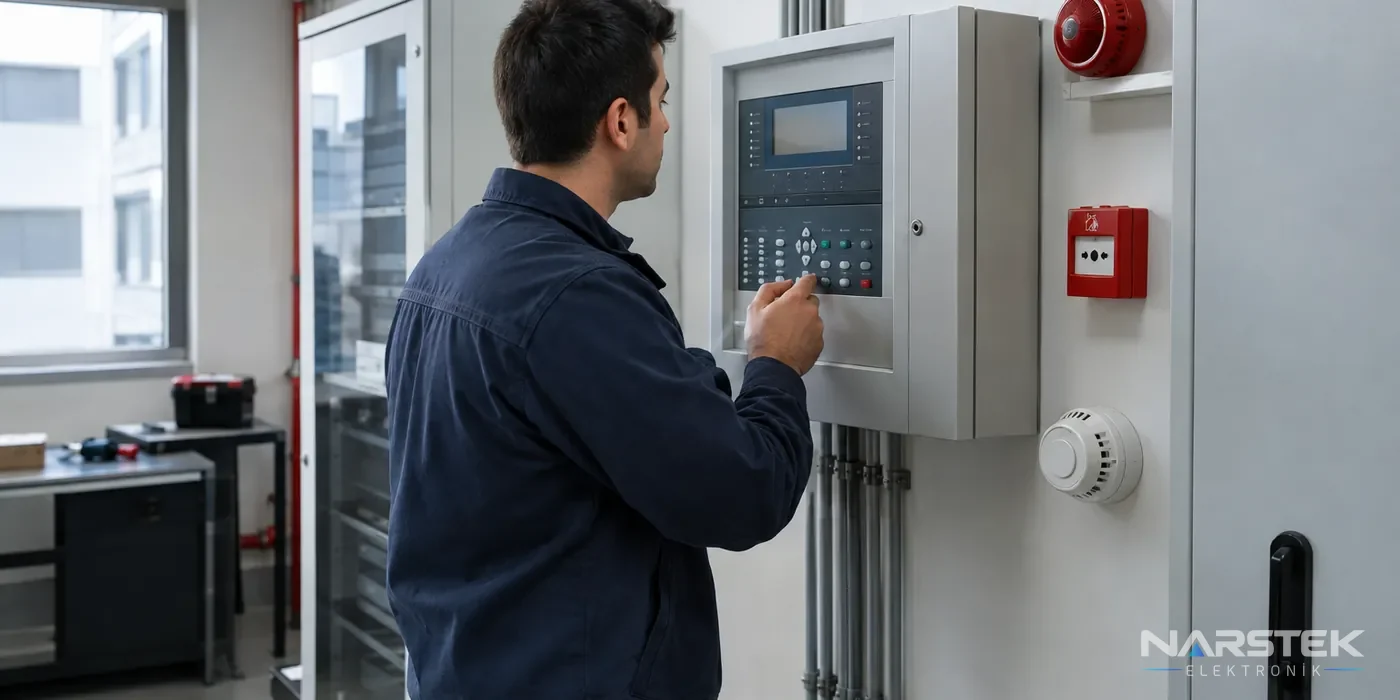
When choosing a Mavili fire alarm system, first identify the building’s requirements and existing installation. If device-level monitoring is required, consider an addressable system; if zone-level monitoring is sufficient, consider a conventional system. Gas detection and fire suppression control can also be included in the project as separate requirements.
Mavili is a manufacturer based in Türkiye. Its Maxlogic and Mavigard product families include addressable and conventional solutions, as well as gas detection products. Choosing the right product depends on assessing both the compatibility of the control panel and field devices, and the building’s intended use.
How do Maxlogic and Mavigard systems work
In an addressable system, each detector, manual call point or module is identified at the control panel by its own address. When an alarm occurs, the panel indicates which device or point triggered it. This arrangement is useful in buildings where individual devices and scenarios need to be monitored. The Maxlogic ML-122X series is an example of a control panel family designed to monitor addressable devices and manage alarm and automation scenarios.
In a conventional system, the panel monitors devices by the zone they are connected to, rather than individually. The zone in which an alarm has occurred can be identified, but the panel does not display a separate address for each device as it does in an addressable system. This approach may be suitable for smaller, simpler installations. Compatibility between conventional products, the control panel and devices should be checked against the documentation for the products to be used in the project.
In an addressable system, detectors and modules must be compatible with the control panel’s communication protocol. Addressable devices from different manufacturers often do not work together; a similar connection type alone does not mean they are compatible. Before adding devices to an existing system, confirm the panel model, protocol and product compatibility. Points to consider when choosing a fire panel can also help with panel selection.
What should be assessed when selecting a system
During the site survey, assess the building’s floors and layout, intended use, existing devices and cable routes. For a new installation, consider not only the number of devices but also future expansion requirements and alarm scenarios. If the existing panel is to be retained, separately check the compatibility of spare parts and additional devices with the same system.
- Addressable or conventional system: The choice depends on the level of detail required when identifying the alarm location.
- Loop and field devices: In addressable systems, a loop is a ring circuit fed from both ends. Isolators help protect the remaining section of the line in the event of a short circuit.
- Cabling and power: Fire-resistant, halogen-free cables, such as FE180 or PH120 class cables, are considered for fire alarm circuits. Panel battery capacity is calculated according to the standby and alarm durations.
- Compatibility: Confirm against the manufacturer’s documentation that detectors, manual call points, sounders and modules are compatible with the selected panel’s protocol.
The standards applicable to fire detection devices should also be checked when selecting products. For example, EN 54-7 for smoke detectors, EN 54-5 for heat detectors, EN 54-11 for manual call points; EN 54-3 for audible warning devices and EN 54-23 for visual warning devices. If a voice alarm system is installed, EN 54-16 for control equipment, EN 54-25 for wireless components, EN 54-20 for aspirating detectors and EN 54-12 for beam detectors may also be considered when selecting products.
For information about site surveys, design, installation and maintenance services, visit our Fire Detection and Alarm Systems page.
Examples of Mavili products from the catalogue
The products below serve different functions. They do not form a package intended to be used together in every project. Selection should be matched to the panel family and application requirements.
- The ML-122X Smart Addressable Fire Alarm Control Panel is designed to monitor addressable devices and manage scenarios; its modular design supports operation with one or two loops.
- The ML-1110 / ML-1130 / ML-1140 series of addressable detectors includes models that detect smoke, heat or both.
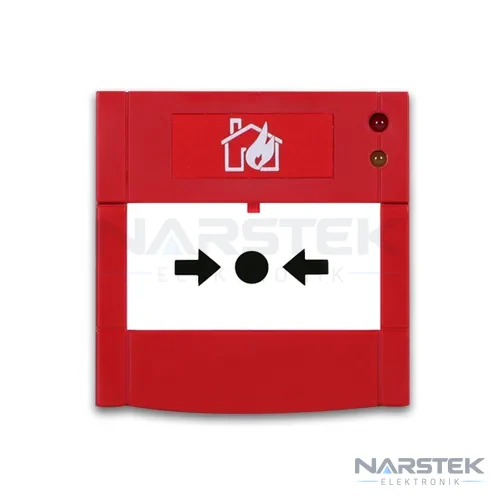
- The ML-1710 Smart Addressable Manual Call Point is used to initiate an alarm manually and can be flush- or surface-mounted.
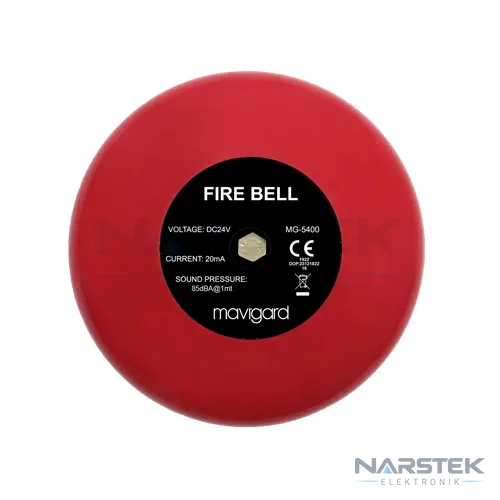
- The MG-5400 Fire Alarm Bell is designed to provide audible warnings in Maxlogic and Mavigard addressable or conventional systems.
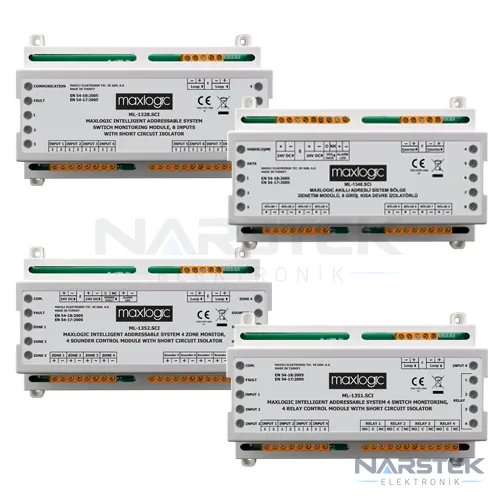
- The ML-1318 / ML-1328 / ML-1338 / ML-1348 / ML-1351 / ML-1352 addressable input/output modules are used for functions such as contact monitoring and controlling external systems.
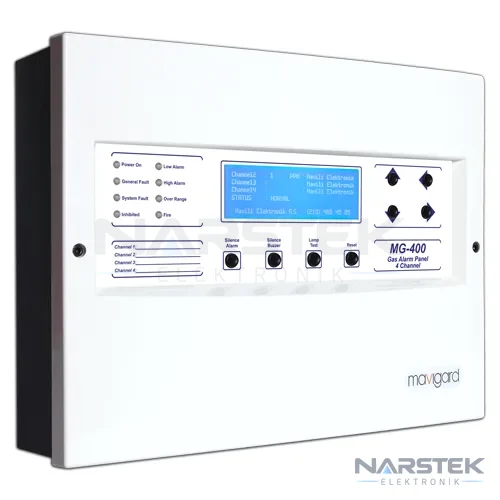
- The MG-400 4-Channel Gas Alarm Control Panel is designed for industrial gas detection applications. Industrial gas detectors or up to 20 standard conventional fire detectors can be connected to each channel.
Browse product groups on the Mavili products page. Confirm panel compatibility when selecting detectors, manual call points and sounders for an addressable system.
Gas detection and fire suppression control
Fire detection and gas detection do not meet the same need. If CO or LPG needs to be monitored in a car park, tunnel or loading area, the appropriate gas detector and control unit should be considered as part of the project. The Mavili product range also includes intelligent addressable detector options for different gases. For example, the MG-1821 / MG-1821.SCI and ML-492L / ML-492L.SCI models are specified for CO or LPG detection; the application area and panel compatibility should be selected in accordance with the product documentation. You can also find out more about CO detection system design for enclosed car parks.
MG-400 offers a different option as a four-channel gas alarm control panel. The type of detector to be used on each channel, alarm levels and connection arrangement should be determined in accordance with the manufacturer's documentation and the project requirements. If gas alarm and fire alarm scenarios are to operate together, it should be clearly defined during the design stage which information is sent to which system.
For fire suppression control units, information from detectors and commands for the suppression system must also be managed in accordance with the project scenario. The unit and interfaces to be used should be selected according to the type of suppression system and the manufacturer's documentation. Do not assume that the existing fire panel supports this function; compatibility, input/output capacity and the scenario should be reviewed together.
What to Check During Maintenance and When Sourcing Spare Parts
During maintenance, check the panel's alarm and fault logs, the status of loops or zones, detectors, manual call points, sounders and connected modules. Devices should be tested using methods appropriate to the manufacturer's instructions and site conditions. Recording the checks carried out and any faults found makes it easier to monitor recurring issues.
Batteries are generally 12 V VRLA lead-acid types. They are expected to be replaced approximately every 3-5 years, in line with the manufacturer's recommendations; the actual replacement interval depends on capacity and condition checks. Battery capacity should be calculated according to the system's standby and alarm duration requirements, and the power supply selection should be assessed in accordance with TS EN 54-4.
Using fire-resistant, halogen-free cables on circuits, and checking for issues such as short circuits and open circuits, are also part of maintenance. When requesting spare parts, provide the panel's full model, the device model code, the existing protocol and details of the fault. In addressable systems, fitting a device that is merely physically similar may not be sufficient; communication compatibility with the panel must be verified.
For more information about panel, detector and battery checks, see our fire alarm system and panel maintenance article. Narstek provides site surveys, installation, maintenance and fault repair services from its base in Istanbul, and supplies products and supports projects across Türkiye.
Request a Survey and Quote from Narstek
To prepare an accurate quote, provide the building address, type of use and approximate size; if available, also include the panel make and model, the number of devices, and whether the system is addressable or conventional. For a new installation, a floor plan and the areas requiring detection will help; for maintenance or a fault, the error message shown on the panel and device model codes will speed up the assessment. If fire suppression or gas detection is also involved, please specify the type of system.
You can complete the site survey / quote form or contact us on 0212 424 07 24. Our WhatsApp number is 0540 001 07 24. If your existing system has a fault, submit a technical service request and share the panel and fault details.
Frequently asked questions
What is the difference between an addressable and a conventional Mavili fire alarm system?
In an addressable system, each device appears individually on the control panel under its own address. In a conventional system, the panel identifies the zone to which the device is connected, rather than the individual device. The choice depends on the level of location detail required in the building and the existing installation.
Can I connect Mavili addressable detectors to a panel from another brand?
Compatibility between addressable detectors and modules depends on the panel’s communication protocol. Products from different manufacturers are often incompatible. Before connecting them, check the panel and device models against the manufacturer’s documentation.
When should the fire alarm panel battery be replaced?
Panel batteries are generally 12 V VRLA lead-acid batteries and are typically replaced every 3-5 years, in line with the manufacturer’s recommendations. The decision to replace a battery should be based on its condition and capacity test results; the required capacity is calculated according to the standby and alarm durations.
Is the MG-400 a fire alarm panel or a gas alarm control panel?
The MG-400 is a four-channel gas alarm control panel. It can be used with industrial gas detectors or with up to 20 standard conventional fire detectors per channel. The connection type and application should be determined in accordance with the project and the manufacturer’s documentation.
Share the panel brand, number of devices and address, and we’ll get back to you about a site survey and quote.