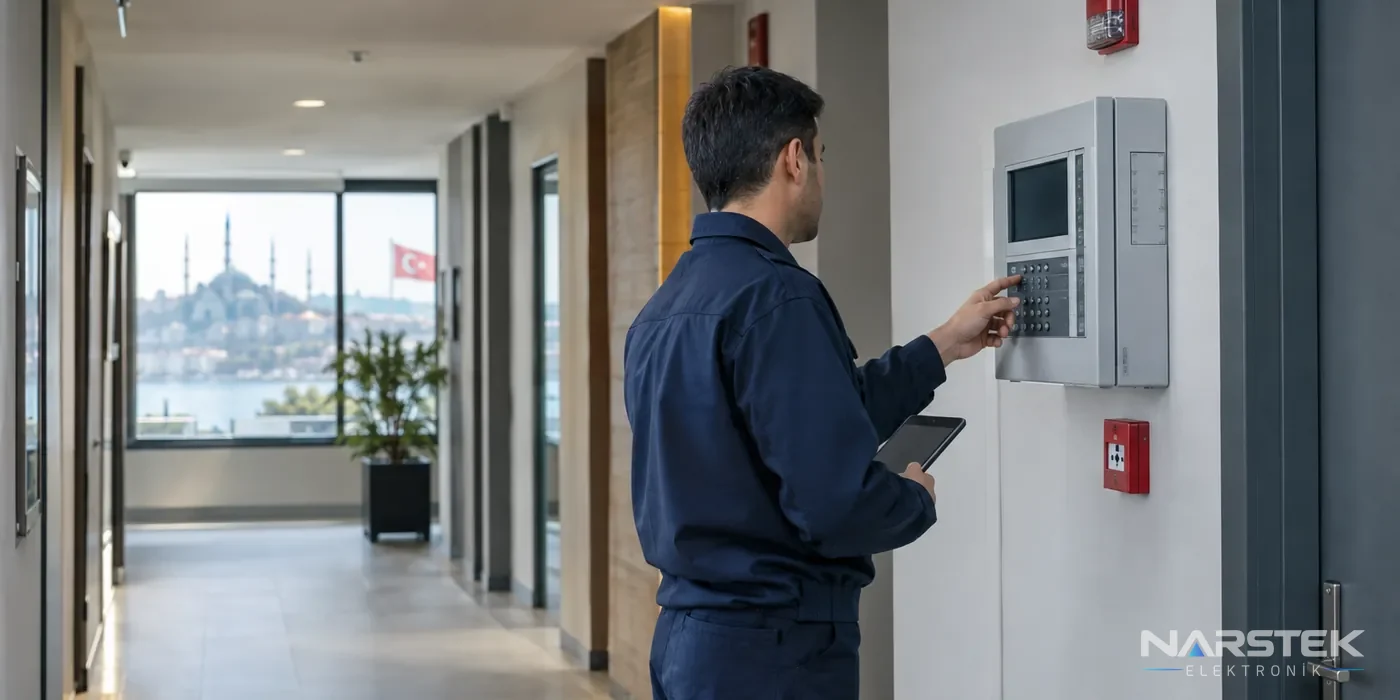
When selecting a Teknim fire alarm panel, first consider the building's use, the number of floors and sections, the detection points and any potential future expansion. A conventional system may be sufficient for small buildings divided into sections; an addressable system is more suitable if you need to monitor each device's location individually at the panel and locate faults more quickly.
Teknim is a Turkish manufacturer offering addressable, conventional and wireless product ranges. However, compatibility between panels, detectors, modules and warning devices depends on the model and protocol. Before purchasing, compare the existing system's make and model with the project and device list.
Addressable, Conventional and Wireless Systems
In an addressable system, each device appears on the panel under its own address. The source of an alarm can be identified more precisely, and fault-finding can be easier in large buildings with multiple sections. Teknim's addressable product range includes panels, detectors, input-output modules, sounders and wireless components that can be integrated into the system.
In a conventional system, devices are not individually addressed; they are monitored by zone. The panel indicates which zone the alarm is coming from, and an on-site check is needed to identify the specific device in that zone. When upgrading an existing installation, do not choose between addressable and conventional solely on the basis of panel price without first assessing the cabling, zone plan and how the devices operate.
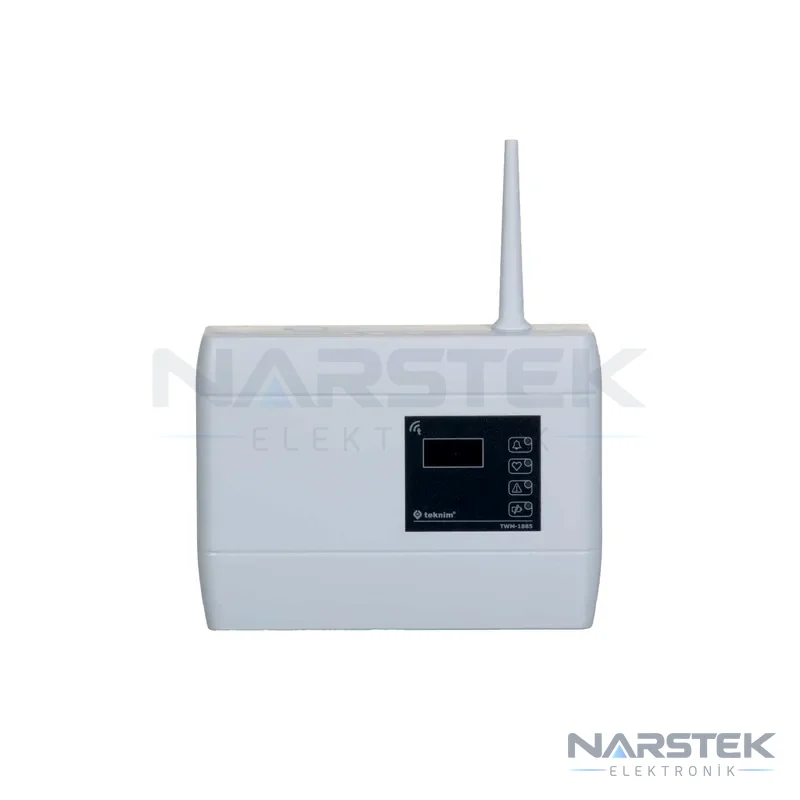
Wireless components can be considered where running cables is difficult or where creating cable routes in the existing structure is not practical. Teknim TWM-1885 is a coordinator that enables wireless fire alarm devices to be integrated into an addressable loop; it is powered by the loop and can be programmed via its OLED display. The suitability of a wireless system should be confirmed on site, taking into account signal conditions inside the building and compatibility with the selected devices. For more information, see our article on wireless fire alarm systems.
Which Teknim Panel May Be Suitable for Your Building?
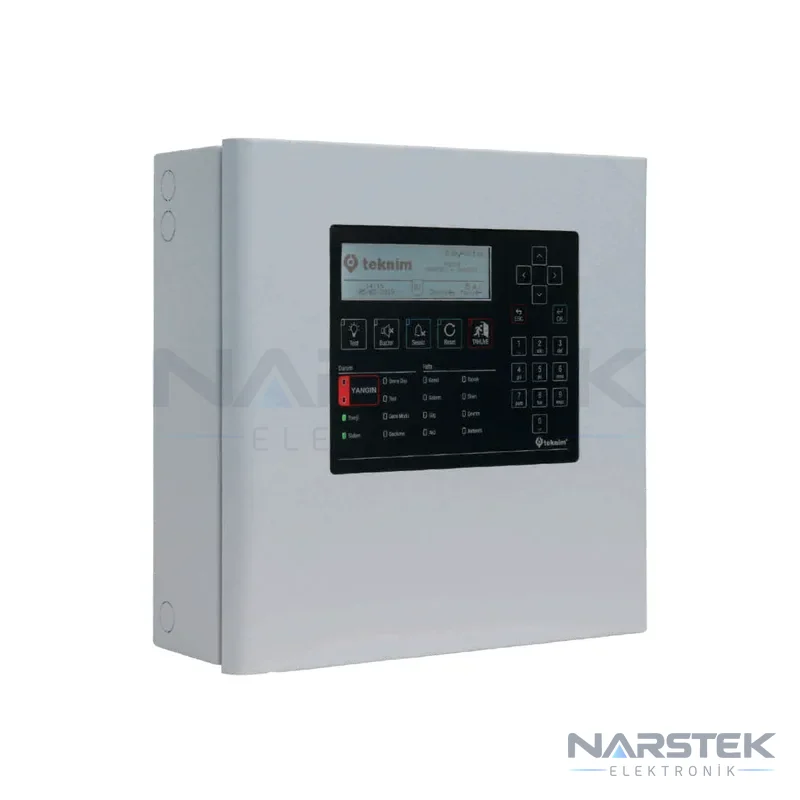
Panel selection should be based not on the building name but on the number of devices, loop capacity, existing infrastructure and operational requirements. The number of devices on a loop is limited by the panel's capacity; allowance should also be made for future additions. Examples of Teknim addressable panels listed in the catalogue include the TFP-1211 and TFP-2111.
| Building or Requirement | What to Consider | Catalogue Example |
|---|---|---|
| Small or medium-sized building with an addressable system planned | Single-loop capacity, device list and potential expansion | TFP-1211 supports 240 devices per loop; its capacity can be increased to 480 devices with an additional loop card. |
| Addressable system where fire and fault conditions need to be monitored using zone indicators | Panel indicator layout, loop capacity and operator requirements | TFP-2111 supports up to 240 devices on a single loop; its total capacity can be increased to 480 devices with an additional loop card. |
| Requirement to monitor panel status from another location | Compatibility of the repeater panel with the main panel and system | TFP-1240 is an intelligent repeater panel for addressable systems. |
The capacity information in the table is for initial assessment; panel selection must be verified against the device count and project. If a conventional system is being considered, the number of zones, the devices in each zone, and how the operator will locate the alarm should also be planned. For additional checks relating to panel selection, see our article on what to consider when selecting a fire panel.
Sample detectors and peripherals from the catalogue
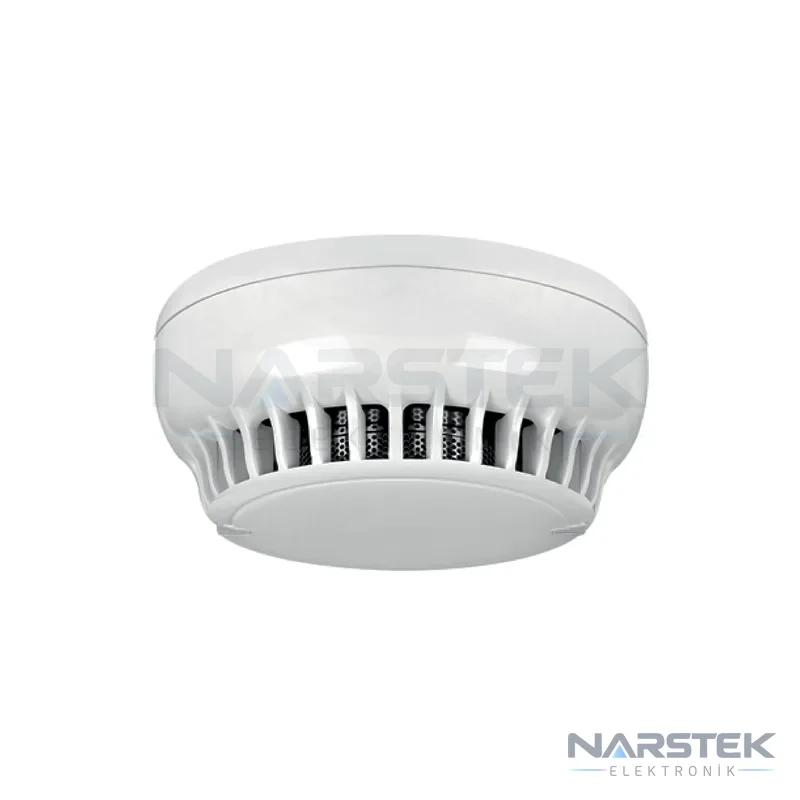
The panel is not a system on its own. Detection points, manual call points, audible or visual warning devices and, where required, monitoring and control modules must be designed together. For example, the TFD-2350 optical detector can be used for addressable smoke detection, while the TFD-2360 can be used for fixed-temperature detection. The detector type should be selected according to the use of the environment and the expected signs of fire.
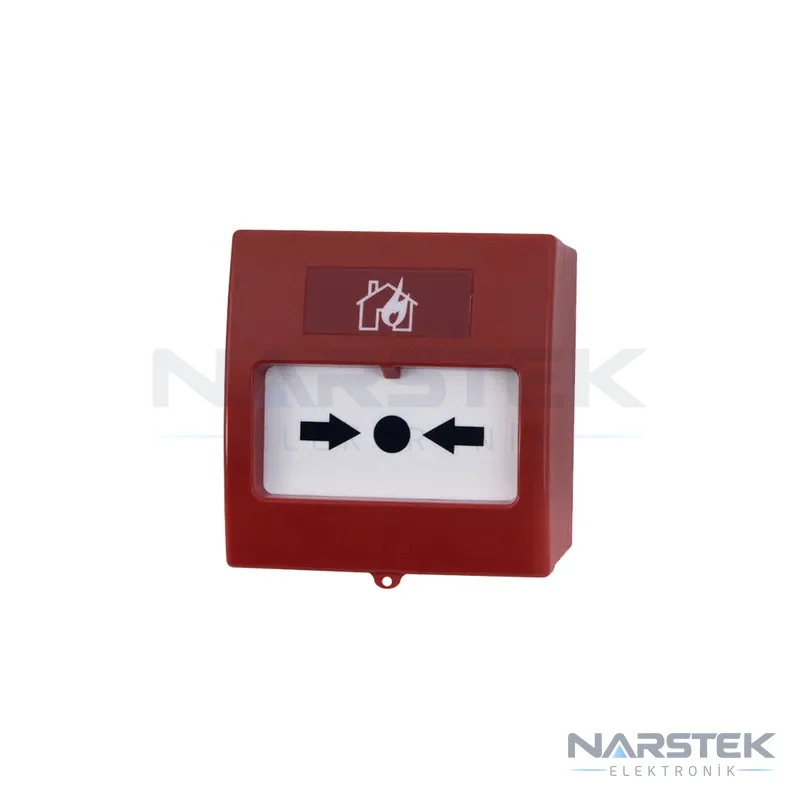
The TFB-3165 is one example from the catalogue for manual alarms in conventional systems. For audible warnings in an addressable system, the TFS-1181 addressable sounder may be considered. The connection and compatibility of these products should be verified against the panel protocol, project wiring diagram and manufacturer documentation.
Compatibility and cable selection during installation
Addressable detectors and modules depend on the panel's communication protocol. Addressable devices from different brands are often incompatible; before adding products to an existing system, check the panel's exact model, software or protocol details, and the manufacturer's compatibility documentation. Even when the brand is the same, verify the product family and connection requirements.
A loop is a circuit that leaves the panel and forms a ring, with both ends connected to the panel. Isolators on the circuit help protect the remaining section in the event of a short circuit. Cable cross-section and routing should be determined according to the project; fire alarm circuits should use fire-resistant, halogen-free cable of the class specified in the project. Example classes include FE180 and PH120. You can also read our article on fire alarm cable selection.
During installation, device addresses, zone or loop information, panel configuration and field labels must be consistent with one another. During commissioning, alarm, fault and warning scenarios are checked; the settings and test results are handed over to the building manager. For site survey, design, installation or fault repair, you can get support from our fire detection and alarm systems service.
What checks should be carried out during maintenance?
During maintenance, check that the panel is operating normally, review fault and disabled-point records on the display, inspect loop or zone connections, and check the power supply. Detectors, call points, sounders and modules should be tested using methods that comply with the project and manufacturer instructions. Inform the building manager before testing, and ensure alarm monitoring and the necessary on-site coordination during the test.
Panel batteries are usually 12 V VRLA lead-acid batteries. They may need to be replaced approximately every 3-5 years, in accordance with the manufacturer's recommendations; their actual condition should be assessed through battery tests and operating conditions. Battery capacity should be calculated according to the system's standby and alarm durations, and TS EN 54-4 should be taken into account in the power supply design. When replacing batteries, do not simply copy the rating on the old battery label; check the manufacturer's documentation and calculations.
Maintenance records should clearly state the date, devices checked, faults identified, corrective actions taken and points disabled. After a fault has been rectified, verify that the relevant section is operational again and inform the building manager. For more detailed site procedures, refer to our fire alarm system maintenance checklist article.
Keep Turkish documentation in the project file
Turkish user manuals, installation manuals and wiring documentation for panels and devices help maintenance teams carry out the right work. Ensure the documents match the selected model and product revision; a general product brochure is not a substitute for connection and programming details. Keep up-to-date documentation obtained from the manufacturer or supplier together with the panel configuration, loop device list and as-built project information.
When a new device is added, update the address and location list. When a panel is replaced or the system is expanded, check whether the old wiring diagrams still reflect the installation on site. Visit the Teknim products page to explore the Teknim product range.
Request a Survey and Quote from Narstek
Narstek Elektronik, based in Istanbul, provides site survey, design, installation, maintenance and fault repair services for fire detection systems, and supplies products for projects across Türkiye. To help us prepare a quote with the correct scope, please share the building address, type of use, number of floors and sections, make and model of the existing panel, approximate device count, and whether your request is for a new installation, an expansion or maintenance. If available, also include existing project documents, device lists, panel fault records and site photos.
For a site survey and quote, you can fill in the form, call 0212 424 07 24, or message us on WhatsApp at 0540 001 07 24. If you have an ongoing fault or maintenance request, submit a technical service request.
Frequently asked questions
What is the main difference between addressable and conventional fire alarm systems?
In an addressable system, devices appear individually on the panel under their own addresses. In a conventional system, the panel reports the alarm by zone rather than identifying the exact device.
Can detectors from another brand be connected to a Teknim addressable panel?
Addressable detectors and modules must be compatible with the panel protocol, and products from different brands often do not work together. Before purchasing, check the panel model and the manufacturer's compatibility information.
When should Teknim fire alarm panel batteries be replaced?
The batteries used are generally 12 V VRLA lead-acid types and may need replacing approximately every 3-5 years, in line with the manufacturer's recommendations. The decision should be based on a battery test and a capacity calculation for the standby and alarm periods.
What information should I provide when requesting a quote for a Teknim fire alarm system?
The building address, its use, the number of floors and sections, the make and model of the existing panel, and the approximate number of devices will help with the initial assessment. Also let us know whether your request is for a new installation, system expansion, maintenance or fault repair, and provide any project documents or fault records if available.
Share the panel brand, number of devices and address, and we’ll get back to you about a site survey and quote.