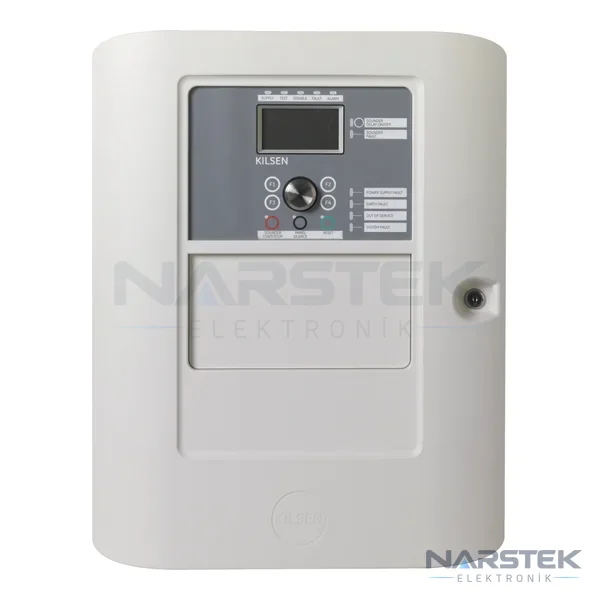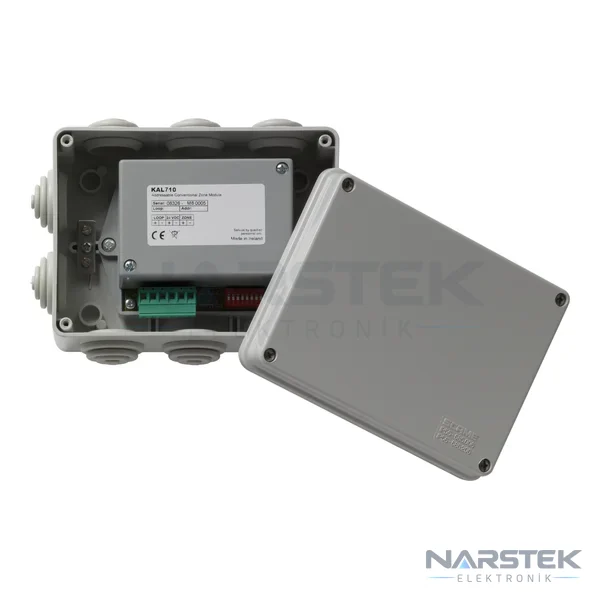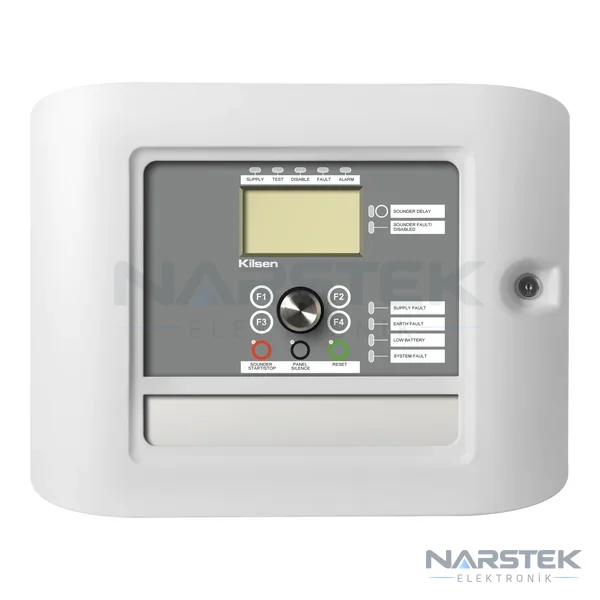
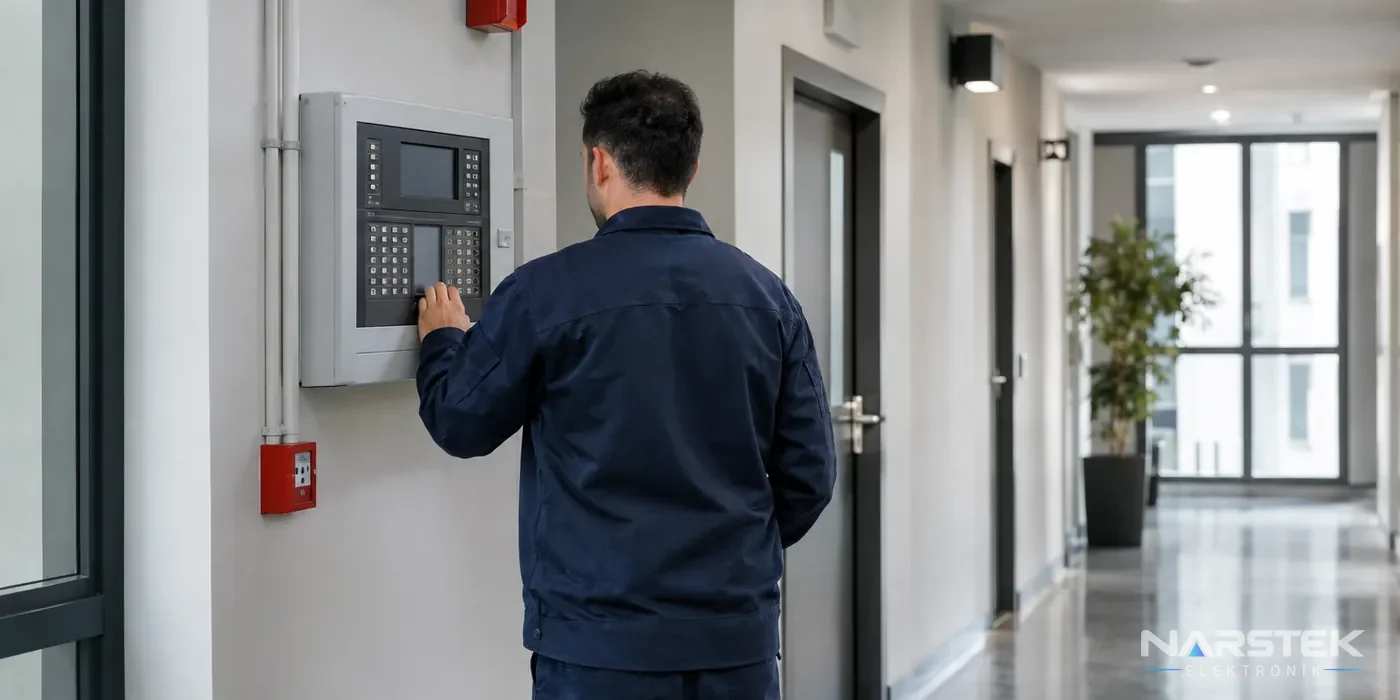
When selecting a Kilsen fire alarm panel, first identify whether the existing system is addressable or conventional and establish the panel model. KFP series addressable panels monitor devices individually by their addresses on the loop; KAL modules connect conventional detector zones to an addressable system.
Carbon monoxide detection is a separate requirement from fire alarm detection. The KMD300 detector operates with KM300 series CO panels. When selecting a new product, checking the brand alone is not enough; compatibility with the panel protocol, connection arrangement and existing devices must also be verified.
The Difference Between Addressable and Conventional Systems
In an addressable system, detectors, call points and modules appear individually on the panel by their addresses. When an alarm or fault occurs, the panel can show which device reported the condition. This arrangement is used at sites where device-level monitoring and event records are required.
In a conventional system, devices are not individually addressed; the panel monitors them by the zone to which they are connected. The panel can show which zone an alarm originated in, but it does not display a separate address for each detector. The devices used in addressable and conventional systems are also different.
A loop is a circuit installed in a ring configuration between an addressable panel and field devices. The line is fed from both ends; isolators help keep the remaining section of the line operational in the event of a short circuit. Communication between addressable detectors and modules and the panel depends on the manufacturer’s protocol. Products from different brands are often incompatible; check the panel model and device type before replacement. For an overview of the main differences, see our comparison of addressable and conventional systems.
Selecting a model in the KFP series
The catalogue includes KFP models with a single loop and options with greater loop capacity. The number of loops affects not only the number of existing devices but also future expansion requirements. When replacing a panel or designing a new system, assess the device list, building plans and existing cabling together.
| Model | Product type | Points to check when selecting |
|---|---|---|
| KFP-AF1 | Single-loop addressable control panel | Protocol compatibility of the detectors, call points and modules to be connected |
| KFP-AF1-S | Compact, single-loop addressable panel | Installation space and the existing system’s addressable configuration |
| KFP-AF2 | Two-loop panel, expandable up to four loops | Current device count and expansion plans |
KFP-AF1 controls an addressable system with a single loop; the panel monitors and records alarm and fault conditions. KFP-AF1-S also has a single loop and features a Turkish user interface on its LCD screen. Choosing the compact enclosure does not remove the need to check that the installation space is suitable for the panel.
KFP-AF2 operates with two loops and can be expanded to up to four. Zone indicators, event log memory and an Ethernet connection for remote servicing, maintenance and programming are listed in the product summary. When expanding the system, check not only the number of loops but also the device and module configurations supported by the panel in the manufacturer’s documentation. You can view product options in the fire panels category.
What are KAL modules used for?
KAL modules are used to connect a zone containing conventional fire detectors to an addressable system, or to monitor the status of multiple conventional zones from an addressable panel. This may be considered in projects where existing conventional sections are to operate alongside addressable infrastructure. Compatibility with the panel and the number of devices that can be connected per zone should be verified against the project requirements and manufacturer’s information.
- KAL710 connects a conventional detector zone to an addressable fire system loop. It operates from an external 24 VDC supply; local alarm and communication status are monitored via the LED.
- KAL714C connects four conventional fire zones to an addressable panel and reports the status of each zone. Conventional detectors or manual call points can be connected to the zones.
Before adding a module, check for spare capacity on the existing loop, the module’s power supply requirements and the condition of the conventional zone wiring. Purchasing a module alone does not mean it will automatically be compatible with the system. Check the wiring diagram alongside the make and model of the installed system.
KM300 Series CO Detection and Field Devices
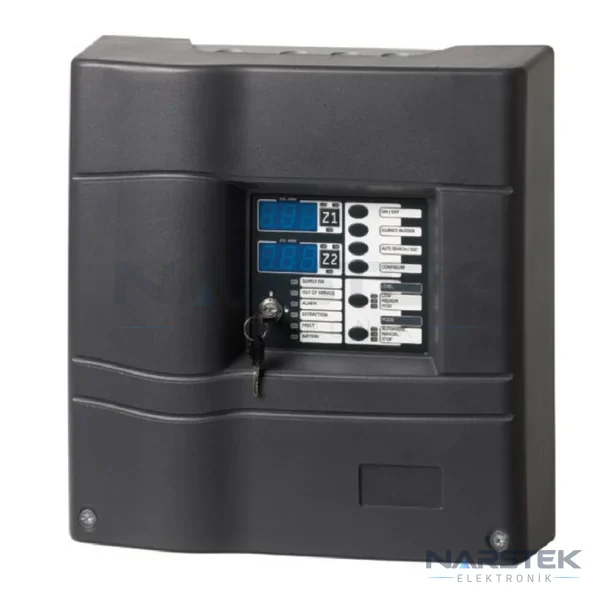
The Carbon Monoxide (CO) system should be considered separately from the fire detection panel. KMD300 is a microprocessor-based detector that measures CO concentration using an electrochemical sensor and is compatible with KM300 Series Carbon Monoxide panels. The product information states coverage of up to 300 m² per detector; actual placement and coverage should be assessed against the project conditions.
KM302 monitors two zones independently. Up to 15 CO detectors can be connected to each zone; the panel’s ventilation/exhaust and general alarm relays can be programmed according to CO levels. KM304 monitors four separate zones and allows up to 15 detectors to be connected to each zone.
The standards and intended function of other products used in the fire alarm system also affect selection. In verified standards mappings, smoke detectors fall under EN 54-7, heat detectors under EN 54-5, manual call points under EN 54-11, audible warning devices under EN 54-3 and visual warning devices under EN 54-23. This standards information alone does not confirm that a specific device is compatible with the existing panel.
Servicing and Compatibility for Existing Kilsen Systems
During maintenance visits, the first check is to compare the fault information shown on the panel with the field devices and wiring measurements. The panel model, software or configuration details, loop and zone connections, battery condition and any subsequent additions all affect the service assessment. Before replacing a product, establish whether the fault is caused by the panel, a device or the cabling.
Do not assume that detectors or modules from another brand will work when connected to an addressable system. Protocol compatibility must be confirmed using the manufacturer’s documentation and the existing panel configuration. Incorporating a conventional zone into an addressable system using a KAL module should also be assessed against the appropriate module, power supply and connection plan. When you submit a technical service request for a Kilsen system, providing the panel model and the fault message shown on the display will help with the initial assessment.
Fire alarm lines use fire-resistant, halogen-free cable; FE180 or PH120 class cables are examples. Panel batteries are generally 12 V VRLA lead-acid types and are replaced approximately every 3-5 years, in accordance with the manufacturer’s recommendations. The required battery capacity should be calculated based on standby and alarm durations; TS EN 54-4 should be considered when assessing the power supply. You can also read our fire panel maintenance notes.
Request a Survey and Service Quote from Narstek
Narstek Elektronik, based in Istanbul, provides site surveys, design, installation, maintenance and fault repair services for fire detection and alarm systems. It also offers project and service support for Carbon Monoxide detection, public address, CCTV, fire suppression, access control and intrusion alarm systems; product supply and project work are available across Türkiye. For details of our services, visit the fire detection and alarm systems page.
For a quote or service request, please provide the panel make and model, whether the system is addressable or conventional, the number of existing devices and zones/loops, the fault message displayed and the building’s use. A photo of the panel display, the existing project or wiring diagram, and the model of the product you are considering replacing may also help speed up the assessment. You can complete the survey / quote form, call 0212 424 07 24 or message us on WhatsApp at 0540 001 07 24.
Frequently asked questions
Can detectors from other brands be connected to a Kilsen addressable panel?
Not always. Addressable detectors and modules depend on the panel protocol; products from different brands are often incompatible. Do not replace a device until the panel model and manufacturer’s documentation have been checked.
What is the main difference between KAL710 and KAL714C?
KAL710 connects one conventional detector zone to an addressable loop. KAL714C reports the status of four conventional zones to an addressable panel.
Which panel is the KMD300 detector used with?
KMD300 is compatible with KM300 series carbon monoxide panels. The catalogue lists KM302 as a two-zone panel and KM304 as a four-zone panel.
When should a Kilsen fire panel battery be replaced?
Panel batteries are generally 12 V VRLA lead-acid types and are replaced approximately every 3–5 years, in line with the manufacturer’s recommendations. The appropriate capacity should be determined by calculating the required standby and alarm times.
Share the panel brand, number of devices and address, and we’ll get back to you about a site survey and quote.