
When choosing a Teletek fire panel, first consider the building’s existing infrastructure, the areas to be protected and the devices to be used. When choosing between the IRIS, SIMPO and ECO families, do not rely solely on the series name; check that the model meets the project requirements and is compatible with the protocol used by the connected devices.
The Teletek product range includes different system solutions built with addressable, conventional and wireless components. Panel models and device compatibility should be verified using the product documentation; design, installation and maintenance should be planned together.
The Difference Between Addressable and Conventional Systems
In an addressable system, each detector, call point or module appears on the panel with its own address. When an alarm or fault occurs, the panel can identify the device that triggered the event. In large buildings with varied functions, this information helps technical staff locate the point of origin.
In a conventional system, devices are monitored by the zone to which they are connected, rather than individually. The zone in which the alarm occurred can be identified, but the devices in that zone may need to be checked on site to locate the exact point. If the existing installation is conventional, a site survey should establish whether all the cabling needs to be replaced as part of the upgrade.
Addressable detectors and modules must be compatible with the panel’s communication protocol. Devices from different manufacturers will often not work together directly. Before purchasing, check the panel model, device model and protocol information in the manufacturer’s documentation. You can also read our article on the differences between addressable and conventional systems.
Evaluating the IRIS, SIMPO and ECO Series
IRIS, SIMPO and ECO are names of different Teletek panel families. However, selection should not be based on the series name alone. The required number of loops or zones, the types of devices to be connected, whether the system is wired or wireless, and any future expansion requirements should be determined for the project. Refer to the manufacturer’s documentation for the inputs, outputs and capacity of each model.
The current catalogue also includes IRIS8 Ext.. This product is a loop expansion box used to increase the capacity of an IRIS8 panel and can add four loop controllers. The communication protocol to be used should be assessed according to the devices connected to the system. Therefore, when planning an expansion, consider device compatibility as well as the number of additional loops.
For conventional fire suppression applications, IVY and IVY Lite are listed in the catalogue as separate control panel options. Do not consider them to have the same functions as general-purpose fire panels; the type of suppression system, operating scenario and project requirements should be assessed separately. Compare the product pages and manufacturer documentation for details of each model’s scope.
Loop, Cable and Device Compatibility
In an addressable system, a loop is a ring circuit that leaves the panel and returns to it at both ends. Detectors and modules are connected at various points along the circuit. Isolators help protect the remaining section of the circuit in the event of a short circuit; their placement and loop design should be determined for the project.
Fire alarm circuits should use fire-resistant, halogen-free cable. FE180 or PH120 class cables are examples used for this purpose. The cable cross-section, route and connection method should be determined using the manufacturer’s documentation and project information. For more information on cable selection, see our article on choosing fire alarm cable.
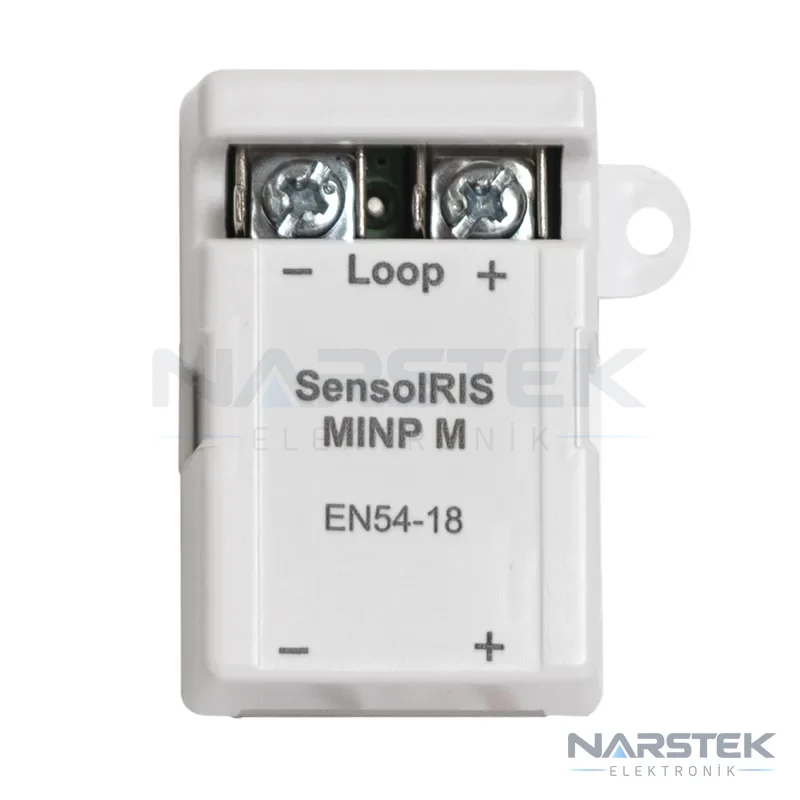
The catalogue includes the SensoIRIS MIO module family for addressable input and output functions. The SensoIRIS MINP M can be used to communicate the status of an external key-operated device to the panel. These devices belong to the SensoIRIS addressable product range; confirm compatibility with the panel and protocol before ordering.
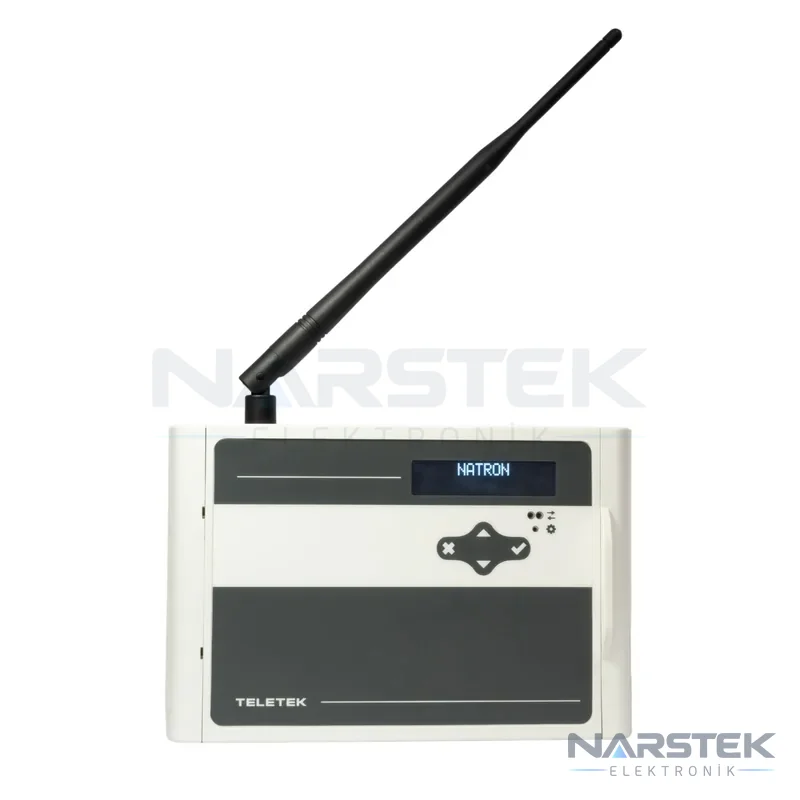
The Natron range includes wireless detectors and alert devices. Natron WE-A is a wireless gateway designed for use with iRIS4 and iRIS8 addressable panels. Natron WE-C connects Natron wireless devices to MAG series and other compatible conventional panels. A device being wireless does not determine whether the system is addressable or conventional; check the gateway and panel pairing.
Which Devices Can Be Added to a Project
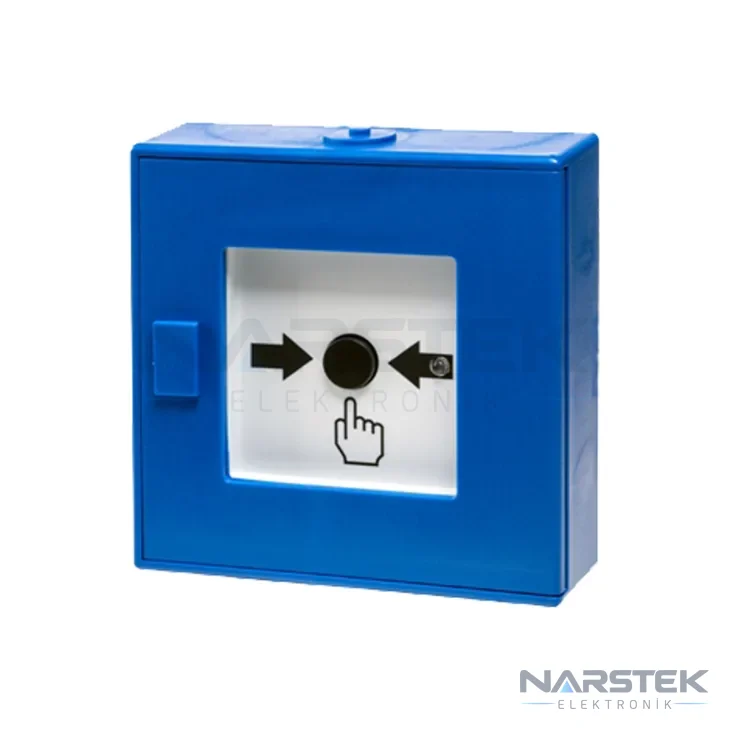
The panel is only one part of the selection. Choose a group of devices suited to the building’s use for detection, manual alarm activation and alarm notification. Examples in the catalogue include the Natron SD wireless optical smoke detector, the Natron MCP PB wireless manual call point and the SF100 RSND conventional sounder.
The appropriate detector type depends on the conditions in the area. Smoke detectors are covered by EN 54-7, heat detectors by EN 54-5, manual call points by EN 54-11, audible warning devices by EN 54-3 and visual warning devices by EN 54-23. These standard references alone do not determine product or system suitability; they should be considered alongside the project requirements and manufacturer’s documentation. Explore the different device groups under detectors, call points and sounders and beacons.
Selection and Maintenance Planning
During the site survey, review the building plans, existing panel and installation, areas to be protected and any limits on the scope of the upgrade. For an existing system, also assess fault records shown on the panel and the operating condition of the devices. For a new project, plan device locations, cable routes, zone or loop configuration and alarm notification together.
- Identify whether the existing system is addressable or conventional and determine the panel model.
- Confirm that the detectors, call points, modules and warning devices to be connected are compatible with the panel protocol.
- Calculate loop or zone capacity, existing devices and potential expansion requirements as part of the project.
- Select the cable type and route according to the fire-resistance requirements.
- During maintenance, record panel faults, devices, connections and battery condition.
Panel batteries are typically 12 V VRLA lead-acid batteries. Depending on the manufacturer’s recommendations, they are expected to be replaced approximately every 3-5 years; the actual replacement decision should be based on battery testing and system requirements. Battery capacity is calculated according to the standby and alarm durations. The power supply design should take TS EN 54-4 into account. For details of the panel and detector inspection scope, read our article on fire alarm system maintenance.
Request a Survey and Quote from Narstek
Based in Istanbul, Narstek Elektronik provides site surveys, design, installation, maintenance and fault repair for fire detection and alarm systems. You can also submit an enquiry for projects and product supply across Türkiye. For help choosing a panel or upgrading an existing system, learn more about our fire detection and alarm services.
When requesting a quote, provide the building type and address, the make and model of the existing panel, whether the system is Addressable or Conventional, any fault symptoms and the work required. If available, floor plans, an existing device list and a photo of the panel will help with the initial assessment. You can complete the Survey / Quote form, call us on 0212 424 07 24, or message us on WhatsApp at 0540 001 07 24.
Frequently asked questions
Can I use detectors from a different brand with an addressable Teletek panel?
Addressable detectors and modules must be compatible with the panel's communication protocol. Devices from different brands are often incompatible, so verify the panel and device models together against the manufacturer's documentation.
Is IRIS8 Ext. a new fire panel?
No. IRIS8 Ext. is a loop expansion box used to increase the capacity of the IRIS8 panel. It can add four loop controllers; the supported communication protocol depends on the devices to be connected.
Can Natron wireless devices be used with conventional panels?
In some installations, they can be used via a suitable gateway. For example, they are designed to connect Natron WE-C devices to MAG series and other compatible conventional panels; check the product documentation to confirm panel compatibility.
When should a fire panel battery be replaced?
Batteries are generally 12 V VRLA lead-acid types and are replaced approximately every 3–5 years, subject to the manufacturer’s recommendations. The decision to replace a battery should be based on its test results and the panel’s standby and alarm capacity requirements.
Share the panel brand, number of devices and address, and we’ll get back to you about a site survey and quote.