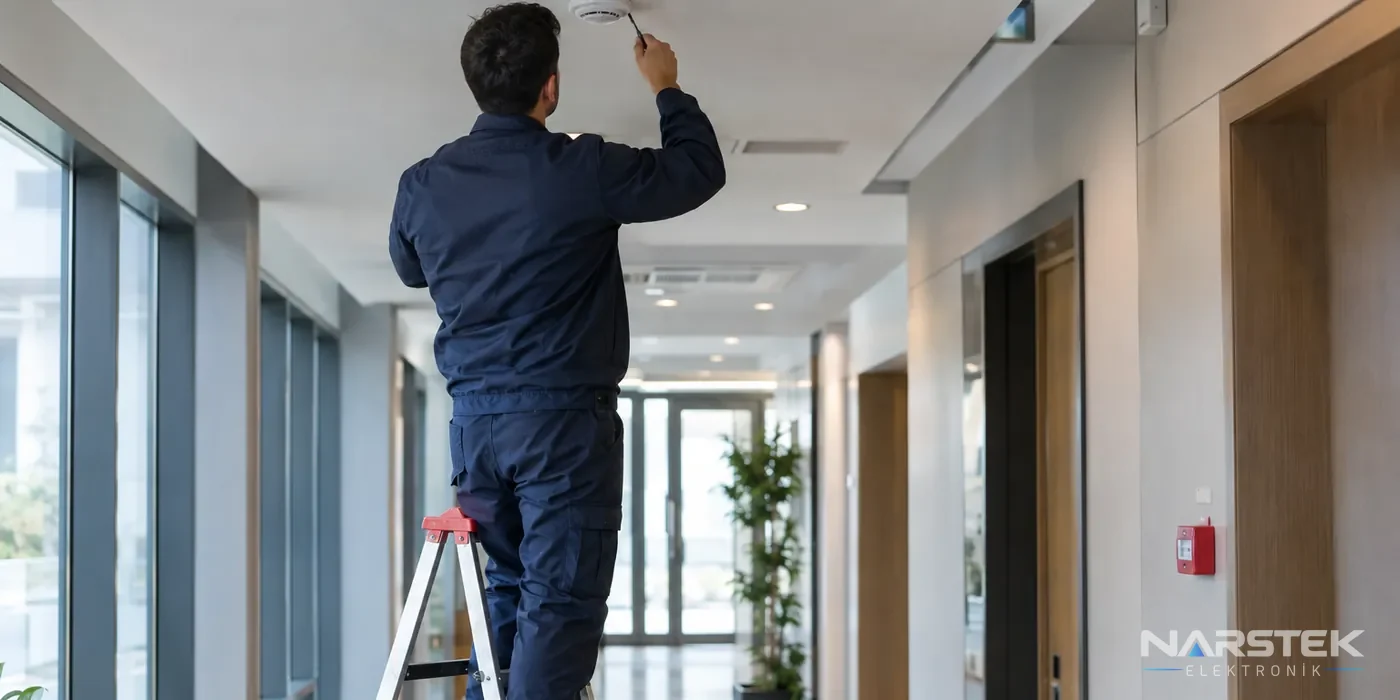
A general approach used on site is to assess smoke detectors at around 10 years of age. This is not a definitive statutory replacement requirement; the manufacturer's recommendation, the device's condition and maintenance records should be taken into account.
A detector may also need to be replaced before this period has elapsed due to contamination, a fault or failure to pass a test. Conversely, age alone does not indicate the condition of a device. The decision should be made alongside maintenance and test results.
What determines the lifespan of a smoke detector?
Optical smoke detectors monitor airborne particles in their sensing chamber. Over time, dust and dirt can build up and affect the device's sensitivity. Some systems report this change as a contamination or sensitivity drift warning. A warning does not necessarily mean the device must be replaced immediately; first, follow the maintenance and checking procedures in the manufacturer's documentation.
In general, around 10 years is a reference point for renewal planning. However, recommended lifespans may vary between manufacturers. Check the documentation for the device model and add it to the maintenance records. If the manufacturer specifies a replacement period, take it into account when planning.
The detector's location can also affect its performance. In areas with dust, steam or high levels of contaminants, the sensing chamber may become dirty more quickly. If recurring false alarms occur due to environmental conditions, investigate the source of the alarm and the suitability of the device rather than simply replacing the detector.
When are cleaning and maintenance sufficient?
Contamination on the detector's exterior and in its optical chamber can affect detection. If permitted by the manufacturer, the optical chamber can be cleaned during maintenance. Cleaning methods vary by model, so check the manufacturer's instructions before opening or working on the device. Improper cleaning may damage components or affect test results.
The detector returning to normal in the system after cleaning is not, by itself, a sufficient check. The alarm test and the device status shown on the panel should also be assessed. Recording which device was maintained, when it was done and the result makes future replacement decisions easier. You can find more information about testing procedures in our Smoke and Heat Detector Testing article.
If the contamination warning recurs, the fault persists after cleaning or the test result is unsatisfactory, the device should be considered for replacement. If alarms recur at the same location, investigate whether dust, steam or another factor is present. Installing a new detector without addressing the source of the problem may lead to similar faults continuing.
Signs that indicate replacement is needed
Alongside the detector's age, its operating condition and maintenance history should also inform the decision. The following signs call for investigation and, where necessary, replacement planning:
- A contamination, fault or communication warning for the detector remains active on the panel.
- The device fails its test after the cleaning and checking procedures specified by the manufacturer have been followed.
- A crack, looseness or other physical damage is visible on the housing or sensing section.
- The detector is approaching or has exceeded the service life specified by the manufacturer.
- No suitable spare part or compatible product is available for the faulty device.
If any of these signs are present, the device should be taken out of service or replaced in a way that complies with the system design. Removing detectors indiscriminately while the fire detection system is operational may interrupt detection in protected areas. During replacement, check the panel warnings, the device location and the commissioning test together.
Check panel compatibility when selecting a new detector
In Addressable systems, each device appears on the panel with its own address. In these systems, the detector must be compatible with the panel protocol; do not assume that a device from a different manufacturer will work with the existing panel. Before selecting a model, identify the panel make and model, the protocol in use and the product details of the existing detector. If necessary, consult the panel manufacturer's documentation or a technical service provider.
In Conventional systems, detectors are not individually addressed; the panel monitors them by zone. Here too, check that the new device is suitable for the existing system and its intended location. A similar-looking base is not, by itself, a valid reason to use an Addressable detector with a different panel. You can clarify your system type by reviewing the differences between Addressable and Conventional systems.
After replacement, check that the device is correctly recognised by the panel and that the alarm signal is transmitted correctly. If several detectors are being replaced, compare the panel configuration and device list with the current installation. When choosing from the products in the Detectors category, make sure to verify compatibility separately.
How to plan bulk replacement
Not all detectors in a building will necessarily have been installed on the same date. For this reason, base decisions about bulk replacement on the installation dates and maintenance records of the devices, rather than the age of the building alone. If records are incomplete, it is useful to compile a device inventory first, listing detectors by location, make, model and system type.
- Collect the make, model and location of the existing detectors from the fire panel and field labels.
- Assess the manufacturer's recommendations, device age, maintenance records and test records together.
- Prioritise faulty devices or those that fail testing; create a phased replacement schedule for the others.
- Confirm that the new product is compatible with the fire panel, and record the test and panel check after replacement.
Phased implementation can make it easier to plan building use and maintenance arrangements. However, the order in which areas are addressed should be determined by the system configuration and site conditions. When replacing multiple devices, ensure that the products are the same model or compatible options; do not assume that different devices are equivalent based on appearance alone.
If maintenance records are unavailable, it is useful to assess the overall condition of the system before replacement. In addition to the detectors, check the fire panel's alerts and the devices' address or zone information. Narstek can help assess the current condition and plan maintenance through its fire security systems servicing and maintenance service.
Example products from the catalogue
The products below are examples of detectors in the catalogue. They should not be considered direct equivalent replacements for every old detector. For addressable models in particular, check the fire panel protocol; select products based on the technical details of the existing system.
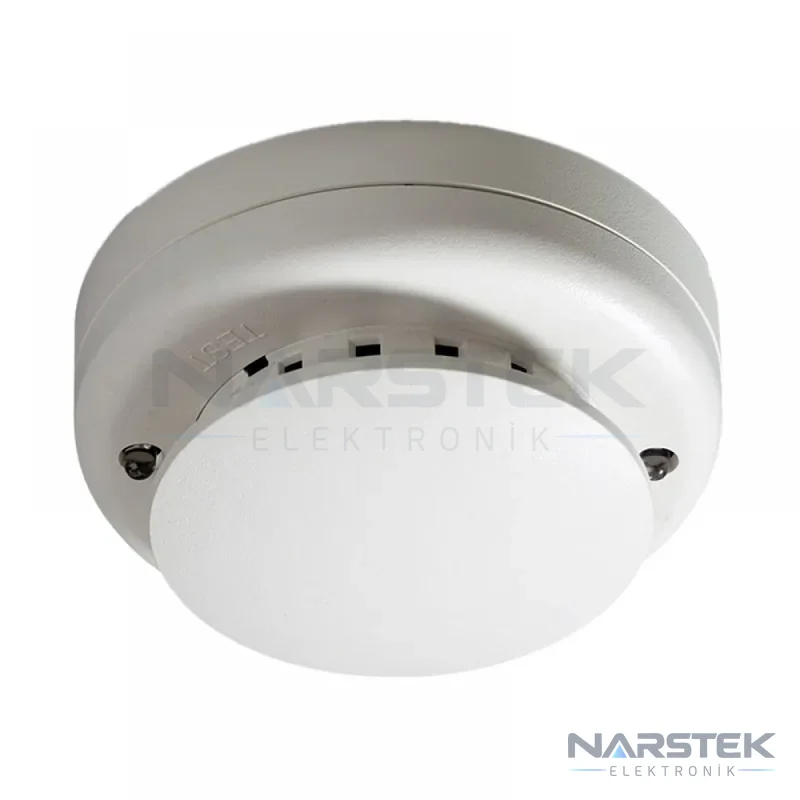
- Teknim TFD-2350 is an addressable optical smoke detector with adaptive protection and contamination warning features.
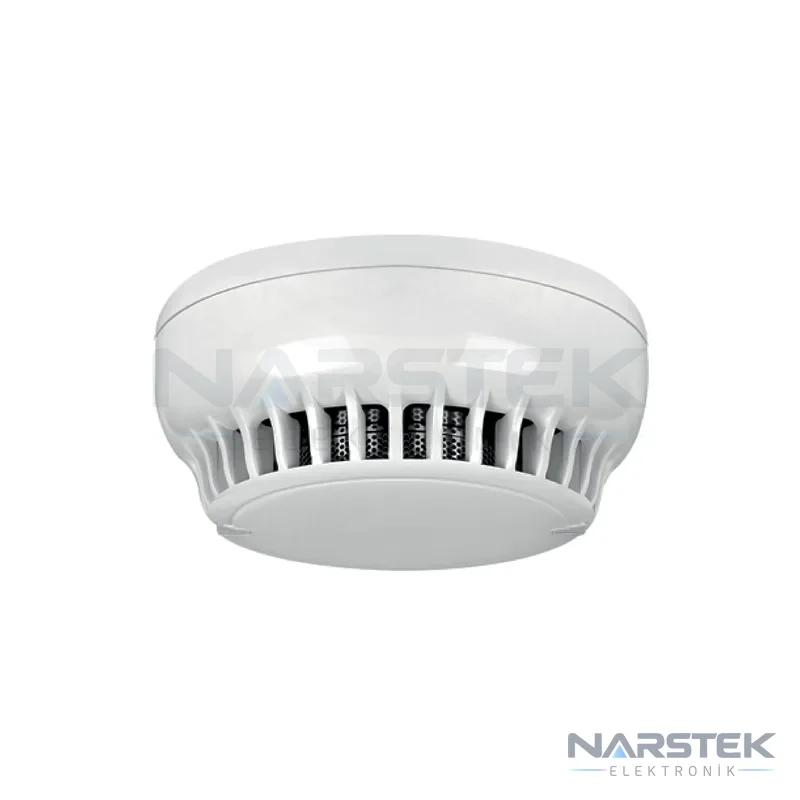
- Aritech DP2061N is an addressable detector that operates using the Aritech 2000 series protocol and has a field-replaceable optical chamber.
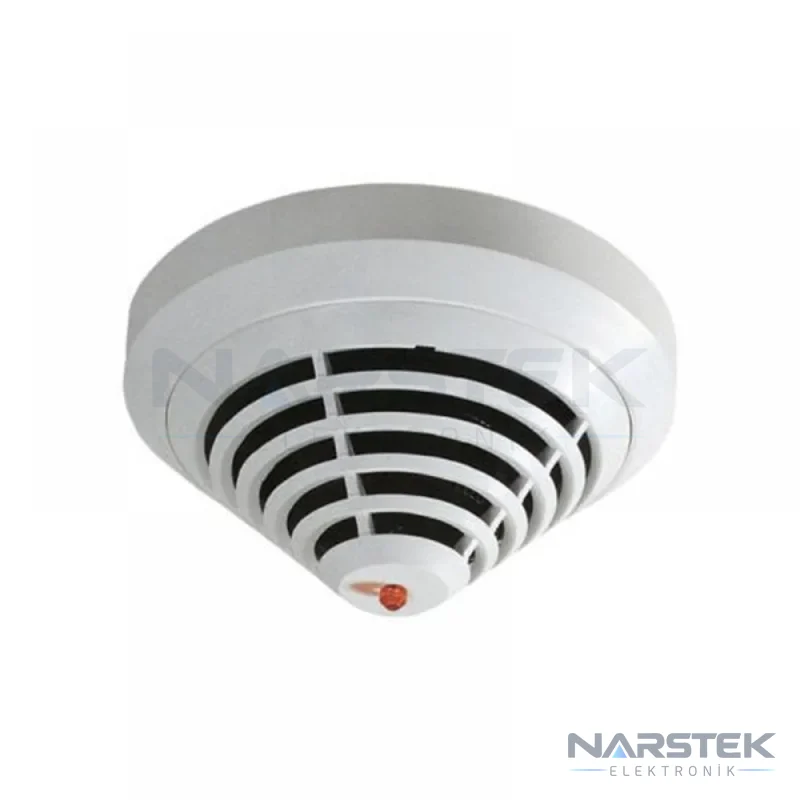
- BOSCH FAP-425-O is an example of a detector offering optical smoke detection and intelligent signal processing technology.
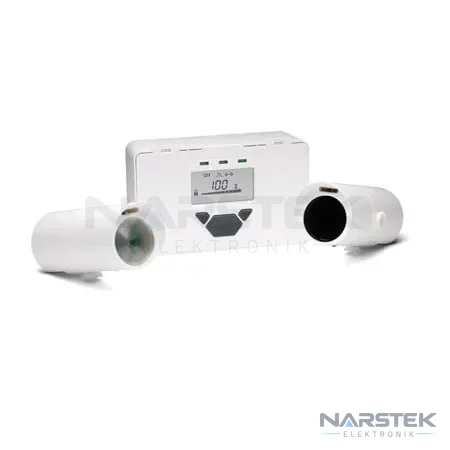
- Apollo 29600-929 is a conventional beam detector suitable for large areas and high ceilings; it is not used in the same applications as a point detector.
Request a maintenance and replacement quote from Narstek
Narstek Elektronik is based in Istanbul and provides site surveys, design, installation, maintenance and fault repair services for fire detection and alarm systems, as well as project services and product supply across Türkiye. When requesting a replacement quote, provide the make and model of the fire panel, the make and model of the existing detector, the number of devices and the areas of the building in which they are installed. Panel photos, device labels and maintenance records, if available, can also help determine the right products and work plan.
You can submit the details using the survey and quote form or create a service request for technical support. Phone: 0212 424 07 24. WhatsApp: 0540 001 07 24.
Frequently asked questions
Does a smoke detector need to be replaced before 10 years have elapsed?
It may be necessary. If the fault warning persists, the device fails its test or has been damaged, it should be assessed regardless of its age. The manufacturer's documentation and maintenance results should form the basis of the decision.
Should a detector be replaced immediately if it gives a contamination warning?
Not always. First, carry out maintenance and checks in accordance with the instructions for the relevant model. If the warning persists or the device fails its test, replacement should be considered.
Can detectors from different brands be used in an addressable fire alarm system?
It cannot always be used. An Addressable detector must be compatible with the panel protocol; do not select a product without verifying the make and model.
What information is needed for bulk detector replacement?
The make and model of the panel and detectors, the number of devices, installation or maintenance records, and the areas where the detectors are located are useful starting points. If records are incomplete, a device inventory may need to be compiled first.
Share the panel brand, number of devices and address, and we’ll get back to you about a site survey and quote.